When a bathroom in a house built in 1937 was slated for demolition because its plumbing is nearly a century old, one homeowner could not resist a little curiosity first. She started chipping at the modern white hexagon tile covering the floor, and what she found underneath changed the plan.
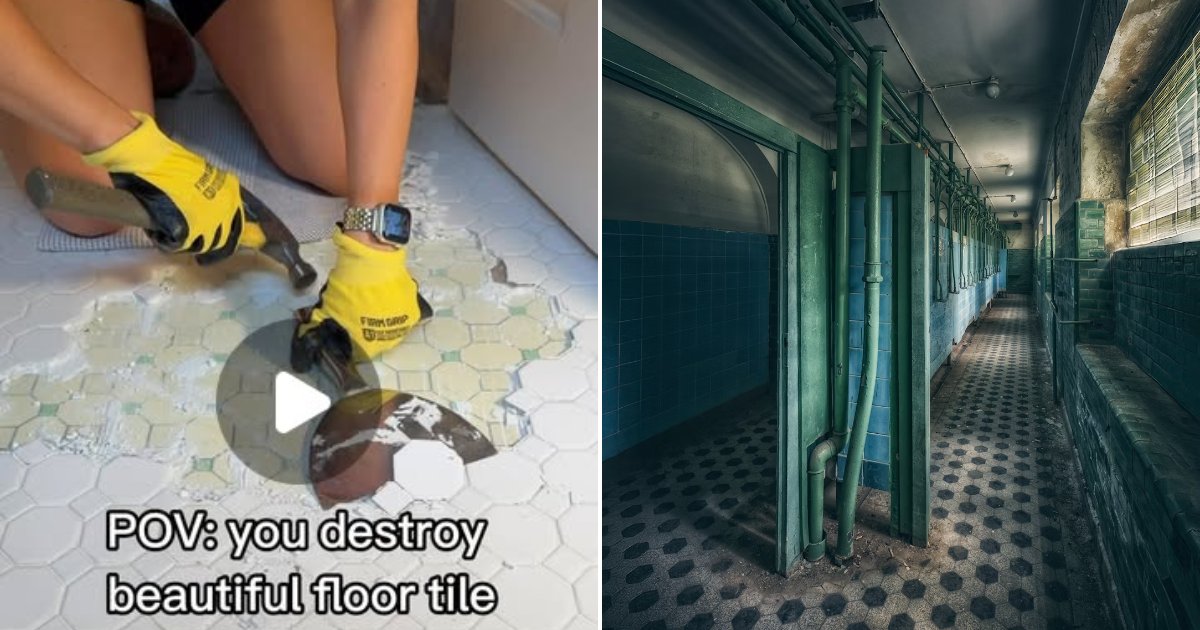
The homeowner, who introduces herself as Katie, shared the discovery on @florencerevival, where she is documenting the revival of the old house.
View on Instagram
Ripping up perfectly good tile
Katie kneels on the bathroom floor with a hammer, chisel and scraper and begins peeling away the upper layer of white hexagon tile. She knows how it looks, and says as much: why would anyone rip up perfectly good tile? The answer is that the bathroom was already going to be demolished, and she had a hunch there might be more to the floor than the surface showed.
Under the white hexagons she finds older hexagonal tile in a green and yellow pattern. These, she says, are the original 1937 floors.
A personal mission to save every inch
Katie declares it her personal mission to uncover every last inch of the original floor. There is a catch: the plumbing is the reason the bathroom was slated for demo in the first place, so she says she will have to convince her plumbers that it can somehow be made to work around the old tile.
To clear the way, a man joins her in the room and removes the fixtures. He unbolts and carries out the toilet, then disconnects the wall mounted sink and carries it out over a bucket. With the room emptied, Katie goes back to chipping at the white overlay tile.
Could the walls be original too?
Once the floor reveals its age, Katie wonders about the walls. She uses an infrared heat tool to warm the painted white ceramic wall tiles, then scrapes away the softened paint. Underneath, green and yellow vintage tile appears, and she celebrates the match: original wall tile to go with the original floor.
The final shot pans across the stripped bathroom, with a ring light on a tripod standing in the middle of the demo floor. She invites followers to keep up as she uncovers the room, and asks anyone with tips to share them. We do not know yet whether the plumbers found a way to save the floor, since the ending is not shown.
Tips if you suspect original tile under your floors
Old houses often hold earlier finishes beneath later updates. If you think your bathroom might be hiding something, a careful approach goes a long way.
- Test in a small, hidden spot first, such as under where a toilet or vanity sits, before removing any more of the top layer.
- Work slowly with hand tools like a chisel and scraper so you do not crack the tile you want to keep.
- For painted tile, gentle heat from a heat tool can soften the paint so it scrapes off, though you should wear eye protection and follow the tool instructions.
- Talk to your plumber early. Nearly century old plumbing can limit what can be saved, so it helps to plan around the pipes before you fall in love with a floor.
- Take photos at every stage so you can match missing tiles or patterns later.
Original tile from the 1930s is the kind of detail that gives an old home its character, and it is often far more durable than modern replacements. Even when a full save is not possible, keeping a section or a pattern can carry that history forward.
A note on 1930s bathrooms
Small hexagon floor tiles and colorful wall tile were popular in American bathrooms of the 1930s, when greens, yellows, pinks and blues were common choices. Because ceramic tile is hard and durable, many of these floors have outlasted the plumbing beneath them.
Common questions
Is it safe to chip up old flooring? It depends on the age and the materials. Some flooring adhesives and backing layers in older homes can contain asbestos, and older paint can contain lead. If your house was built before the 1980s, consider having a sample tested before you chip, grind or sand anything.
Can original tile survive a plumbing update? Sometimes. It depends on where the pipes run and how they can be reached. A plumber can tell you whether the work can be done from below, from the wall side, or by lifting only a small section of floor.
How do I clean old glazed tile? Start with a mild, pH neutral cleaner and a soft brush. Harsh acids can damage grout and some glazes, so test in a hidden corner first.
Try this at home: protect yourself while you uncover
- Wear safety glasses, work gloves and a dust mask or respirator rated for fine dust.
- Test unknown materials for hazards before disturbing them.
- Work from the edges inward, and keep the chisel at a low angle to lift the top layer rather than strike the tile below.
- Save a few loose tiles in a labeled box in case you need to patch a gap later.
Credit for the original post goes to @florencerevival on Instagram.
Leave a Reply