“Are you ready? Every single one is still here.” With those words, a woman renovating her old house reveals what had been hiding behind a wall of hardboard beside her staircase: the original 1930s banister spindles, all of them intact.
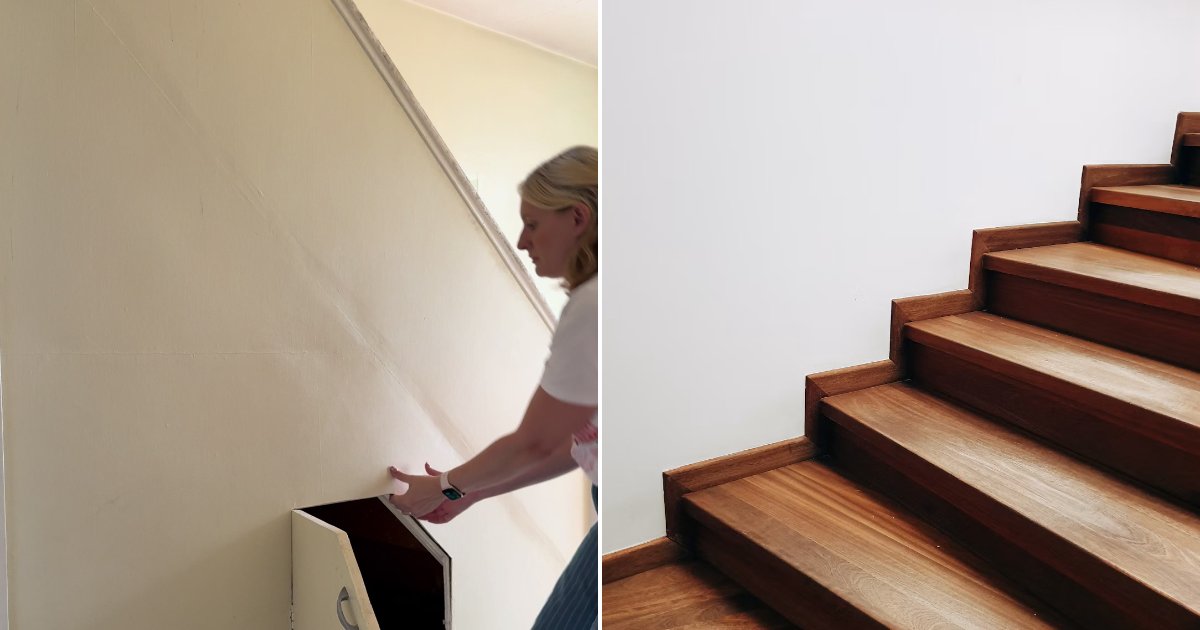
The discovery was shared by @houseoflittlewomen, who calls it the most amazing discovery she has made so far in the renovation.
@houseoflittlewomen
Tapping the wall to see what is behind it
The scene begins in the entryway of the home in natural daylight. Wearing a white t shirt and striped jeans, she works her way along the side of the staircase, prying off layers of hardboard and paneling. At one point she taps on the wall to check whether the spindles are there before going any further.
Every spindle is still there
When the board comes away, she finds a row of intact wooden banister spindles standing in their original places. She explains that they are the original 1930s stair bannisters, hidden since probably the 1960s or 70s when the hardboard was put up. Her excitement is obvious, and she moves straight on to the other side of the staircase to take the board off there too.
More original paneling in the hall
The surprises do not stop at the stairs. She removes more hardboard from an adjacent hallway entryway, then pries a flat outer board off the door of the cupboard under the stairs. Beneath it she finds matching wood paneling, which she calls the rest of the panelling. On screen she invites people to come back to see how she restores it, so the restoration itself is still to come, and how the finished staircase looks is not shown.
Why mid century cover ups hide so much
Covering up original woodwork with flat boards was a popular way to modernize a home in the middle of the last century. The result is that many older houses still have staircases, paneling and doors sitting untouched right behind a layer of hardboard. It is one of the most rewarding discoveries a renovator can make, because original wood details are expensive and difficult to reproduce.
Tips before you pull the boards off
- Tap along the wall and listen for a hollow sound or a change in rhythm that hints at a structure behind it, as she does.
- Remove the board slowly with a pry bar and work from an edge or corner so you do not gouge the wood beneath.
- Wear a dust mask and gloves, because old houses can contain dust, old paint and insulation behind a covering.
- If your home was built before 1978, have paint tested for lead before sanding or scraping any wood you uncover.
- Photograph the stairs before you start, so you can plan the restoration and match any missing pieces later.
- Stop and ask a professional if a board seems to be holding anything up. Not every wall covering is purely cosmetic.
Hidden original features are a reminder that an old house is worth a close look before you decide to replace anything. Sometimes the best renovation is simply taking away what was added later.
The parts of a staircase
The vertical posts she uncovered are often called spindles or balusters. They stand between the handrail on top and the stair treads or a bottom rail below, and together with the larger newel posts at the ends they make up the balustrade. Knowing the terms helps when you are searching for matching parts, ordering replacements or describing the work to a carpenter.
Common questions
Do old staircases meet modern code? Often they do not. Current building codes set rules for handrail and guard heights and for the maximum gap between balusters, and historic stairs were built before those rules. Before you alter a staircase, check with your local building department about what applies.
Can old finish be removed safely? Yes, but method matters. Chemical strippers need good ventilation and gloves, and sanding old paint can release lead dust. Test first, and consider a professional if the paint turns out to contain lead.
What if a spindle is loose or missing? A loose spindle can often be reglued and tightened. A missing one can be copied by a woodworker, or you may find a match at a salvage yard.
Try this at home: a gentle restoration plan
- Clean the wood with a soft brush and a vacuum to see its true condition.
- Test a hidden spot with mild soap and water before trying anything stronger.
- Check each spindle for looseness, cracks and signs of insects or moisture.
- Choose the least aggressive method that works, and keep the original finish where it is sound.
- Take before and after photos to keep a record of the work.
Uncovering is the easy part, and restoration is where patience pays off. Work in small sections, plan for dust control, and let the wood show you what it needs. Even a partial restoration can bring back much of the character of an entry.
Credit for the original post goes to @houseoflittlewomen on TikTok.
Leave a Reply