Seventy square feet is smaller than many walk in closets, yet one renter in New York City calls it home. The studio costs $1,400 a month, and its tenant gave a quick tour that shows exactly how every inch is being used.
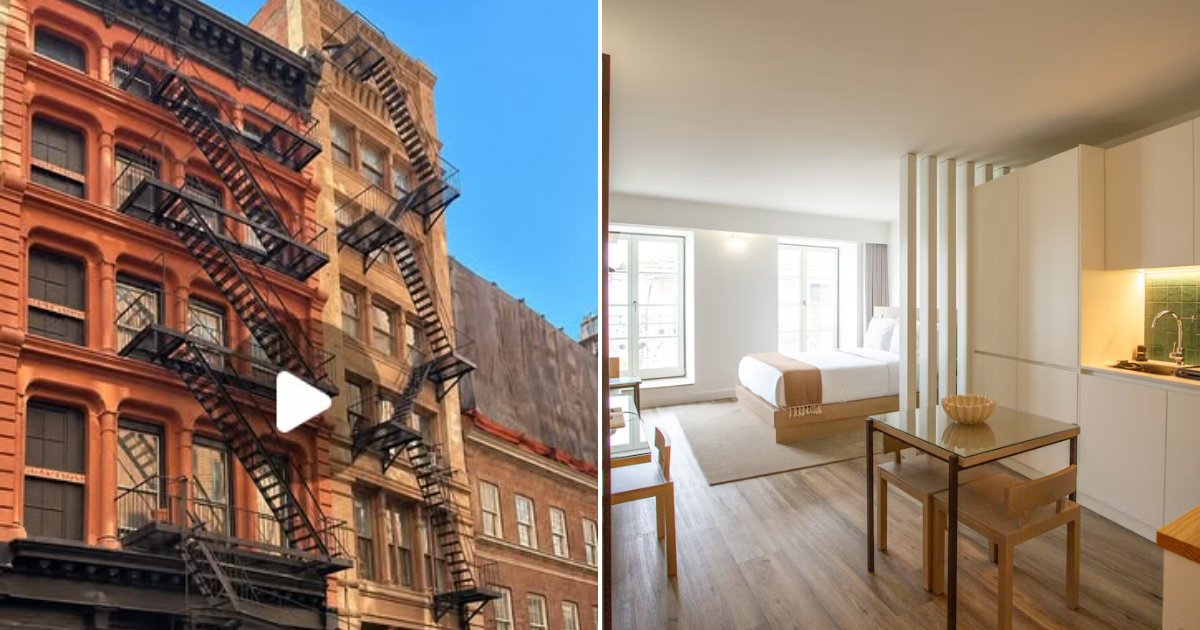
The tour was shared by @brightonpollard, who frames it as the experience of renting what is billed as the smallest apartment in the city.
View on Instagram
Stepping through the door
The tour begins in a residential hallway in front of a dark brown wooden door. The door is unlocked and pushed open, and a compact, brightly lit studio comes into view. Just inside is a sink, and nearby sits a small refrigerator and microwave station. At the far end, a couch faces a sunlit window. On screen, the tenant notes that the unit is only $1,400 a month and 70 square feet.
How the space is organized
With so little floor, the apartment goes up. A lofted bed platform is built directly above the entry door, which keeps the sleeping area off the floor and leaves room below for walking. A small white shelving rack holds plates and utensils, so the kitchen supplies stay within arm’s reach. The tenant takes a mirror selfie and flashes a peace sign before ending with a big smile and a cheerful “Okay.”
The tour is brief and does not show a bathroom or any storage beyond the shelves, so we cannot say how those needs are handled in a unit this size.
Ideas to borrow from a micro apartment
Few people will ever live in 70 square feet, but the principles apply to any small home.
- Build up, not out. A loft over a doorway uses space that would otherwise be wasted.
- Keep daily items on open shelving close to where you use them, such as dishes near the sink.
- Choose multipurpose furniture, like a couch that also works as a place to eat or work.
- Let natural light do the work. A window at the far end of the room makes a tiny space feel longer.
- Edit your belongings regularly. In a space this size, every item needs a home.
Small living is not for everyone, but it can be a practical way to afford a city address. A clever layout and a good sense of humor, as this tenant shows, can go a long way.
How big is 70 square feet?
Seventy square feet is roughly a room measuring 7 feet by 10 feet. A standard parking space is commonly around 9 feet by 18 feet, or about 160 square feet, so this studio is less than half the size of a single parking spot. Model residential building codes often list about 70 square feet as the minimum floor area for a habitable room, though local housing rules differ and depend on how a unit is classified.
Designing a very small room
Designers who work in tiny spaces tend to repeat the same handful of ideas. Each one is simple enough to try in any home.
- Use vertical space for storage, with tall shelves, wall hooks and hanging organizers.
- Divide the room into zones for sleeping, cooking and sitting, even if they are only a few steps apart.
- Pick a limited color palette so the room looks calm instead of cluttered.
- Use mirrors and light colors to bounce daylight around.
- Choose furniture with a job, such as fold down tables and storage under the bed.
Common questions
How do I compare rents fairly? Divide the monthly rent by the square footage. In this case, $1,400 across 70 square feet works out to $20 per square foot each month. The number helps you compare different units, though location, utilities and building amenities matter too.
Are lofted beds safe? They can be, but they need adequate headroom, a secure ladder or stairs, and a guardrail where there is a drop. Anything built into a home should be anchored well, and it is wise to ask the building owner what is allowed before you add one.
What if I cannot fit everything? Sort belongings into daily, seasonal and sentimental piles. Keep daily items within reach, and store the rest in a locker, a relative’s home or boxes under the furniture.
Try this at home: a small space reset
- Clear one surface completely and put back only what you use every day.
- Measure your walls from floor to ceiling to find unused vertical room.
- Add one storage piece that goes up, not out.
- Give every item a home, and return it there after each use.
- Review the room again in a month and remove anything you did not touch.
A small space asks for choices, and that can be freeing. When every item must earn its place, the home tends to feel more intentional.
Credit for the original post goes to @brightonpollard on Instagram.
More from Willow and Hearth
- Young first time home buyer is documenting his entire house hunting journey on camera
- Brand new home came with nothing but plain beige walls and a blank drywall box until one homeowner’s vision turned the exact same space into something unrecognizably cozy
- Husband is documenting every step of secretly recreating his wife’s entire Pinterest dream board inside their own home
Leave a Reply