A $1.7 million price tag sets certain expectations. Buyers picture flawless finishes, solid construction and the kind of attention to detail that a large number is supposed to buy. But when the home inspector behind @inspectionhome walked through one house in that price range, the problems started showing up right at the staircase.
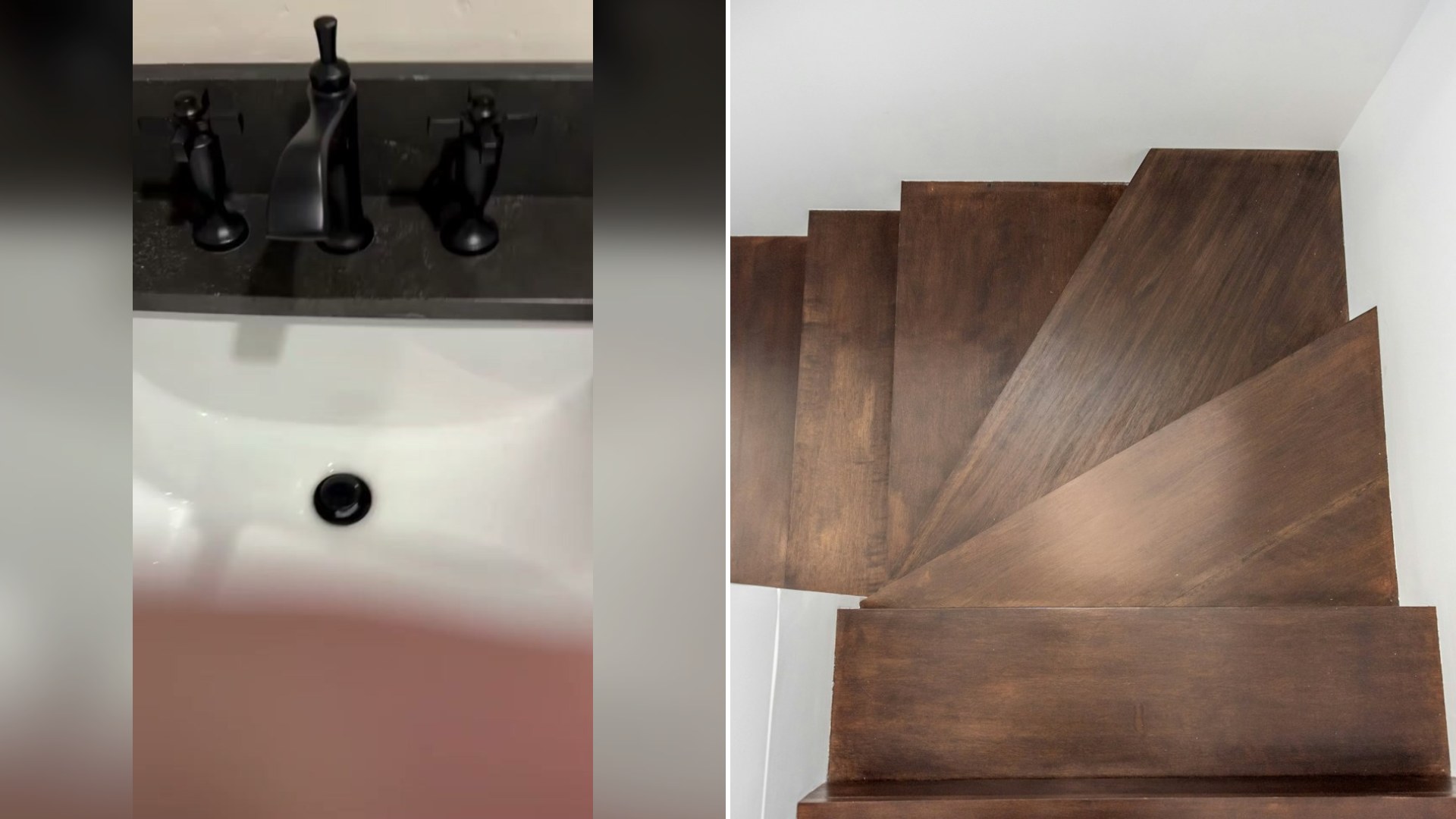
His room-by-room walkthrough pulled in more than 4 million plays, and it begins with a moment that no buyer wants to hear about: he nearly cut his hand on the railing. Here is what he reported, and what it can teach any homebuyer, whatever the price of the house.
@inspectionhome
Starting With the Stairs
The inspector says he happened to be holding the handrail while walking down the stairs when he felt something sharp. By his account, he almost cut his hand on it. A railing is the one part of a home that people touch automatically and without looking, and a sharp or unfinished spot on it is more than a cosmetic flaw. It is a safety issue, especially for children, older adults and anyone who relies on the rail for balance.
Loose Receptacles and Leaky Showers
From there he moves through the house, noting each problem as he goes. The first is an in-floor receptacle, the kind of outlet that sits flush in the floor of a living area. He says that if he had a dollar for every time one of these was loose, he would not be rich, but he would have around two or three hundred dollars. It is a joke, but it points to how often this particular detail is overlooked. A loose outlet is not secured properly to its box, and over time that can cause wear on the wiring and connections.
The bigger concerns are in the bathrooms. According to the inspector, the primary bathroom shower enclosure is not watertight and is leaking onto the floor. In the spare bathroom, the enclosure has missing grout between the tiles, and the tiles are also not sealed to the wall. He also points out that the tile around the shower spouts is poorly cut around the collar, which is the trim ring where the pipe comes through the wall. That gap has the potential to allow water to get back into the wall cavity.
Of everything on his list, this is the one that matters most over the long run. Water that escapes a shower can slip behind tile and into the framing, where it cannot be seen. Slow leaks inside walls are a common source of mold, rot and expensive repairs.
When Stone Is Not Stone
The inspector also draws attention to the exterior. He notes that what appears to be stone veneer is in fact vinyl, and from where he stands he can see the framing all the way down. Manufactured products have a place in modern construction, and many look convincing from the street. Still, buyers paying top dollar should know exactly what they are getting. The material list in your contract and the finish you see at the showing are not always the same thing, and an inspector can help you notice the difference.
Does a Higher Price Mean Fewer Problems?
It is natural to assume that a pricier house comes with higher standards. In reality, a home is built by many separate tradespeople working in sequence, and the final quality depends on how well each stage is supervised and checked. A large house simply has more rooms, more bathrooms and more details where something can be missed. That does not mean every expensive home has serious defects. It does mean that a high price is not a substitute for an inspection.
Inspectors often say that the most expensive house on the block can have the same type of defects as the least expensive, simply in larger numbers. Water in the wrong place and electrical work done in a hurry are not reserved for any one budget.
What Buyers Can Learn From This Walkthrough
You do not have to be an inspector to take away a few smart habits. Consider these:
- Run your hand along the railings. Check the entire length for sharp edges, rough spots and wobble.
- Test the showers. Run each one and then look around the base, along the outside of the enclosure and at the floor outside. Any dampness is a warning sign.
- Look closely at tile and grout. Gaps, cracks and missing grout let water in. Check where the tile meets the wall and around fixtures.
- Press on outlets and plates. A cover plate or outlet that moves is not secure.
- Ask what the exterior is made of. If it is described as stone or brick, find out whether it is the real thing or a manufactured product, and what that means for upkeep.
Bring Your Own Inspector
If a builder or seller offers to recommend an inspector, it is perfectly fine to choose your own. Look for someone licensed where your state requires it, ask for a sample report, and attend the inspection if you can. Seeing the problems with your own eyes makes the report much easier to understand, and you can ask questions on the spot.
Afterward, use the report as a negotiating tool. Many buyers ask for repairs or credits, and builders often fix items if they are shown in writing. At this price level, a few hundred dollars for an inspection is a small amount to spend on knowing what you are really buying.
Leave a Reply