The caption on this post sums up the job of a home inspector better than any brochure could: “I’m a home inspector, not a handyman. I just find the problems, I don’t create them.” The inspector behind @inspectionhome posted a quick tour of one brand new house, and the list of things he flagged drew more than 1.9 million plays.
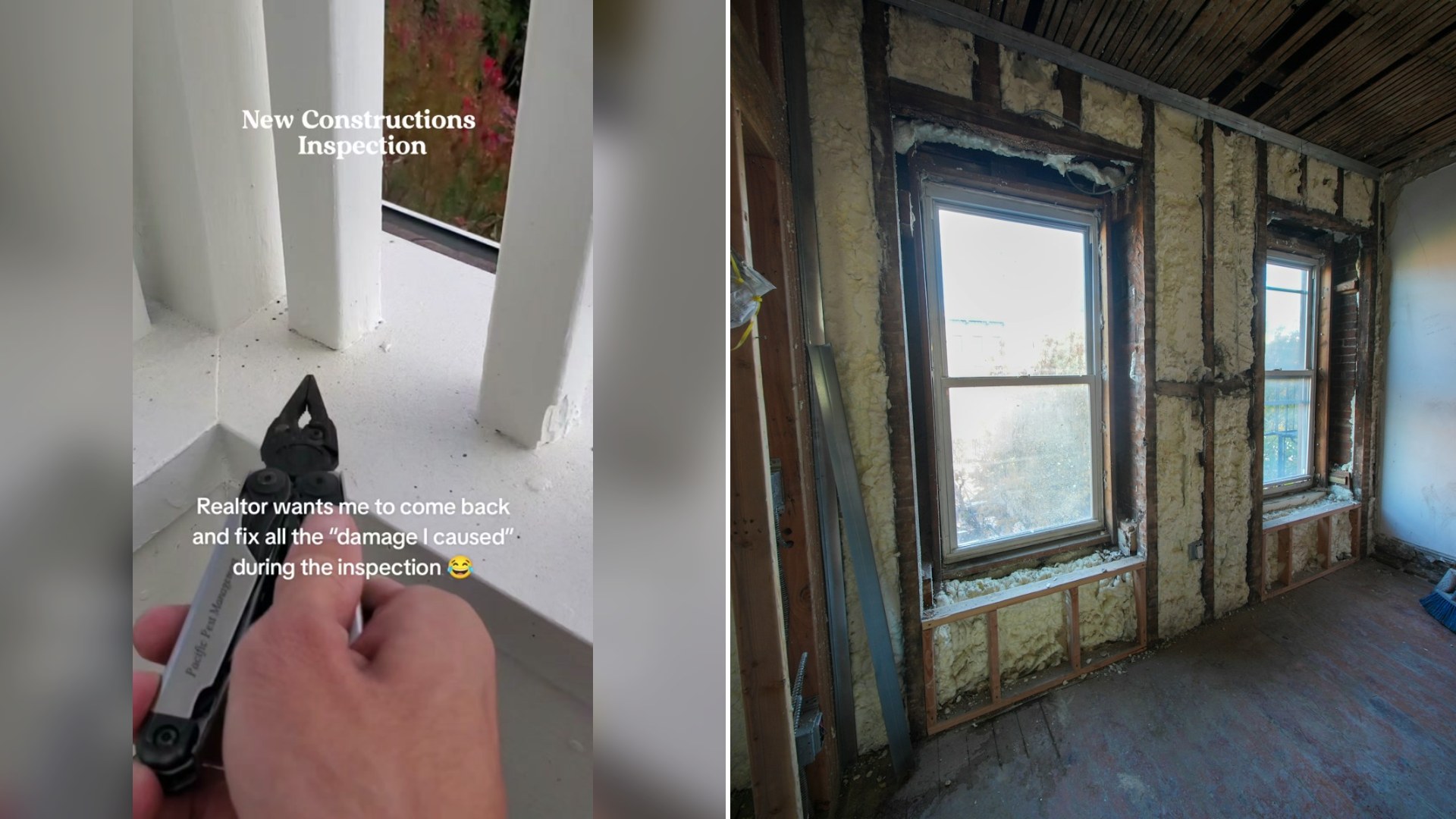
The house is new, so most buyers would assume it is in perfect shape. His walkthrough shows how many small mistakes can be built into a house, and how an inspector finds them with a few simple tools, including a golf ball.
@inspectionhome
Third Time’s the Charm
The walkthrough begins with a handrail bracket that does not work. With a bit of dry humor, the inspector says that third time is the charm when it comes to the placement of the brackets. Anyone who has watched a stair rail go in knows how this happens: a bracket is screwed into the wall, found to be in the wrong place or not into a stud, and then moved. Older holes are left behind, and a fastener that has been moved more than once may not hold as well as one set correctly the first time.
The Golf Ball Test
One of the more colorful moments is what the inspector calls the golf ball test. He places a golf ball on the soap shelf in a shower to see which way it rolls. A soap shelf should slope toward the drain, or at least toward the shower interior, so water runs off. In this case, the shelf slopes toward the wall. Water that collects on a shelf and drains toward a wall can seep into the joints and cause damage behind the tile over time. It is a cheap, simple test, and it is easy to try in your own bathroom.
An Open Neutral in the Pantry
Next, he checks an outlet in the pantry and finds what he calls an open neutral. The neutral wire is part of the circuit that completes the flow of electricity. If it is open, it means the connection is incomplete. That can cause an outlet or the devices plugged into it to behave strangely, and it can be a safety problem. The fix is straightforward for an electrician, but a homeowner would probably never notice it without a tester.
Missing Insulation, Seen With Heat
Then he brings out a thermal imaging camera. Above one window, the camera shows an orange square. In this type of scan, orange tends to mean heat is moving through that spot, and in his view that most likely means insulation is missing inside the wall. Insulation gaps are invisible once drywall goes up. Thermal imaging lets an inspector see temperature differences on the surface, which can hint at what is behind it. Missing insulation means higher energy bills and rooms that are harder to keep comfortable.
Safety Glass and Flashing
The inspector explains a rule that few homeowners know. Windows installed within 24 inches of a door are generally required to have safety glass, also called tempered glass, because they are in a spot where a person could stumble into them. A good way to tell, he says, is to look for a small etched mark in one of the corners. On this window, that mark is missing.
He then looks at the flashing above the windows. Flashing is a thin material that directs water away from the top of a window. He says the Z flashing in this house is in the wrong location, and that it should run on top of the trim. Where flashing sits matters because it determines where rainwater goes. He also notes damaged trim that needs to be repaired.
Where Does the Moisture Go?
Last, he talks about homes insulated with spray foam. In very tight houses, there is little natural air exchange, so he says there has to be a way to control humidity. In this house, he looks at the bathroom exhaust vent and asks where all the moisture is going. In his view, it is getting trapped. A bathroom fan that does not exhaust properly can leave warm, damp air inside the house or inside the attic, where it may lead to mold and wood damage.
A Homebuyer’s Cheat Sheet
You can borrow a few of these ideas when you tour a new or newly renovated home:
- Roll a marble or golf ball on shelves and shower floors to see which way water would travel.
- Buy an outlet tester. They cost only a few dollars and show common wiring faults at a glance.
- Look for the etched label in the corner of glass near doors, tubs and showers.
- Run the bathroom fans and hold a tissue near the vent. If it does not pull the tissue, ask why.
- Check for cold or hot spots on walls and ceilings. An inspector can use a thermal camera to confirm.
Why the Message Matters
The inspector’s caption makes a fair point. He did not create these problems, and none of them are the buyer’s fault. But if no one finds them before closing, the buyer inherits them. A single bracket or outlet is not a reason to walk away from a new home. Together, though, a list like this gives you something to bring to the builder, in writing, before you sign.
It also pays to ask the builder how and when each item will be corrected, and to request a re-check of the work afterward. Small defects are far easier to fix before move-in, while the walls are still accessible and the crews are still on site, than after the furniture and landscaping are in place. A fair builder will welcome a clear, written list.
Leave a Reply