Few things bother a new renter like a mystery on the bathroom wall. You have just moved in, you are still unpacking boxes, and then you notice something yellow showing up on the wall again and again, as if it were about to drip. That is the situation described by @ukinspection in a short clip that has been played more than 2.7 million times.
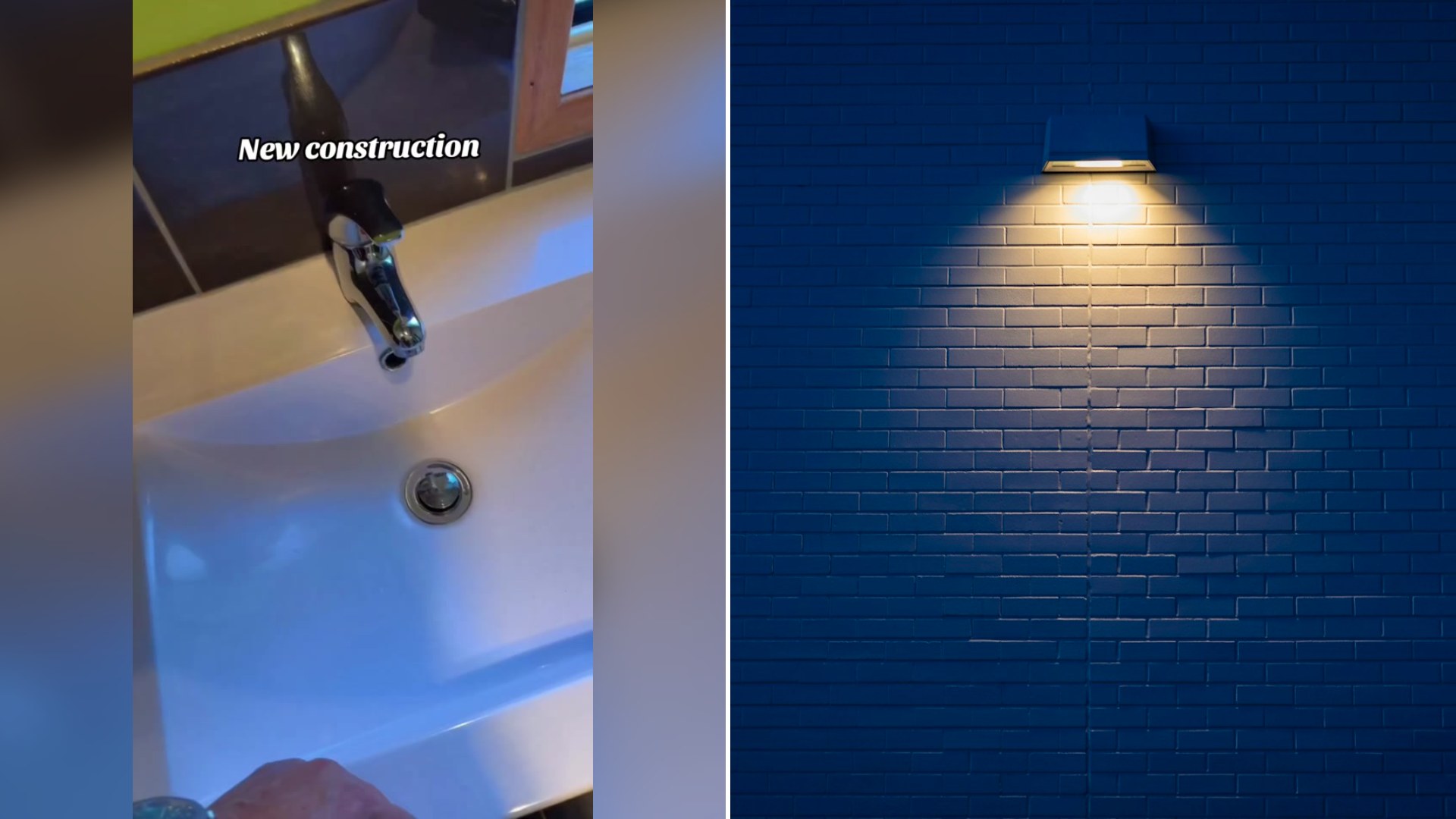
The man in the clip explains that he recently moved into an apartment, and that in the bathroom he “kept seeing stuff almost drip on the walls.” He describes it as “this yellow stuff” that “would just show up.” Then he remembers a tool he got for work: a flashlight with an ultraviolet light. He switches it on and starts looking around the room. He asks what is on the back of the door, notes that it goes “all the way around,” and says, “This is nuts.” He finishes by saying it is “all over the walls, all the way around.” The caption, which reads “Home inspection,” carries hashtags for new construction and new home.
Here is an important point of honesty. The video does not say what the light revealed, and it does not say what the yellow substance actually is. The man does not name a cause, and we will not guess at one. What we can do is walk through what a UV flashlight can and cannot tell you, what commonly causes stains and drips in bathrooms, and what a renter can sensibly do about it.
Here is the original post.
@ukinspection
What a UV flashlight can show you
An ultraviolet flashlight, often called a blacklight, makes certain materials glow, or fluoresce, in a way that ordinary light does not. People use them around the home to find pet stains, since urine, which contains phosphorus, shows up under UV and appears yellow, and to find leaks by adding a fluorescent dye to a system and looking for glowing spots in a dark room. Extended exposure to UV light can cause skin irritation, so it is wise to avoid direct eye contact and read the instructions first.
The home inspection reference site InspectApedia describes using a black light to screen buildings for pet or human urine, even where no stains are visible, and passes along a user’s report that some mold fluoresced under a cheap UV flashlight. It also stresses that the color alone does not identify what you are looking at, and that UV light cannot effectively kill mold.
So the main lesson is that a glow tells you that something is there, not what it is. Many ordinary products fluoresce, including some cleaners, detergents, paints, oils and soaps. A UV light is a screening tool. It can point you toward a problem, but it cannot be the final word.
Why bathroom walls develop stains and drips
Bathrooms are the most moisture-heavy rooms in a home, and moisture is behind most wall problems. The Environmental Protection Agency’s guide to mold, moisture and your home says plainly that the key to mold control is moisture control. Its advice includes the following.
- Ventilate. Run a fan or open a window when showering. If mold keeps returning in the bathroom, increase ventilation and clean more often.
- Dry things quickly. Water-damaged areas and items should be dried within 24 to 48 hours, because mold will usually not grow if wet materials dry within that window.
- Control humidity. Keep indoor relative humidity below 60 percent, ideally between 30 and 50 percent.
- Watch for condensation. Insulating cold pipes can prevent moisture from forming on them.
Drips and stains can also come from a leak above the room, a faulty seal around a tub or shower, or a plumbing problem inside the wall. A discolored patch that returns again and again is a sign that a water source has not been solved.
What a renter can do
If you rent and notice something unusual on the walls, you do not have to solve the mystery yourself. The EPA guide says renters should report plumbing leaks and moisture problems to the building owner, manager or superintendent right away. If persistent water problems go unaddressed, it suggests contacting local, state or federal health or housing authorities.
A legal-aid handout from MassLegalHelp offers a sensible approach for getting repairs made. It is specific to Massachusetts, so your state’s rules may differ, but the basic steps are useful anywhere.
- Put the problem in writing. Email or text works. Describe the issue and ask when someone can come to fix it.
- Document everything. Take dated photos or videos and keep copies of all your messages.
- Follow up. If the landlord does not act, ask your local board of health or housing office about an inspection.
- Know your protections. The handout notes that in Massachusetts it is illegal for a landlord to evict you or raise your rent in retaliation for requesting repairs in writing. Check what applies where you live.
Should you clean it yourself?
That depends on what it is. For mold, the EPA says a moldy area smaller than about 10 square feet can usually be handled by the occupant, while larger areas, contamination from sewage or other dirty water, and suspected problems in the heating and cooling system call for a professional. If you do clean, the agency recommends wearing gloves, goggles and an N-95 respirator, fixing the leak first and drying everything completely. It also says routine use of bleach is not recommended and warns never to mix bleach with ammonia-based cleaners. If you have health concerns, talk with a health professional first.
But if you are renting and the cause is unknown, it is usually best to hold off on scrubbing. Cleaning away a stain can erase evidence that helps you prove there is a problem, so photograph it first and let the landlord know.
A good habit for any new home
This story is a good reminder to take a careful look at a place when you first move in. Walk through each room with a flashlight, look at the ceilings and corners, check under sinks, and take photos of anything that seems odd. Do it in the first few days, and keep the pictures with your lease. If a problem shows up later, you will have a record of what the place looked like when you arrived.
As for the man in the clip, he left us with a cliffhanger, and we cannot say how the story ended. But his curiosity, and a flashlight from work, turned a small bathroom puzzle into a lesson every renter can use.
Leave a Reply