When the garden starts to wind down, the real work of stocking the pantry begins. Becky, the host of the channel @AcreHomestead, spent a long day in her kitchen turning the season’s tomatoes, tomatillos and peppers into two canned staples, red enchilada sauce and tomatillo salsa verde, and made a batch of homemade tortillas along the way. Her goal, as she explains at the start, is to turn this year’s tomatoes into convenience items that sit ready on the shelf.
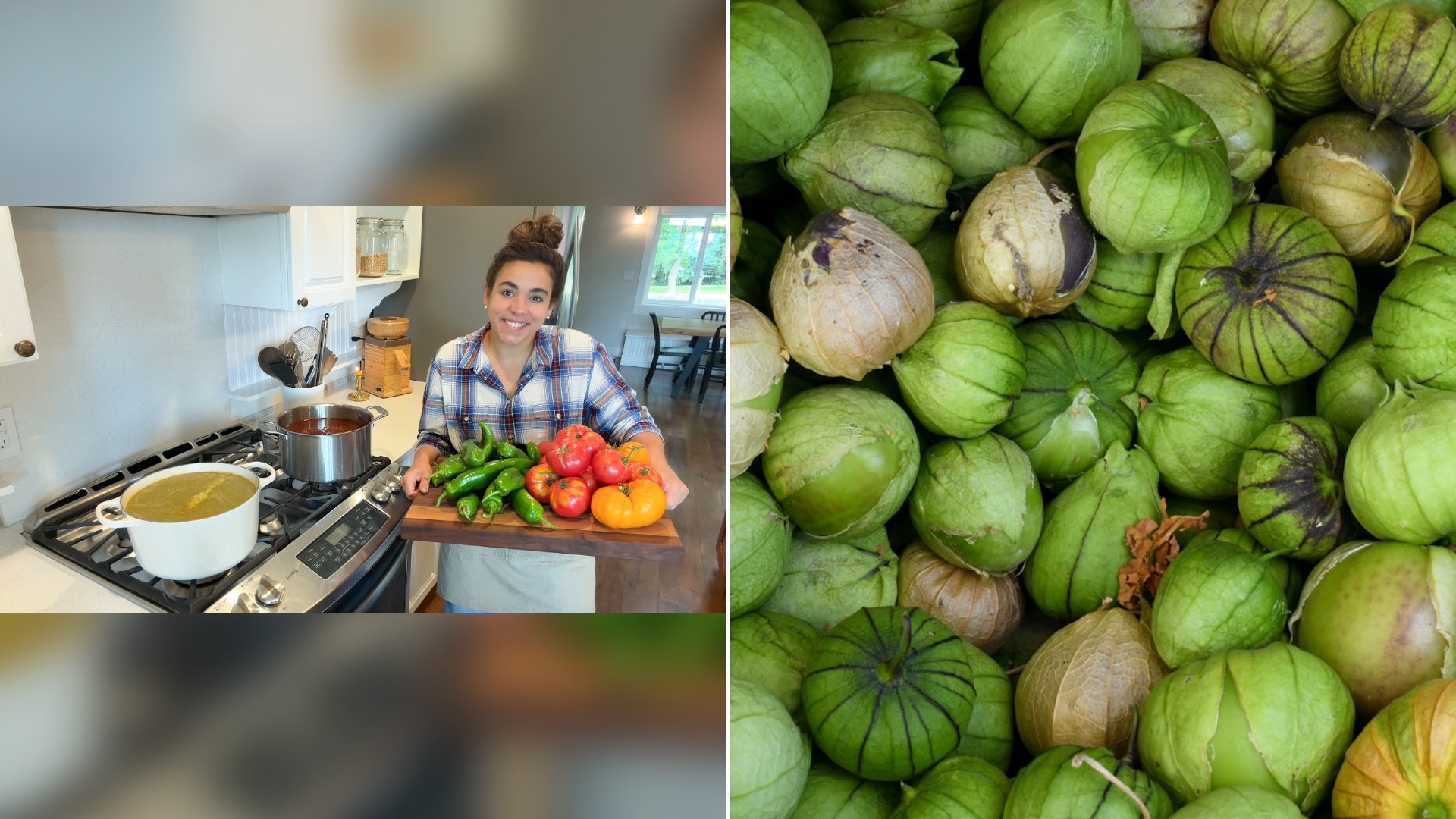
The Garden Supply
Becky says the garden is “starting to close up shop,” though she is still finding zucchini and expects two more big tomato harvests, along with more peppers and the dried beans. The tomatillos had a tough year. She bought starts, and she says the plants came in yellowish rather than bright green but taste like green tomatoes. To make up the difference she also bought tomatillos at the store, because she wanted enough for a full year.
The salsa verde matters in her house. It is her husband’s favorite, she says, and she was down to one jar and rationing it. Both recipes come from the Ball canning website, and she makes the red sauce at one and a half times the recipe, which is written to yield eight pints.
Red Enchilada Sauce
The red sauce starts with dried chilies. Becky uses 18 of them, six of a sweet, raisiny variety and the rest California chilies. She de-stems and de-seeds them, toasts them briefly in a dry pan, and warns that burnt chilies turn bitter. Then they simmer in water for 10 to 15 minutes.
The rest of the pot is hearty. She uses about 7.5 cups of chopped onions and nine cups of fresh diced tomatoes, chosen over canned so she does not have to open jars she already put up. Garlic, oil, a cup of dark brown sugar, chili powder, salt, freshly ground cumin and a reduced amount of crushed red pepper round it out.
Becky says this time she slowed down on purpose. She blends the chilies with some of the soaking liquid and pushes the puree through a sieve with a ladle, then blends the tomato and onion mixture and strains that too, to remove seeds and skins. “I’ve slowed down and I realize you’re going to get a better product,” she says. Her tomatoes were a yellow and orange heirloom called pineapple and a red hybrid, both pulpy rather than seedy. After tasting it twice and adding more salt, she calls it “probably the best enchilada sauce I’ve ever had.” She plans to use it on a slow cooker pork roast and as a pozole base.
Tomatillo Salsa Verde
The green sauce is the easy one, and she says so. In a big pot she combines frozen garden tomatillos with the store bought ones. The recipe calls for two pounds per batch for two pints, and she multiplies it by four. Twelve cloves of garlic, cilantro, cumin, salt, red pepper flakes, vinegar, lime juice and peppers go in, with two pinches of pepper flakes, which is less than called for. After a simmer of about ten minutes, she blends it with a stick blender. There is no straining, which she calls much more straightforward than the enchilada sauce, and she uses it as a green enchilada sauce as well.
Peppers, Tortillas and the Canner
She also roasts hot green peppers under the broiler until they blister, steams and peels them, removes the seeds and freezes them in bags of about four ounces. She says she burned the parchment and will use foil next time.
For the tortillas, she mixes four cups of flour with baking powder, salt and heavy cream in place of fat, lets the dough rest 20 minutes and portions it into balls, cooks them on a griddle and steams them in a towel so they stay soft.
For canning, she says she fills the pint jars with red sauce leaving one inch of headspace. The pressure canner is vented for ten minutes and she processes the pints for 50 minutes at her pressure, followed by a slow depressurizing of about 15 to 20 minutes. The salsa verde goes in a water bath for 20 minutes.
The Final Count
By the end of the day, she says she has about ten jars of salsa verde plus the one old pint, which equals a year’s supply at one jar a month, and 12 pints of red enchilada sauce. Her dinner plan is chicken from the air fryer with the salsa verde, lettuce, pickled serranos and red onions, sour cream and cheese. She will freeze the leftover tomatoes for a later crushed tomato day and says there will be no more marinara this year.
Canning Tips for Beginners
Becky’s day is a good reminder of how a few hours of work can fill a pantry. If you want to try something similar, these habits help.
Use tested recipes. Canning is food safety, not improvisation. Stick to recipes from sources such as the Ball website or the National Center for Home Food Preservation, and do not change the acidity or the amounts of low acid ingredients like onions and peppers. Becky’s recipes come from Ball, and she notes the National Center as a free resource.
Match the method to the food. Low acid foods generally need a pressure canner, while high acid foods can often go in a water bath. If you do not want to buy a canner, freezing the sauce is a safe alternative, as she mentions for the enchilada sauce.
Prep before you start. Chop, measure and set out jars and lids first. Becky admits that the dishes piled up and she had to reset her kitchen midway, which is normal on a big canning day.
Follow headspace and processing times for your altitude. Times and pressures change with elevation, so check a trusted chart instead of copying someone else’s numbers.
Label and rotate. Mark each jar with the date and recipe, and use the oldest first.
Why This Kind of Day Matters
A shelf of sauces and salsa means weeknight meals take minutes. It also makes use of every bit of a harvest, including the fruit that arrives all at once. Becky’s mix of garden produce, store bought backup and patient technique shows that you do not need a perfect garden to eat from your own shelves.
Leave a Reply