The house has been maintained really well, so there should not be any problems. Anyone who has ever bought a house has heard some version of that sentence. Home inspector Frank heard it from a realtor before this inspection, and the reaction was a dry “Well, I’ve heard that before.” What came next, on a 1970s house, is a long list of reasons to never take a seller’s or an agent’s word as the final word.
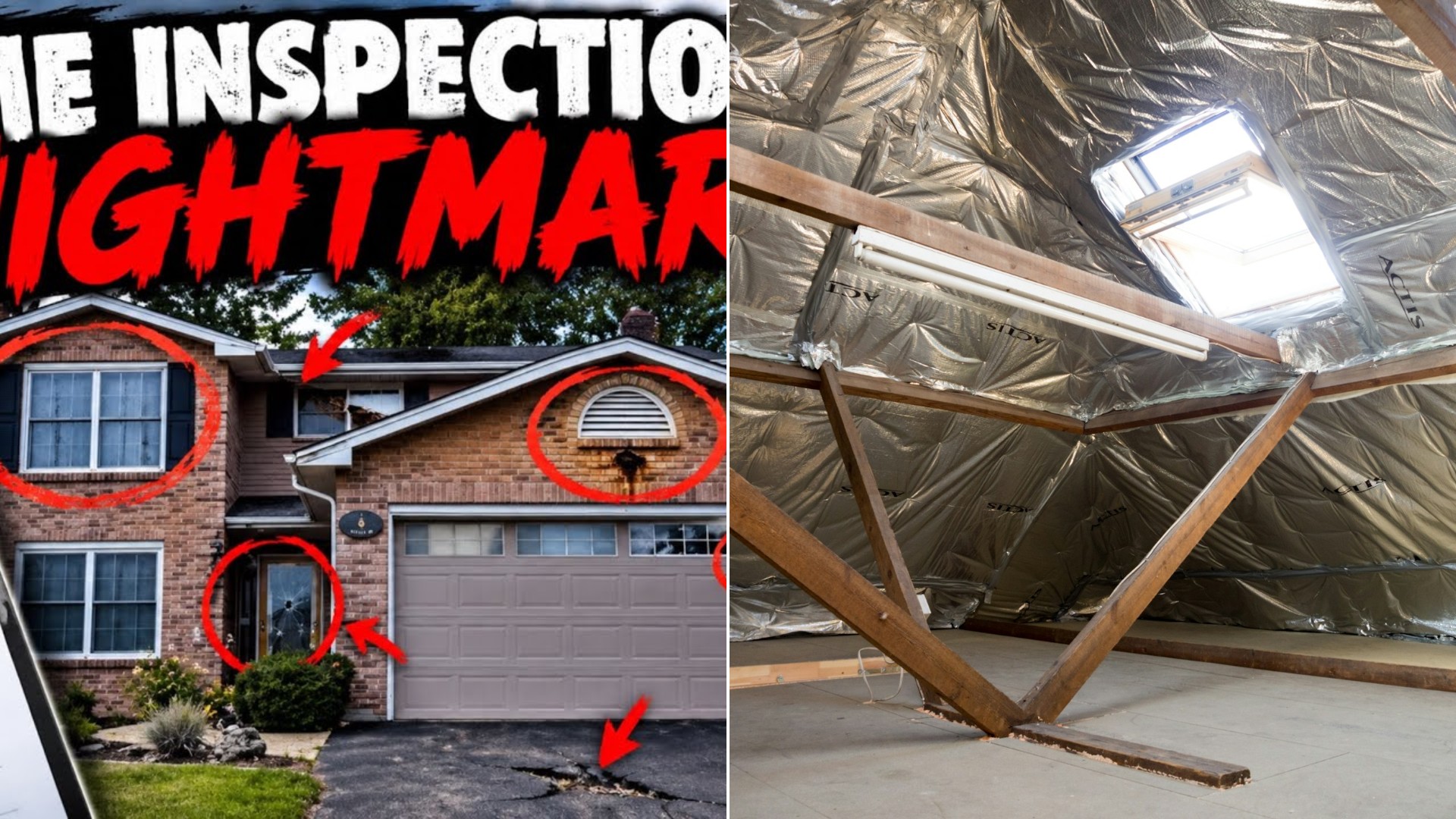
The inspection comes from the YouTube channel Home Inspection Nightmares, in a video called “HORRIBLE HOUSE FULL of DEFECTS.” Frank, an inspector with more than ten years of experience in Canada, walks the property room by room and calls out what turns up.
An Air Conditioner Built Into the Garage Door
The first surprise is at the side door of the garage, where an air conditioner has been built right into the door. Frank’s verdict: “That’s new.” The unit is quite dirty, and Frank says there will be no trying out that air conditioning door, because a stack of flooring is sitting in front of it.
That is not the only oddity in the garage. A vent coming out of it is completely open, and the inspector wonders what is to stop birds or a wasp from getting in. There is an open junction box in the garage ceiling, and the lights do not work. A gas heater in the garage vents out through a pipe that looks plugged up, and there is a rusted hole in the duct. As Frank puts it, that is not going to do any good when you are trying to vent gases out of the garage.
The door between the garage and the house has two problems of its own. It has no self-closer, and it has a cat door. Frank explains that neither is allowed, because gases from your car can come through into the house.
Spray Foam in Every Hole
Inside, the inspector asks a question many buyers would ask: why did somebody seal the drywall with spray foam? There are holes with foam in them here, and more there. In Frank’s words, this person “went crazy with the spray foam.” Got a hole in the drywall? Plug it with spray foam. Need to seal up a vent? Spray foam. Even a post was sealed with the stuff.
Spray foam is a handy product in the right place. It is just not a cure-all for every gap, and a house patched that way tells an inspector a lot about how repairs were handled over the years.
The Rest of the Problem List
The inspection did not stop at the garage and the foam. Here is more of what Frank flagged, inside and out:
- Level grading near the house, with moss growth, which points to water ponding there.
- A fence at the back of the house leaning inward.
- A chimney with no cap, which lets squirrels and rain get in.
- The main water line coming into the house leaking.
- A furnace filter installed backwards, with the arrows pointing the wrong way.
- Basement flooring that, as Frank says, “needs replacing.”
- No handrail on the basement stairs.
- Several reversed receptacles, one after another.
- A receptacle by the bathroom sink that is not GFCI protected.
- A bathroom vent exhausting into the attic.
Put it all together and you have a house that a realtor described as well maintained. The gap between that description and what the inspector found is the whole point of the story.
What Buyers Can Learn From This
A realtor’s comment, however well meant, is not an inspection. If you are buying a home, a few habits can protect you.
- Hire your own inspector. Pick someone who works for you, not for the seller or the agent.
- Go to the inspection if you can. Seeing the problems in person, and hearing the explanation, is worth far more than reading about them later.
- Read the whole report. Safety items, such as open junction boxes, blocked vents and missing handrails, deserve a close look. So do water issues like a leaking main line or poor grading.
- Ask for repair quotes before you decide. A long list of small items can add up, and some of them, like heating vents and electrical work, are best left to licensed professionals.
- Use the report to negotiate. If the findings are serious, you can ask the seller to fix them or adjust the price, or you can walk away.
A Few Things You Can Check Yourself
You do not need to be an inspector to spot some of the same warning signs on a walk-through. Look at whether the ground slopes toward or away from the house. Check that downspouts and vents are open and not clogged. See whether bathroom fans actually vent outdoors. Notice whether stairs have handrails, and whether outlets near sinks have the test and reset buttons that mark a GFCI.
These checks are no substitute for a professional. They simply help you ask better questions and pay attention to the details a quick tour might skip.
The lesson from the 1970s house is simple. A seller might truly believe the home has been looked after. A real estate agent might be passing along what they were told. But an air conditioner built into a garage door and spray foam stuffed into drywall holes are exactly the kinds of things only a careful inspection brings to light. Before you sign anything, find out what is really behind the walls, under the floors and inside the garage.
More Stories You May Like
- Inspector Checks a Brand New Home Before the Drywall Goes Up and Finds the Bathtub Filled With Dirty Water, Sawdust and Construction Trash
- Home Inspector Finds A Gas Meter With A Broken Top Held Together With Tape, Then Learns Nobody Ever Called The Gas Company To Fix It
- Homeowner Cleaning Out The Basement Notices A Damp Spot, Pulls Off A Section Of Wall, And Finds A Hidden Door Framed In Wood Behind The Block
Leave a Reply