Some inspections come with surprises before anyone opens a door. This one came with a skunk. Home inspector Frank wonders aloud whether a skunk is good luck or bad luck for an inspection, then adds a warning that duct tape does not fix everything. By the end, the inspector had found a dishwasher hose that looked chewed through, water on the kitchen floor and mold growing in the attic.
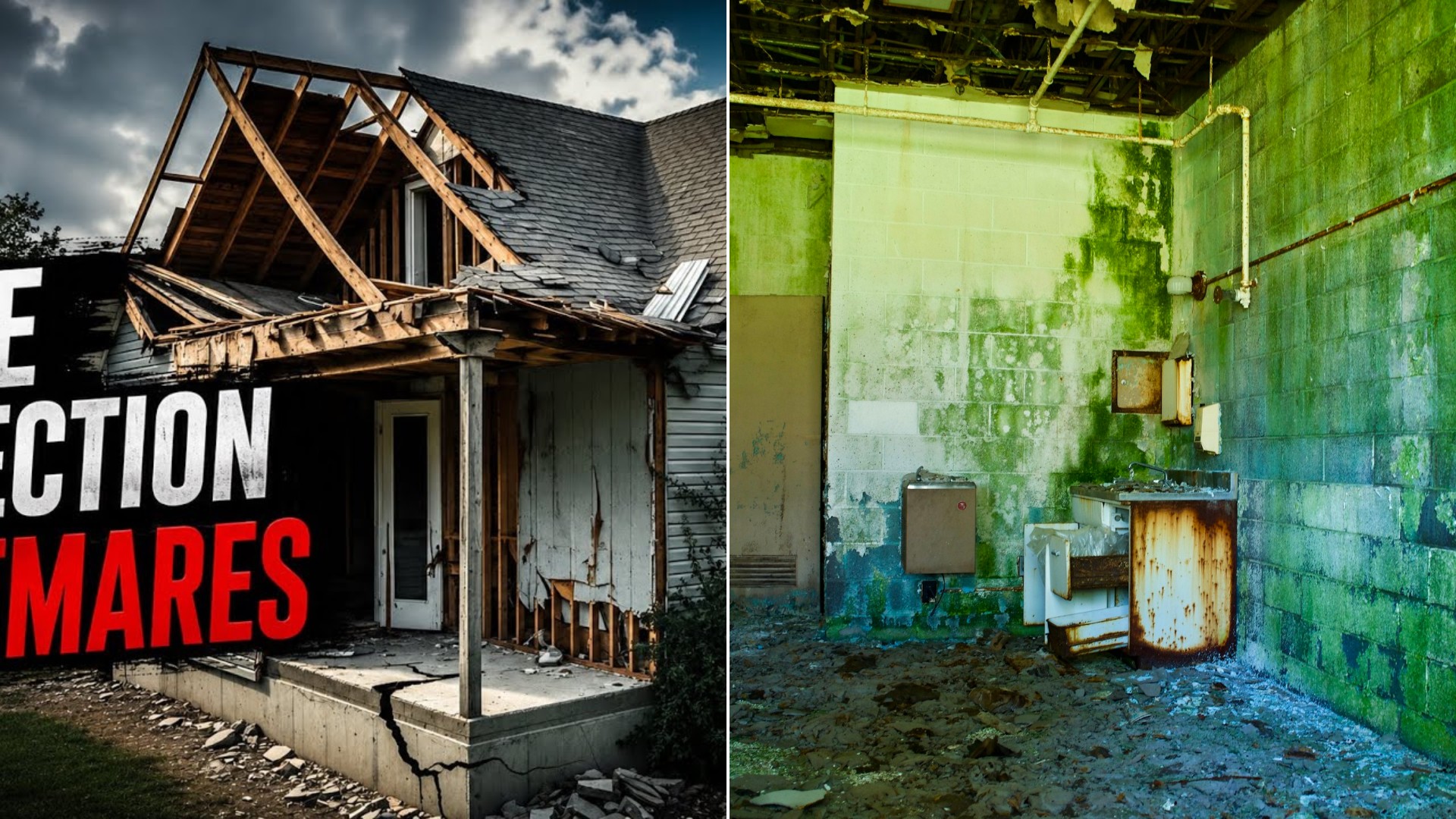
The walk-through comes from the YouTube channel Home Inspection Nightmares, in a video called “House Loaded with PROBLEMS – Shocking Home Inspection Defects FOUND!” As Frank puts it up front, the house has a lot of problems, “surprisingly, a lot of problems.”
The full video is on YouTube if you want to follow along.
Outside: Steps, Spouts and a Shed
The trouble begins before Frank gets inside. The steps have no handrail. The downspout has no extension to carry water away from the house. The shed looks good from the outside, so Frank checks the inside, and the reaction is “Oh boy.” There is a little bit of a hole in the roof. “Yikes.”
The screen door is off its track. The caulking around the windows is starting to peel away. None of it is dramatic on its own, but each item is a small door left open for water, drafts or pests.
A Shower That Goes Hot, Then Off, Then Cold
Inside, the shower faucet handle is a little loose and does not work properly. Turn it and the hot water comes on. Keep turning and it shuts off. Keep turning and the cold water turns on. Frank says a plumber definitely has to get that replaced.
There is also a stairway with an open side. Frank’s advice is that whenever you have an open side beside your stairs, it is always a good idea to have handrails. The inspector asks you to imagine a child coming through and falling down in there.
Gas Fumes and the Garage
The garage gets particular attention. Frank explains that a garage is supposed to be gasproofed, which means you cannot have holes in the ceiling. If you have your car running, you do not want the gases from the car coming into the house. There is a vent up in the ceiling, another vent over there, cracks in the walls and openings around the doors. Frank’s instruction is short: seal it all up.
The Chewed Dishwasher Hose
The kitchen turns up its own problem. Frank was running the dishwasher and noticed water at the base of the cabinet, water on the floor, and a hose that looks like it has been chewed through.
It is the sort of leak that can go unnoticed for a long time, because the damage happens out of sight inside the cabinet. By the time the floor is soft or a smell shows up, the repair bill can be much bigger than a new hose.
Cold Room, Windows and Mechanical Equipment
Frank also notes that the cold room vents look blocked, and that the cold room door is just a thin wooden door. There is a condensated window, which the inspector says might be time to replace, and then another one.
The furnace and water heater are hard to reach. As Frank asks, how is the inspector supposed to properly inspect the furnace and water heater with all that stuff in the way?
Mold in the Attic
The last stop is the attic, and it is not good news. Some of the party wall drywall tape is peeling off in the attic space, and it looks like there is mold growing. “That’s not right,” Frank says.
What You Can Learn From This House
A house like this is a good teacher, because so many of the problems are ones you can watch for in your own home. Here are some simple habits worth building.
- Check under the sink and behind the dishwasher. Look for water, soft cabinet bases and worn or damaged hoses. Catching a leak early is far cheaper than repairing the damage later.
- Keep handrails on every set of steps. Open sides on a staircase are a risk for children and adults alike.
- Seal gaps between the garage and the house. Car exhaust contains carbon monoxide, which is dangerous to breathe, so keep the wall and ceiling between the garage and living space well sealed.
- Look at your attic once in a while. If you ever see signs of mold, a remediation company can tell you what to do next.
- Keep mechanical equipment accessible. The furnace and water heater should have clear space around them, both for safety and so a technician can get to them.
- Do not use duct tape as a permanent fix. It can hold things together for a day, but it is not a substitute for the right repair.
Buying a House With a Long List
If you are looking at a house with this many items, the first question is how much of the list matters. Some are quick fixes, like a loose faucet handle or a screen door off its track. Others, like mold, a leaking hose or a gap in the garage ceiling, deserve a professional’s opinion before you commit.
Ask for quotes on the bigger items. Add them up. Then decide whether the price of the house still makes sense once you count what it will cost to make it sound.
That is the real lesson of Frank’s video: it is not about one dramatic defect, but about how many small ones can pile up under a single roof. A thorough inspection gives you the full picture before you sign, and that picture is worth far more than a skunk’s good or bad luck.
More Stories You May Like
- They Plan To Restore A 130 Year Old Abandoned Farmhouse With No Power, No Water And No Plumbing, And Will Close In The Porch For A Bathroom
- Inspector Checks a Brand New Home Before the Drywall Goes Up and Finds the Bathtub Filled With Dirty Water, Sawdust and Construction Trash
- Homeowners Find A Hidden Box In Their Attic Wall With A Key Rattling Inside A Mirror And Open It To A Burnt Ouija Piece And A Lock Of Hair
Leave a Reply