Home inspector Frank opens with a promise: you will not believe all the problems found in this older house. By the end of the walk-through, that promise holds up. A water heater is sitting on a stack of bricks, the garage door opener is plugged into an extension cord, and the attic is covered in mold. Frank’s closing line says it all: “Time to call the remediation company.”
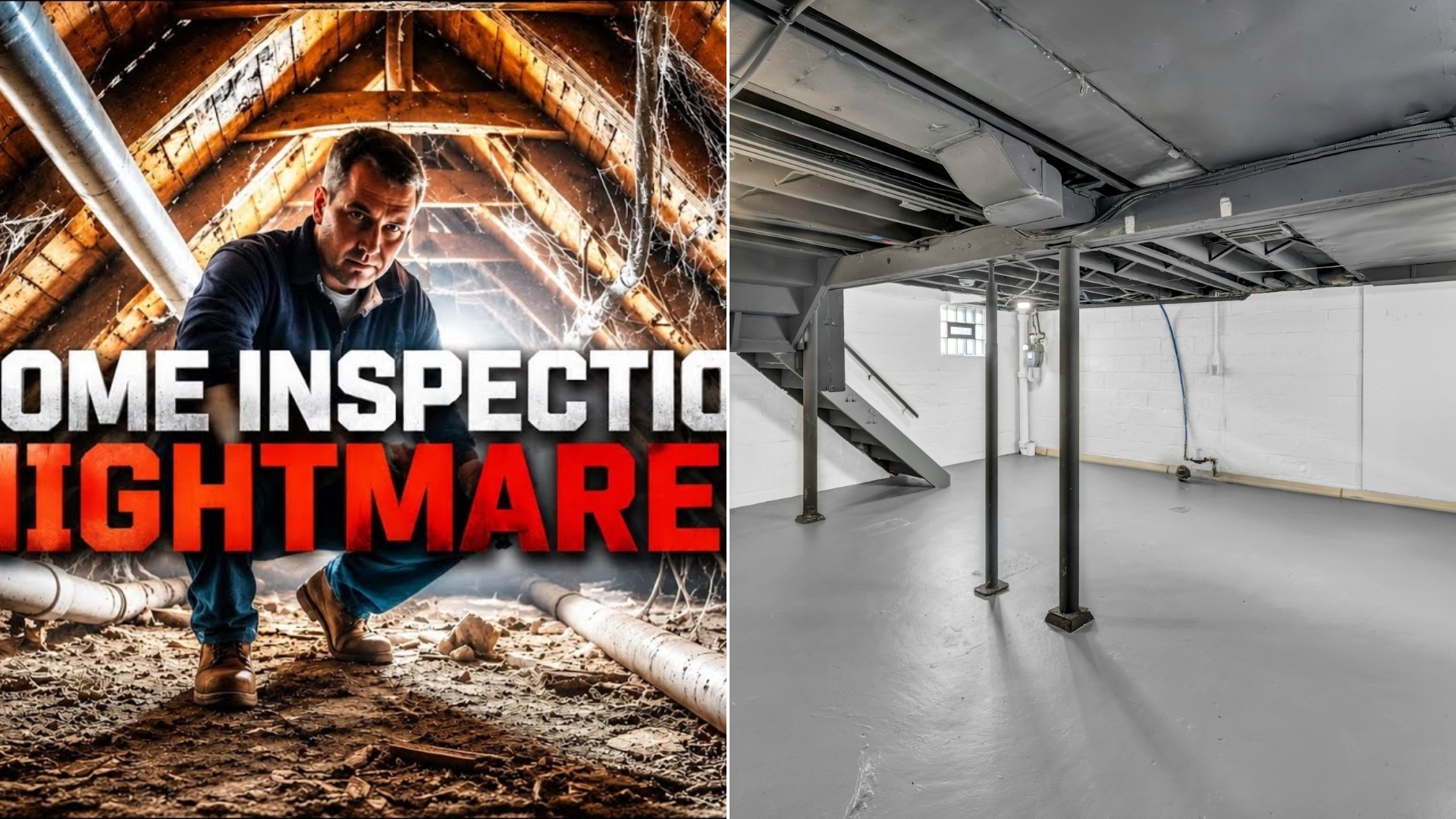
The inspection comes from the YouTube channel Home Inspection Nightmares, in a video titled “Inspecting OLD House Loaded with PROBLEMS – Shocking Defects FOUND!” Frank, working in Canada, goes from the yard to the attic and describes each flaw along the way.
Starting With the Outside
The first thing Frank notices is a tree growing pretty close to the house. It is probably time to trim it back so it does not damage the house. The bricks are not in very good condition, and there is some mortar cracking. The receptacle outside is pretty old and should be GFCI protected. A GFCI, or ground fault circuit interrupter, is an outlet or breaker that shuts off power quickly when it detects current leaking, which is why it is used near water.
Next, Frank points to the windows and doors, which sit pretty close to the ground. In Canada, Frank explains, there is snow. If snow piles up against windows and doors, it starts to melt and is going to leak into the house. The downspout extension is not long enough. One wire is not inside a conduit. The air conditioner looks quite old and is starting to corrode on the outside, and there is a foundation crack.
Garage Trouble
In the garage, there is a heat vent, and another vent up in the corner for some strange reason. The automatic door opener is plugged into an extension cord, which Frank says is not safe.
Wiring, Outlets and Ducts
The electrical issues keep coming. One electrical plug tests as reversed and is loose. Wiring is just sitting on the ground, which Frank says is probably not safe. Receptacles by sinks always need to be GFCI protected. The electrical panel does not have very good working space. There is no cover on a junction box. Whenever wires touch a duct, there needs to be insulation separating the two. Frank also finds yet another reversed receptacle.
The Water Heater on Bricks
Then comes the moment that gives the video its punch. “Yep, you’re seeing it right,” Frank says. “This water heater is sitting on bricks. That can’t be very stable.”
It is the kind of thing that looks like a quick fix to somebody and looks like an accident waiting to happen to an inspector. A water heater holds a lot of water and needs a solid, level base.
The furnace gets a mention as well. Its ABS vent is pretty old, and Frank usually recommends getting it replaced when you replace the furnace.
Moisture, a Missing Exhaust and Attic Mold
Near the foundation, Frank notices efflorescence and a bit of moisture staining at the bottom of a foundation wall. Efflorescence is the white, powdery mineral deposit left behind when water moves through masonry and evaporates, and it is a common sign of moisture. There is also a stove, but “where’s the exhaust?”
Finally, Frank checks the attic. “There was mold everywhere,” the inspector reports, and then comes the line about calling the remediation company.
What Homeowners Can Do About These Problems
Not every item on Frank’s list is expensive to fix, and some are well within reach of a careful homeowner. Others call for a licensed professional. Here is a simple way to think about it.
- Trim trees near the house. Branches and roots that crowd the house can cause damage over time.
- Extend your downspouts. Water that drains right beside the foundation can lead to moisture problems.
- Keep snow and soil away from windows and doors. If you live where it snows, piled snow melts and can find its way inside.
- Add GFCI protection near water. Outlets outdoors and by sinks should be protected, and an electrician can install it.
- Leave electrical work to the pros. Open junction boxes, loose wiring and reversed receptacles are not do-it-yourself projects for most people.
- Do not rely on extension cords for permanent equipment. A garage door opener should not be plugged into one.
- Give your water heater a proper base. Bricks are not the answer, and a plumber can tell you what is.
- Check the attic. Mold should be dealt with by professionals, as Frank says.
Why Older Homes Need a Closer Look
Older houses can be wonderful, but they carry a long history of repairs, some careful and some not. Over decades, wiring is added, vents are moved and equipment is replaced. Each change is a chance for something to be done the quick way instead of the right way.
A good inspection helps you sort out which problems are minor and which are serious. Even a short video like this one shows how many separate items an inspector can find in a single house.
If you are buying an older home, read the whole report, ask questions about every item you do not understand and get quotes for the work. Frank’s list of findings is long, and the best time to learn it is before the keys change hands.
More Stories You May Like
- Couple Restoring An 1888 Home Clears The Attic And Finds A Sewing Machine, A 1920s Chemical Company Ledger And A Glass Display Cabinet
- She Spends $40 To $50 A Week Feeding Two Working Adults, And Turns Spoiling Tomatoes Into Sauce, Soft Fruit Into Jam And Scraps Into Broth
- She Had Five And A Half Shelves Of Garden Onions And Two Weeks To Save The Bolted Ones, So She Made Powder, Pickles And Caramelized Onions For The Freezer
Leave a Reply