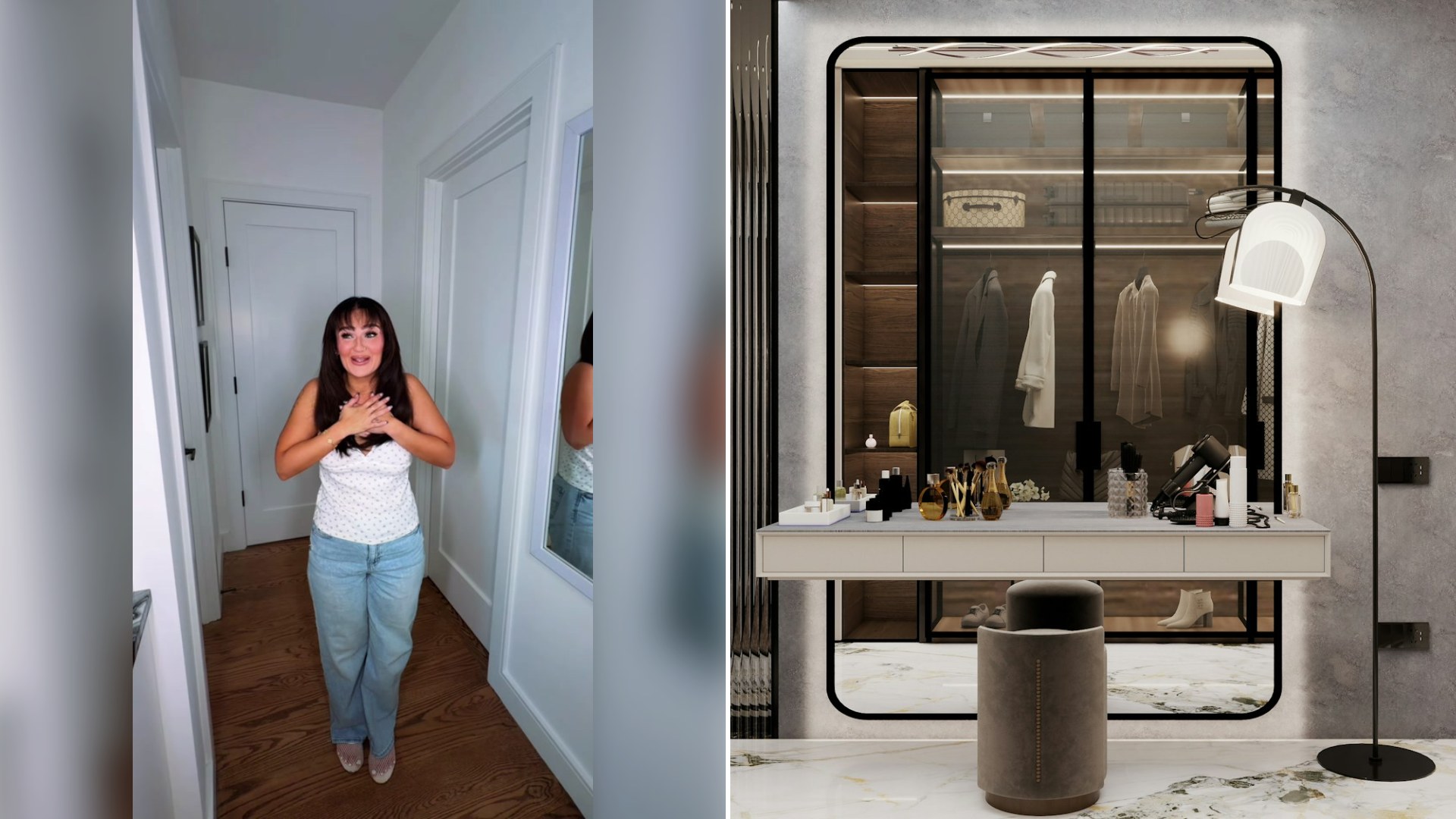
There’s a specific kind of magic in watching someone encounter a space built just for them, and creator @mikaylanogueira (TikTok) delivers exactly that with the unscripted, genuinely emotional moment she walks into her finished dream beauty room for the very first time, a space designed specifically around her content creation and glam routine.
The rise of the dedicated beauty room reflects a broader shift in how homes get designed around the people who actually live and work in them. Where a vanity corner tucked into a bedroom used to be the standard, content creators and beauty professionals alike are increasingly carving out entire rooms built around lighting, storage, and seating configured specifically for on-camera work, treating the space less like a bathroom extension and more like a small production studio.
What makes a first-reveal reaction video so much more compelling than a typical room tour is the genuine uncertainty baked into the format. The creator hasn’t seen the finished result, which means the camera captures a real-time, unfiltered response rather than a performance crafted after the fact. That unpredictability is exactly what a scripted walkthrough can never replicate, no matter how polished the design itself turns out to be.
There’s also a practical design story worth unpacking behind any well-built beauty room. Lighting is the single most important variable, color temperature, diffusion, and placement all have to be calibrated specifically for skin tones and makeup application rather than general ambiance, which means these rooms often require far more technical planning than their soft, pretty aesthetic lets on. A beautiful beauty room is, underneath the surface, essentially a small lighting lab.
Storage solves a second major design challenge unique to this kind of space. Beauty content creators often work with product collections that rival small retail inventories, and a well-designed room has to make that volume look curated rather than cluttered, through acrylic organizers, labeled drawers, and display shelving that turns product storage into part of the room’s visual identity rather than something hidden away.
This trend also says something about how home design has adapted to the realities of remote and creator-driven work generally. A decade ago, a home office meant a desk and a bookshelf. Today, for a meaningful share of working professionals, a home office might mean a ring light, a backdrop, and a room engineered around how it performs on camera, a shift that’s reshaping which rooms in a house get prioritized during a renovation or new build.
There’s an emotional dimension here too that goes beyond the practical function of the room. A space built specifically for someone, reflecting their work, their aesthetic preferences, their daily routine, carries a different weight than a generic guest room or a repurposed closet. The genuine tears or gasps that often accompany these reveal videos aren’t really about the furniture, they’re about feeling truly seen in how a space was designed.
It’s also worth noting how this kind of content serves as informal education for anyone considering a similar project. Viewers get to see real layout decisions, lighting setups, and storage solutions in a finished, functioning space, often more useful than a staged showroom display precisely because it was designed for actual daily use rather than for photographing well once and never again.
In the end, what makes this reveal resonate goes beyond the room itself. It’s a reminder that home design, at its best, isn’t about following a trend, it’s about building a space that reflects exactly how someone actually lives and works, and capturing the honest moment they realize that’s precisely what they got.
Leave a Reply