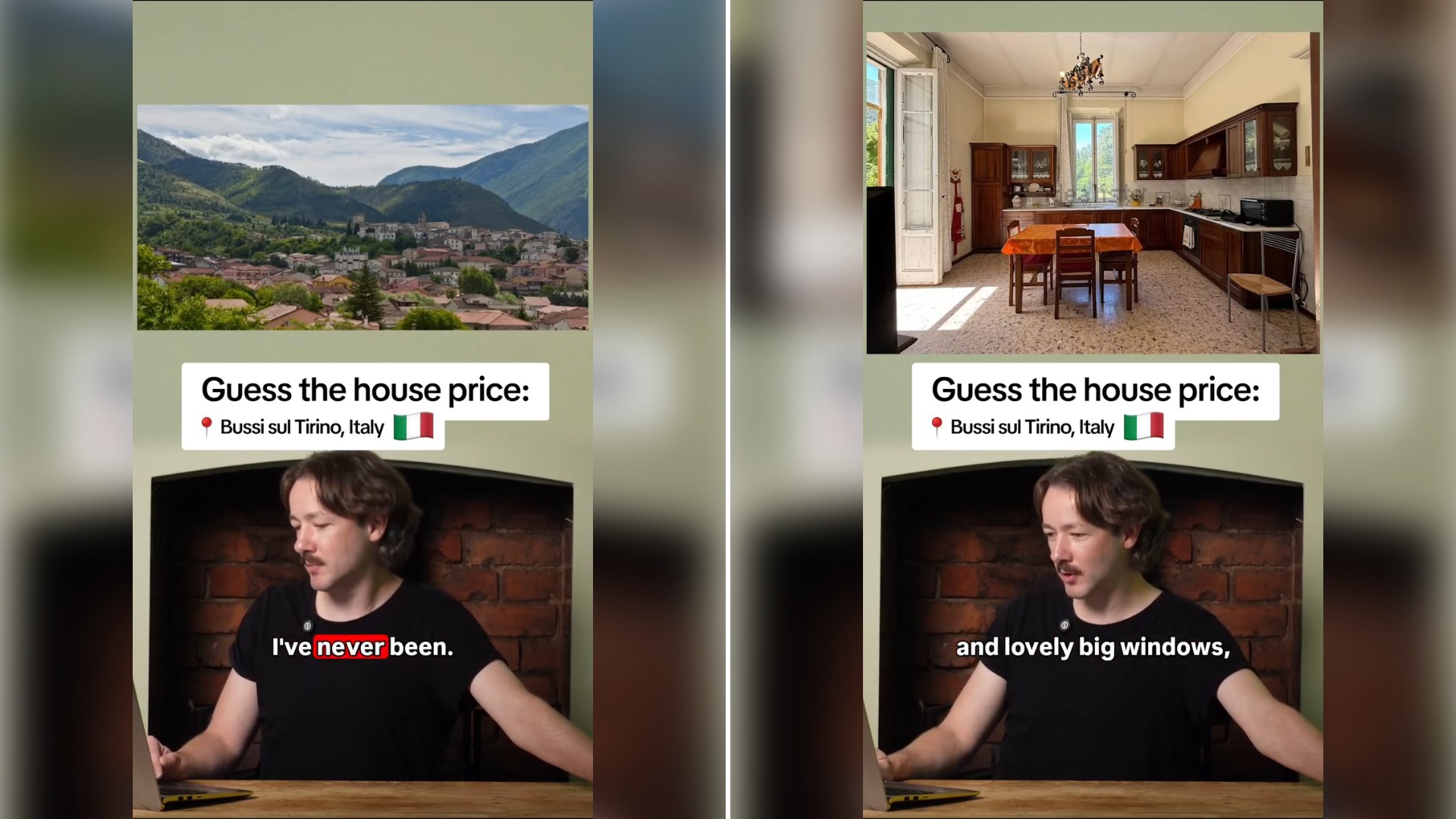
There’s a particular kind of real estate content that works almost entirely on suspense, and @thisonesnice (Instagram) nails it with a photo tour through a 12-room, 2-bathroom, 471 square meter Italian villa in Bussi sul Tirino, Pescara, building anticipation image by image before finally revealing a listing price that lands far lower than viewers expect.
The appeal of Italian real estate to an international audience has only grown in recent years, fueled partly by viral stories of one-euro homes in small towns and partly by a genuine, long-running fascination with the lifestyle those properties promise. A 471 square meter villa with a dozen rooms sounds, to most American or British viewers, like something reserved for the extremely wealthy, which is exactly why the reveal of an accessible price tag lands with such force.
Pescara and the surrounding Abruzzo region occupy an interesting place in Italy’s real estate landscape, less famous internationally than Tuscany or the Amalfi Coast, but rich with exactly the kind of historic housing stock that drives this entire genre of content. Villages like Bussi sul Tirino often carry generations of family-built architecture, homes constructed with a permanence and craftsmanship that’s increasingly rare and increasingly expensive to replicate in newer construction markets.
It’s worth examining why the “reveal the price last” structure works so well across this kind of content. Leading with images rather than numbers forces viewers to form their own expectations first, usually anchored to what a comparable home would cost in their own market, which makes the eventual gap between expectation and reality do most of the storytelling. By the time the actual figure appears, the viewer has already done the emotional work of imagining themselves owning the place.
There are real structural reasons behind the price gap too, beyond simple regional cost differences. Many of Italy’s smaller towns have faced decades of population decline as younger residents move to larger cities for work, leaving behind a surplus of large, well-built homes with fewer local buyers competing for them. That demographic shift, more than any single policy, is what quietly keeps prices on properties like this villa far more accessible than their size and craftsmanship would suggest elsewhere.
For anyone seriously considering a purchase like this rather than simply enjoying the content, it’s worth noting that an appealing price is rarely the whole story. Renovation costs, import duties on furnishings, local permitting processes, and the practical challenges of managing a property from abroad can add up quickly, and plenty of buyers drawn in by a headline number have found the real total cost of ownership considerably higher once those factors are accounted for.
There’s also something worth appreciating about the villa’s scale itself, 12 rooms is genuinely substantial, likely reflecting either a multi-generational family home or a property that once served a working estate. That kind of layout tends to produce exactly the sprawling, slightly mismatched floor plan that makes old-world European homes so endlessly interesting to tour, room after room revealing a slightly different era of the home’s life.
This genre of content has also fueled a broader cultural moment around slow, intentional relocation, people genuinely researching visas, renovation grants, and small-town Italian life rather than just watching passively. Whether or not most viewers ever follow through, the villa tour taps into a real and growing appetite for a different relationship with home, one built around space, history, and affordability rather than proximity to a major metro job market.
In the end, tours like this one do more than showcase a single property, they quietly recalibrate what viewers think real estate has to cost. A 12-room villa in Pescara, priced well below what the photos alone would suggest, is a reminder that opportunity in the housing market doesn’t always look the way the biggest cities have trained us to expect.
Leave a Reply