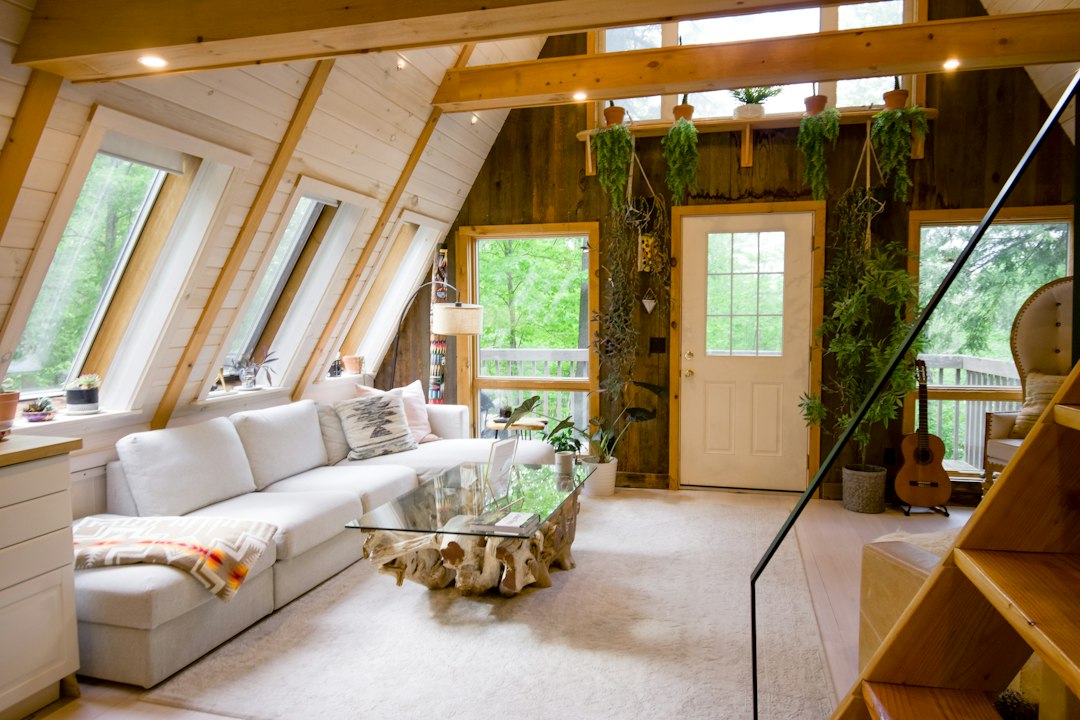
Few renovation challenges start from a lower point than a flooded, muddy cave, and that’s exactly what makes the project from @ai_workflows_ (TikTok) so compelling to watch unfold. The creator documents taking a raw, water-logged, cave-like space and turning it, step by step, into a fully furnished, genuinely cozy tiny house tucked directly into the rock.
There’s a reason before-and-after renovation content built around the worst possible starting point performs so well. The further a space begins from habitability, mud, standing water, raw stone, the more dramatic and satisfying the transformation feels by the end. A cave isn’t a blank canvas the way an empty room is, it’s an active obstacle, and watching someone methodically out-stubborn that obstacle carries a different kind of tension than a standard remodel.
Cave and earth-sheltered dwellings also carry a deep, almost primal appeal that goes well beyond novelty. Long before framed houses and drywall, people lived in exactly this kind of space, shaped by the land rather than built on top of it. There’s something quietly grounding about watching a modern builder return to that original form of shelter, proving that rock and earth can still produce a space that feels warm and deliberate rather than merely improvised.
The flooding and mud at the start of the project also point to a genuinely difficult technical problem: managing water intrusion in a space defined by porous stone and no conventional drainage. Solving that isn’t optional, it’s the entire prerequisite for everything that follows, which means the unglamorous early footage of digging, draining, and sealing is doing just as much work as the cozy, styled interior at the end, even if it gets far less attention in the comments.
This kind of project also reflects a broader trend of builders seeking out unconventional, overlooked spaces rather than starting from a standard buildable lot. Caves, culverts, old root cellars, and similar geological features tend to be considered unusable by conventional development standards, which paradoxically makes them appealing to builders drawn to a challenge, and to an audience that’s grown a little tired of seeing the same cookie-cutter renovations repeated on a loop.
There’s also a genuine design lesson buried in how a cave gets made cozy. Soft textiles, warm lighting, and curved furnishings that echo the organic shape of the stone do more to make an irregular space feel intentional than straight lines or sharp angles ever could. Builders tackling spaces like this often end up rediscovering design principles that mainstream, boxy modern interiors have mostly abandoned, principles that favor working with a space’s natural form rather than forcing it into a grid.
It’s worth noting, too, how this kind of build speaks to shifting ideas about what counts as a “real” home. A tiny house built into a cave will never show up on a standard real estate listing, there’s no comparable sale data, no conventional appraisal model, but that hasn’t stopped builders from pursuing spaces like this purely because they produce something genuinely memorable to live in, value measured in character rather than resale comps.
There’s an environmental angle worth considering as well. Earth-sheltered and cave-adjacent structures benefit from natural thermal mass, staying cooler in summer and warmer in winter with far less mechanical heating and cooling than a conventional above-ground structure requires. What starts as a passion project driven by curiosity ends up, almost incidentally, demonstrating a genuinely sustainable approach to shelter that predates energy-efficient building codes by millennia.
In the end, this transformation sticks with viewers because it reframes what “starting from nothing” actually looks like. A flooded cave isn’t nothing, it’s raw material waiting for someone patient enough to see the cozy tiny house hiding inside the mud. That patience, more than any single design choice, is the real takeaway from watching the whole project unfold from first shovel to finished reveal.
Leave a Reply