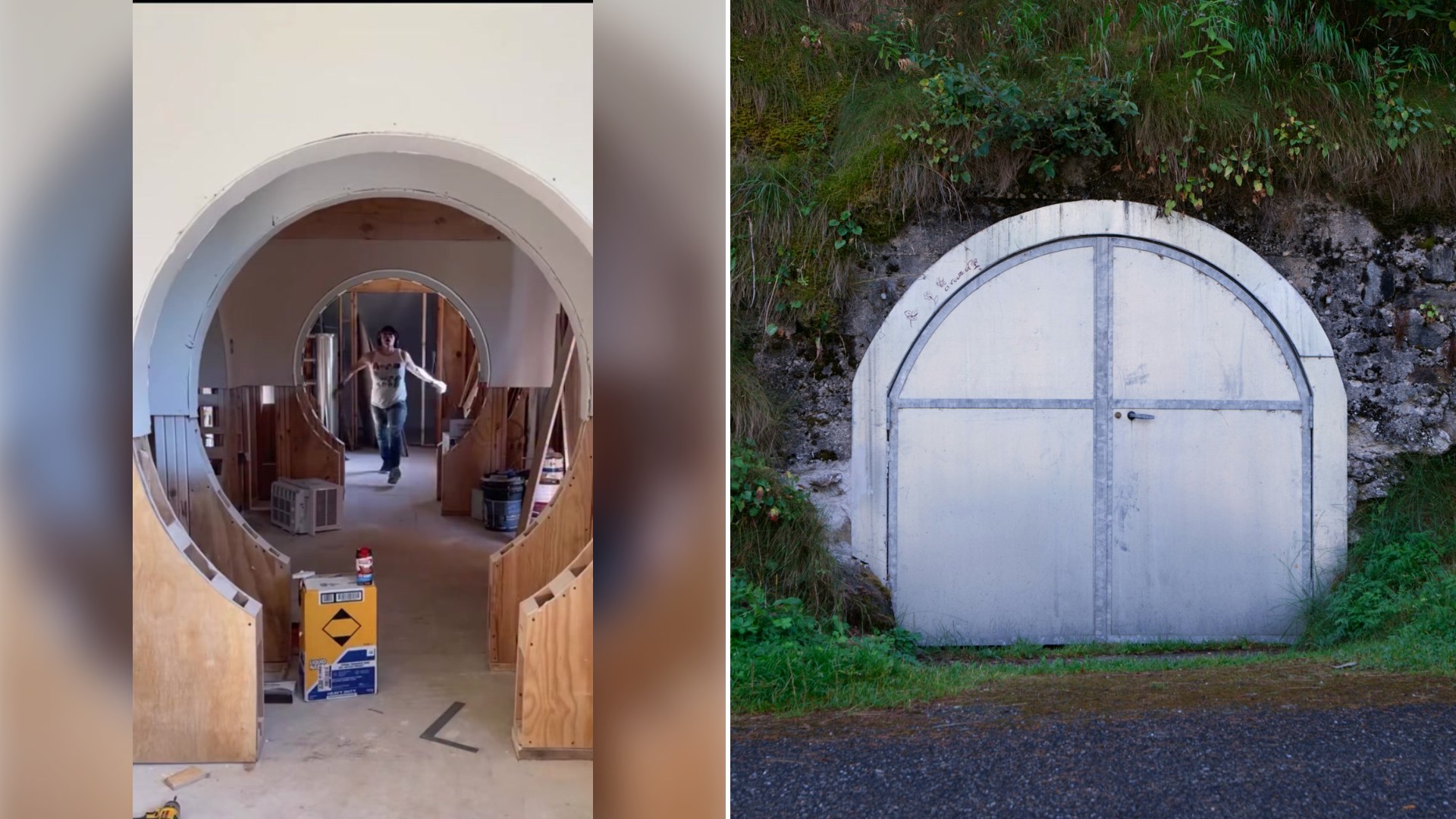
Few transitions feel as satisfying as the jump from raw construction to finished fantasy, and @nauvoo.halfling.house (TikTok) delivers exactly that, standing in a bare, unfinished construction site one moment and seamlessly transitioning into a fully decorated, Lord of the Rings-inspired interior the next, blending real construction labor with an unmistakably personal passion project.
Themed residential spaces occupy an interesting middle ground in the design world, too specific and personal for most conventional interior design advice, yet genuinely compelling to watch precisely because they commit so fully to a single aesthetic vision rather than hedging toward broad market appeal. A hobbit-style room isn’t trying to please everyone, and that specificity is exactly what makes it memorable.
The curved, organic architectural language of hobbit-house design, rounded doorways, low ceilings, earthy material palettes, actually draws on real and longstanding design principles rather than pure fantasy invention. Earth-sheltered and vernacular building traditions from various cultures have long favored exactly these forms, which means a Tolkien-inspired room, for all its fictional pedigree, is quietly rooted in genuine, time-tested architectural logic.
There’s also something worth appreciating about the specific jump cut from construction site to finished room as a storytelling device. That transition format has become a signature of renovation content generally, but it carries extra weight here because the gap between “unfinished structural shell” and “fully realized fantasy world” is so much wider than the gap in a typical modern remodel, making the payoff disproportionately satisfying.
This kind of project also reflects a meaningful trend in how people are choosing to express personal identity through their homes rather than suppressing it in favor of neutral, broadly marketable design. For decades, conventional real estate wisdom pushed homeowners toward beige walls and universally appealing staging. A growing counter-movement embraces genuine specificity instead, betting that a home built around real passion will always feel more alive than one built around consensus.
It’s worth considering the sheer craftsmanship required to execute a themed room convincingly rather than superficially. Achieving a genuinely immersive hobbit-house aesthetic means custom millwork, specific lighting choices, carefully sourced materials, and attention to proportion that mass-market decor simply can’t replicate. The difference between a halfhearted themed room and one that actually transports a viewer comes down entirely to that level of commitment.
There’s also a community dimension to this kind of content worth noting. Fantasy and genre-inspired home builds have developed genuinely passionate, engaged online communities, with builders sharing techniques, sourcing tips, and encouragement with each other in a way that mirrors fandom culture more than typical home-renovation forums, adding a social layer that keeps projects like this one going over the long haul.
It’s also a useful reminder that unfinished construction doesn’t have to feel discouraging. Raw drywall, exposed studs, and bare concrete can be hard to look at optimistically mid-project, but builders willing to hold a clear creative vision through that unglamorous middle stretch are the ones who end up with spaces this distinctive once the work is finally done.
In the end, what makes this transformation so compelling isn’t just the fantasy aesthetic itself, it’s the proof that a home can be built around genuine joy rather than compromise. Not every renovation needs to chase universal appeal, and sometimes the most memorable rooms are the ones built unapologetically for an audience of one.
Leave a Reply