Day one of a multi-day cleaning project opens with rooms stacked floor to ceiling with belongings, the kind of hoarding situation that would normally cost a homeowner thousands of dollars to have professionally cleared. The video comes from @toniscleaningco, Toni Myers, who has built a following around a cleaning business, with the caption confirming this is “day 1 of this Washington free clean,” tagged #freecleaning.
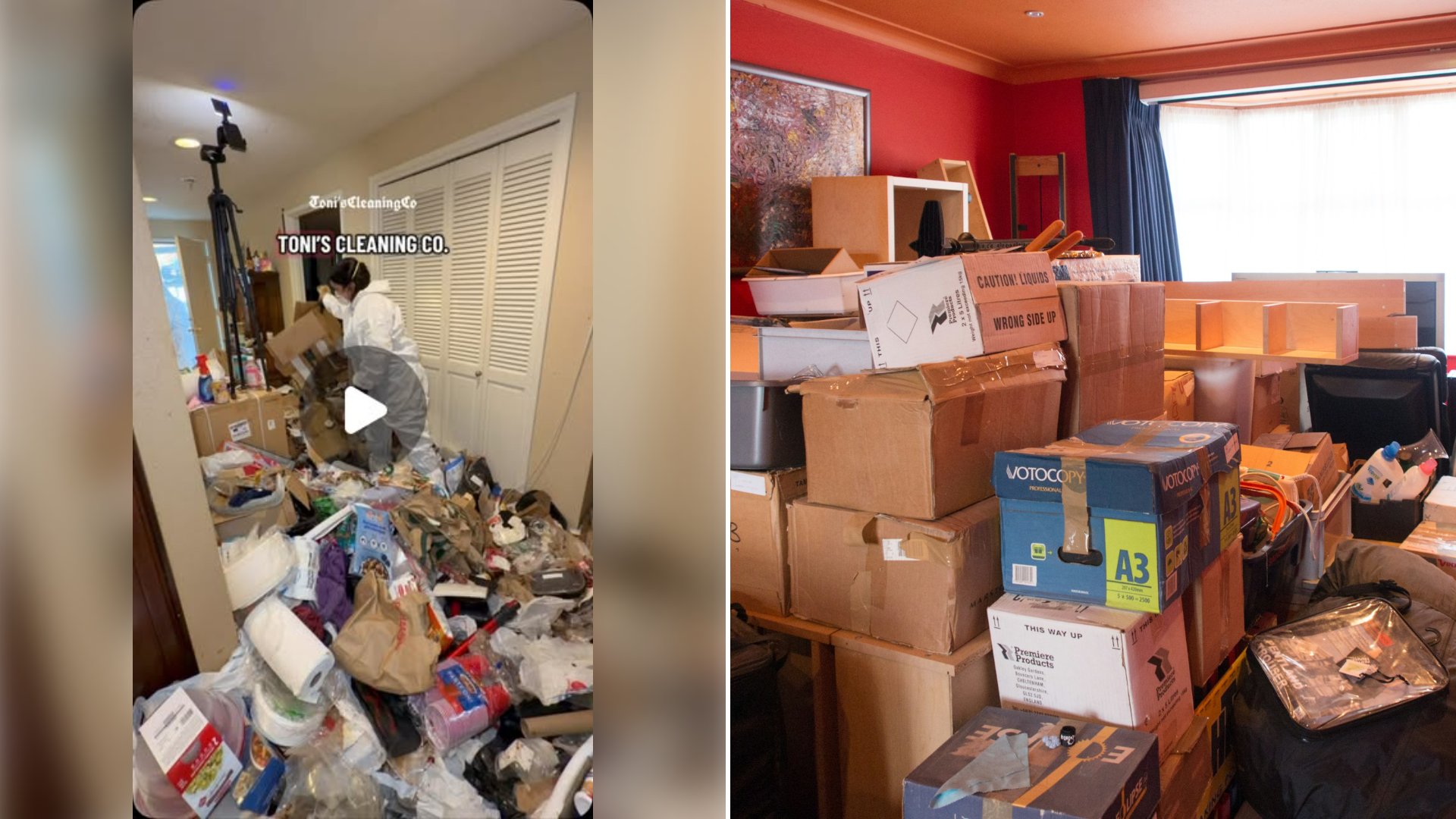
Toni’s cleaning business is based out of Louisville, Kentucky, according to her account, which means this particular job required traveling a significant distance to reach the home in Washington state, taking on a multi-day hoarding cleanup entirely free of charge. The specific circumstances that led to the home’s condition, including whether grief was a direct factor, aren’t detailed in the caption itself, though the free, out-of-state nature of the project is confirmed directly by Toni.
Whatever the specific backstory, the connection between major loss and hoarding behavior is well documented in clinical literature. Hoarding disorder is recognized as a distinct mental health condition, generally estimated to affect somewhere between 2 and 6 percent of the population, and researchers who study it consistently point to grief, trauma, and major loss as common triggers or contributing factors, particularly in cases where accumulation accelerates sharply after the death of a spouse, parent, or close family member.
Professional hoarding cleanup is also one of the more expensive categories of home cleaning service, reflecting both the labor involved and the specialized handling some situations require. Depending on the severity of the hoarding, the size of the home, and whether biohazard conditions or structural damage are present, professional cleanout costs commonly range from a few thousand dollars for a moderate case to tens of thousands of dollars for the most severe, multi-day jobs, which is part of why cost alone keeps many families from ever addressing a hoarded home.
Free cleaning projects like this one have become a notable trend among cleaning business owners on social media in recent years, with creators documenting pro bono jobs for families who can’t afford the cost themselves. For the businesses involved, the videos double as marketing and as a way to highlight a genuine community need, while for the families receiving the help, the free cleanup can be the only realistic path to addressing a problem that professional quotes would otherwise put out of reach.
Beyond the cleaning itself, mental health professionals who treat hoarding disorder generally caution that a single cleanout, free or paid, rarely resolves the underlying condition on its own without ongoing support, since the accumulation pattern can return without addressing whatever triggered it in the first place. That makes stories like this one as much about the labor of the clean itself as about what happens for the household afterward.
More from Willow and Hearth
- Mold Remediation Contractor Says a Landlord Left the Shower Running for Two Weeks and Shows Gutted Drywall, Tossed Doors and Trim and a Ceiling Fan Beyond Saving
- Realtor Reacts to a Painter Rolling White Paint Over a Bathroom Coated in What She Says Is Decades of Cigarette Smoke and Warns That Cleaning Has To Come First
- Home Inspector Walks Through a 5000 Square Foot Abandoned House Where Finished Rooms Open Onto Piles of Lumber and Old Roofing and Warns It Gets Crazier the Longer You Watch
Leave a Reply