“You never really know what’s hidden behind walls until you open them up.” That is how one couple sums up the moment a kitchen remodel stopped cold. What started as a plan to update the kitchen turned into a hunt for a leak, and the deeper they cut, the more the ceiling had to say.
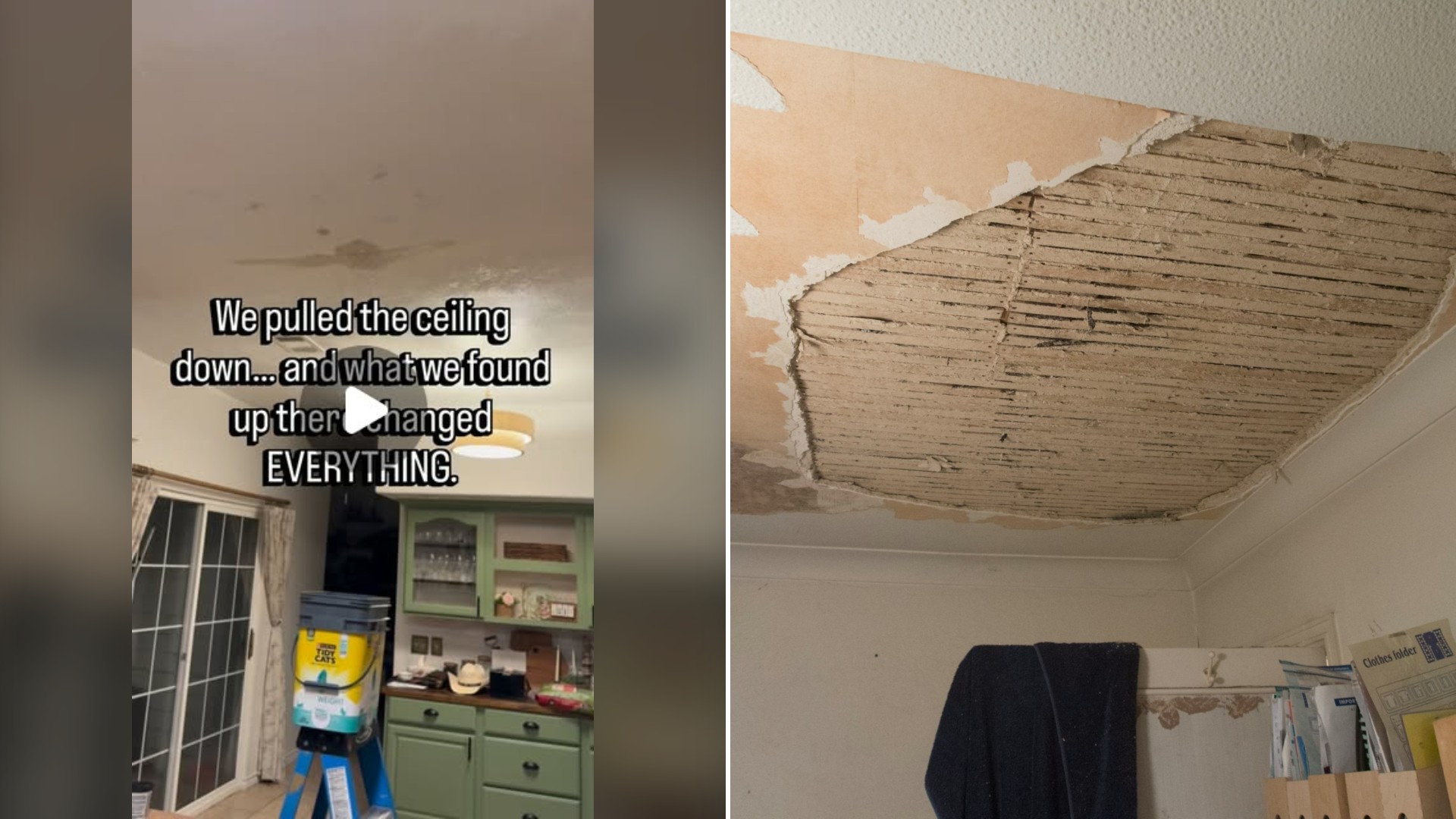
Their story is shared by @tanyaoutyonder, and it is a good reminder of why a ceiling stain should never be treated as a cosmetic problem.
View on Instagram
Following the water damage
The scene opens in a kitchen and dining area where the ceiling already shows water spots and the lines of an earlier patch. A man climbs a ladder with an oscillating multi tool and begins cutting out sections of drywall while a woman watches from below. They explain that they had cut a hole much further over the last time, because they believed the leak was coming from a window sill upstairs. This time they opened a larger area, and the answer was not where they expected.
What was waiting above the drywall
As the panels come down, the back of the drywall is dark with mold, and the man can be heard saying it looks fresh. Wet, heavy insulation sits between the joists. The couple then lists the problems they spot one by one. The P-trap for the upstairs plumbing is not the right kind to be placed in a ceiling. The wiring has no junction box and is simply wires joined with wire nuts. And the main support beam turns out to be rotted through, with an earlier repair that was not done correctly. In their words, the repair is just floating, which explains why the ceiling is sinking and why the bathroom above is sagging too.
A remodel on pause
The ending is sobering. The kitchen remodel is now fully on hold while they work out how to fix the structure, clear out the mold and keep the second floor from falling in. Nobody wants to hear that news in the middle of a project, but finding it before the new cabinets and countertops went in may have saved them from a far bigger repair later.
Why ceiling stains deserve attention
A brown ring or a bulge in a ceiling is often the last visible sign of water that has been traveling for a long time. Water follows framing, pipes and wires, so the stain can sit far from the real source. That is exactly why the first hole in this story was cut in the wrong place. Over time, repeated wetting can soften wood, corrode fasteners and feed mold in insulation and drywall, all of which hide in the dark space above a finished ceiling.
What to do if you suspect a hidden leak
- Mark the stain and photograph it, then check it again after rain and after someone uses the bathroom above. A pattern points to the source.
- Look at everything above the stain: supply lines, drain lines, tub and shower seals, window sills, roof flashing and exterior walls.
- Shut off water to the suspect fixture and see whether the stain stops growing.
- Open the ceiling with a small inspection hole first, wearing a respirator, eye protection and gloves, and turn off power to any circuits nearby.
- Stop the project and call a licensed plumber, electrician or structural professional once you see rot, mold or questionable wiring.
Common questions
Is a ceiling P-trap supposed to look like that? Plumbing rules vary by location, and the couple point out that this one was not the right type for a ceiling installation. A licensed plumber can tell you what your local code requires.
Why do wire nuts need a junction box? Electrical code generally requires wire connections to be contained in an approved box so a loose or overheated connection cannot touch insulation or framing. Open splices above a ceiling are something an electrician should correct.
Can I clean up mold myself? Small surface patches can sometimes be handled by a homeowner, but mold inside a ceiling cavity, or mold tied to ongoing water, is a job for a qualified remediation professional. Fixing the water source comes first, or the mold returns.
Should I fix a rotted beam with a quick patch? No. A beam that carries a floor above should be assessed by a structural professional, who can specify a proper repair or replacement.
The takeaway
Cosmetic updates are the fun part of a remodel, but the hidden parts decide how long the work will last. Opening the ceiling before installing anything new gave this couple a chance to deal with the structure, the plumbing and the wiring properly. If your home has a stubborn stain, treat it as an invitation to investigate rather than a reason to repaint.
Credit for the original post goes to @tanyaoutyonder on Instagram.
Leave a Reply