A dining room with a built-in hutch and a long table disappears in the first few seconds of a before-and-after clip, replaced by a bright, plant-filled home office with a sleek desk, open shelving, and a reading chair tucked into the corner. The transformation comes from @greybirchdesigns, the account run by interior designer Kaycie in Salt Lake City, who has built a large following largely around home renovation and design content, including an ongoing “Dining Room DIY” story highlight documenting this exact project.
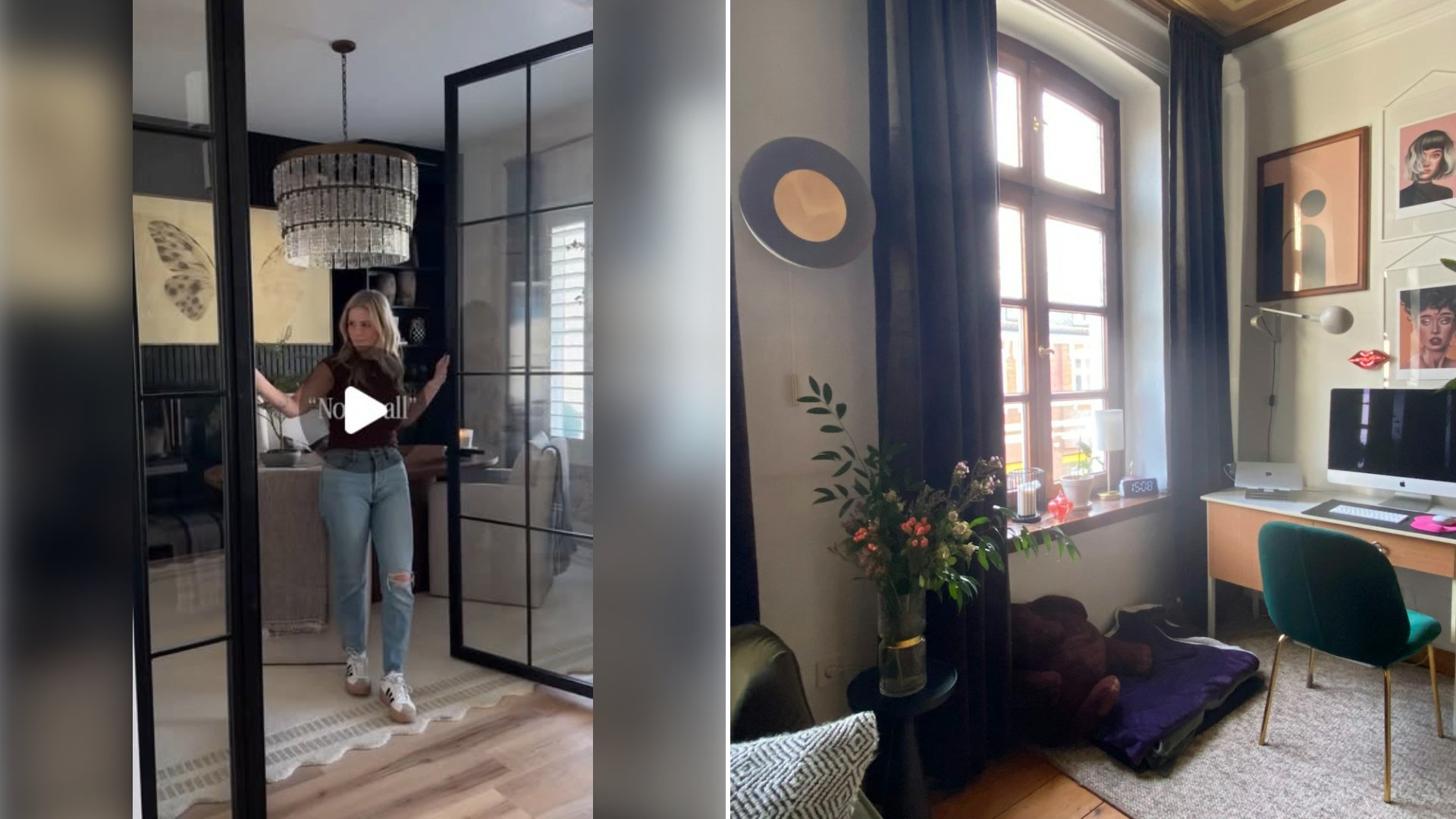
The caption itself is short, just “I have no regrets!!” alongside a shop-link call to action, but the before-and-after speaks to the question that tends to follow this kind of swap: is it really worth giving up a formal dining room, a space most households use only a handful of times a year, for a room that gets used every single day? For Kaycie, the finished video makes the answer unambiguous.
Converting a formal dining room into a home office has become one of the most frequently cited renovation swaps since remote and hybrid work became a permanent fixture of American working life. Housing and design industry surveys conducted since that shift have repeatedly found that a meaningful share of households with a formal dining room say they use it only for holidays or special occasions, while a home office or flexible workspace gets used daily, which is the exact math driving conversions like this one.
The renovation itself is one of the more budget-friendly room conversions a homeowner can take on, since a dining room rarely needs plumbing changes and usually already has adequate electrical capacity for desk equipment and lighting. Industry cost guides for small home office build-outs, covering paint, flooring, lighting and basic built-in or modular shelving, typically range from about $1,500 to $6,000 depending on finish level, well below the $10,000 to $30,000 commonly cited for a mid-range kitchen remodel. That gap alone helps explain why dining-room-to-office conversions have remained one of the more popular entry-level renovation projects, even among homeowners who have never taken on a DIY build before.
Open shelving, visible in the finished room, has also become one of the defining features of post-pandemic home office design, favored because it keeps a small or converted room from feeling boxed in the way closed cabinetry can. Design surveys tracking home office trends consistently point to layered lighting, a mix of closed and open storage, and at least one soft seating element, like the reading chair tucked into this office, as the features homeowners most often say make a home office feel usable rather than purely functional.
There’s also a resale consideration that often gets raised whenever a formal dining room disappears. Real estate agents are somewhat split on how strictly a “dining room” needs to exist for appraisal and listing purposes, since most markets no longer treat one as a baseline expectation the way they might a certain number of bedrooms or a primary bathroom. Many conversions, including the kind shown here, are also built to be reversible: removable shelving, freestanding furniture rather than permanent built-ins, and a dining table stored elsewhere mean a future owner, or even the same owner down the road, can convert the room back without major renovation work.
For now, Kaycie’s before-and-after stands as one more data point in a trend that shows no sign of reversing: homeowners are increasingly willing to trade a rarely used formal room for one that earns its square footage every single day of the week.
More from Willow and Hearth
- Homeowner Quoted $18k by a Contractor for a Dining Nook Answers No Thanks I Got It and Builds the Bench, Cushions, Table and Hanging Plants in Five Steps
- Homeowners Pull Kitchen Cabinets Out of the Middle of the Room, Build IKEA Cabinets, Flip the Doors on a Fridge and Rework the Window Over the Counter
- Man Shows One Month in His New Home by Building a Bed Frame, Stocking a Burgundy Wardrobe, Assembling Oak Storage in a Green Tiled Bathroom and Ending in the Living Room
Leave a Reply