After four years in the same house, you would think you know every corner of it. One family found out otherwise when they opened a concealed room they had never seen before, and the first look inside had everyone guessing. Creator @kids_up_in_here shared what the caption calls the unedited first views of the hidden room, and the reactions say it all: shock, jokes and a lot of theories.
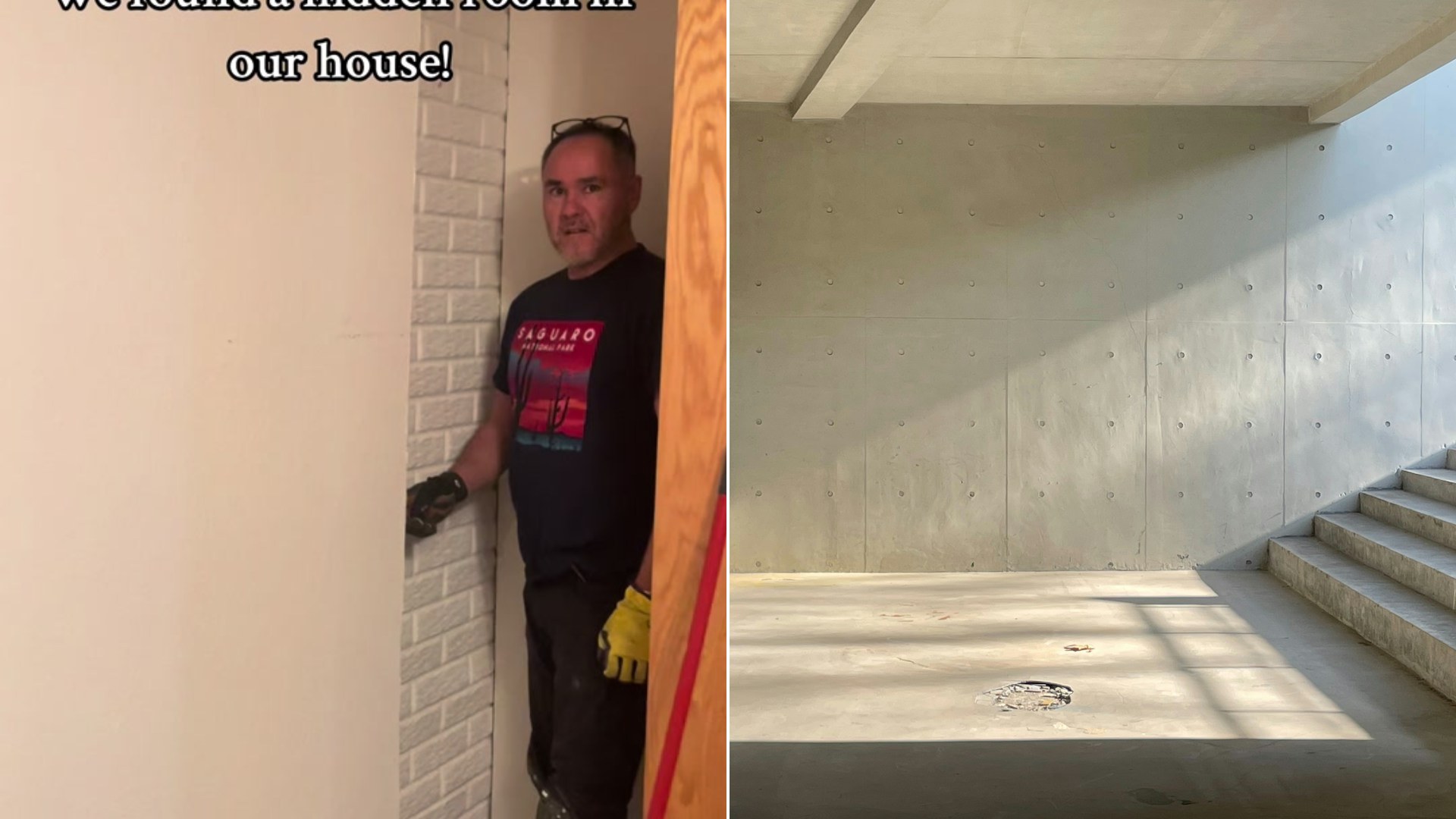
The house dates to the 1990s. The family had lived there for four years. And somewhere along the way, they had walked past a hidden door without knowing what it was.
@kids_up_in_here
The first look inside
The moment starts with someone saying, “Go for it,” and “Keep opening.” As the door swings wide, the family is stunned. They say they have never seen this space in their house, and they have lived there for four years.
The first theory comes quickly. Someone says it has to be some kind of bunker or shelter. Another voice calls it a panic room. Then one family member says something near the floor always struck them as strange and that they had wondered about it for a long time. Another asks whether they had expected there to be another passage. The group is clearly trying to put two and two together as they take in the space.
Then comes the detail that turned the room from strange to downright puzzling: there is a drain. The family points out that the house is from the 1990s and says they cannot believe nobody ever told them about it. They say the room looks nasty and keep staring at the floor, where the drain is.
Safe, rust or something else?
As they look around, the family starts running through possibilities. One person says there was probably a gun safe in there, since that is the kind of thing someone might keep in a secret room. Another notices something that looks like rust, and someone says, hopefully, that it is just rust. One person adds that they think it was meant as a panic room, and another says they think a safe was in there at some point.
Someone jokes that it might have been hidden so the kids would not know about it. And the best line of all comes at the end, when one family member quips that the space would make a perfect guest room, followed by a quick “Your mother wants to stay.” It is a nice reminder that even the strangest discoveries can come with a laugh.
The creator does not say what the family did next, or whether any previous owner has explained what the room was for. The caption just calls it unedited first views of the hidden room, and the story stops there.
Why would a room have a drain?
The drain is the part that gets people talking, so it helps to know what a floor drain normally does. According to a home repair guide on basement floor drains, a drain sits at the lowest point of the floor and collects water from sources such as a leaking water heater, HVAC condensation or rain seepage. Where that water goes depends on the setup. It may connect to the sewer, to a sump pit with a pump, or to an ejector system when the floor is lower than the main sewer line.
In other words, a drain does not automatically mean anything mysterious. It can simply mean a room was built in a lower part of the house, or a space that was designed to handle water. The guide also notes that a floor drain has a trap beneath the grate, and when that trap dries out, sewer odor can come up. If you ever open a closed space and smell something bad, a dry trap is a common cause, and pouring a pitcher of water down the drain every couple of weeks can help.
What is a panic room, really?
The family’s guesses of a bunker or a panic room are the kind most people reach for. A panic room is a reinforced space designed as a place to retreat in an emergency. In many homes the space is more ordinary than movies suggest: a closet with a heavy door, a storage nook or a utility room. Nobody in this story has confirmed what the room was built for, and the family’s own guesses are just that.
Professional inspectors have seen their share of hidden spaces. One inspector-training article on secret rooms and passageways says hidden spaces have turned up behind bookcases, under stairs, behind fireplaces, beneath trap doors and in attics. It also lists safety concerns to watch for in a concealed room: mold, locks on the outside that could trap someone inside, a single entrance and exit, and electrical work that was added without any review.
If you find your own hidden room
- Air it out first. A closed space can hold stale air and dampness. Open the door fully and let it breathe before anyone goes in.
- Make sure the door opens from the inside. Before anyone steps in, check that the latch or lock works from both sides, especially if kids are curious.
- Look at the walls and floor. If you see dark stains, white powder or a musty smell, that could mean moisture. A rust-colored mark can be water or metal, and it is worth asking a pro if you are unsure.
- Have the wiring checked. If you see outlets or lights, ask an electrician to confirm they are safe.
- Check the records. Your county may have permits or floor plans that show what the space was meant to be.
- Tell your insurance agent and your inspector if you plan to sell. A hidden room is a feature for some buyers, but it should never be a surprise.
A house that still has surprises
What makes this story so fun is not the room, but the reaction. The family went from confusion to curiosity to laughing about guest rooms in a matter of seconds. It is a reminder that a house is a long story with many chapters, and sometimes you only find a chapter after four years of living in it.
If you have a corner of your home that has always looked a little odd, a door that never opens or a wall that seems too thick, now might be a good time to take a closer look. You may never find a panic room with a drain. But you might find a good story.
Leave a Reply