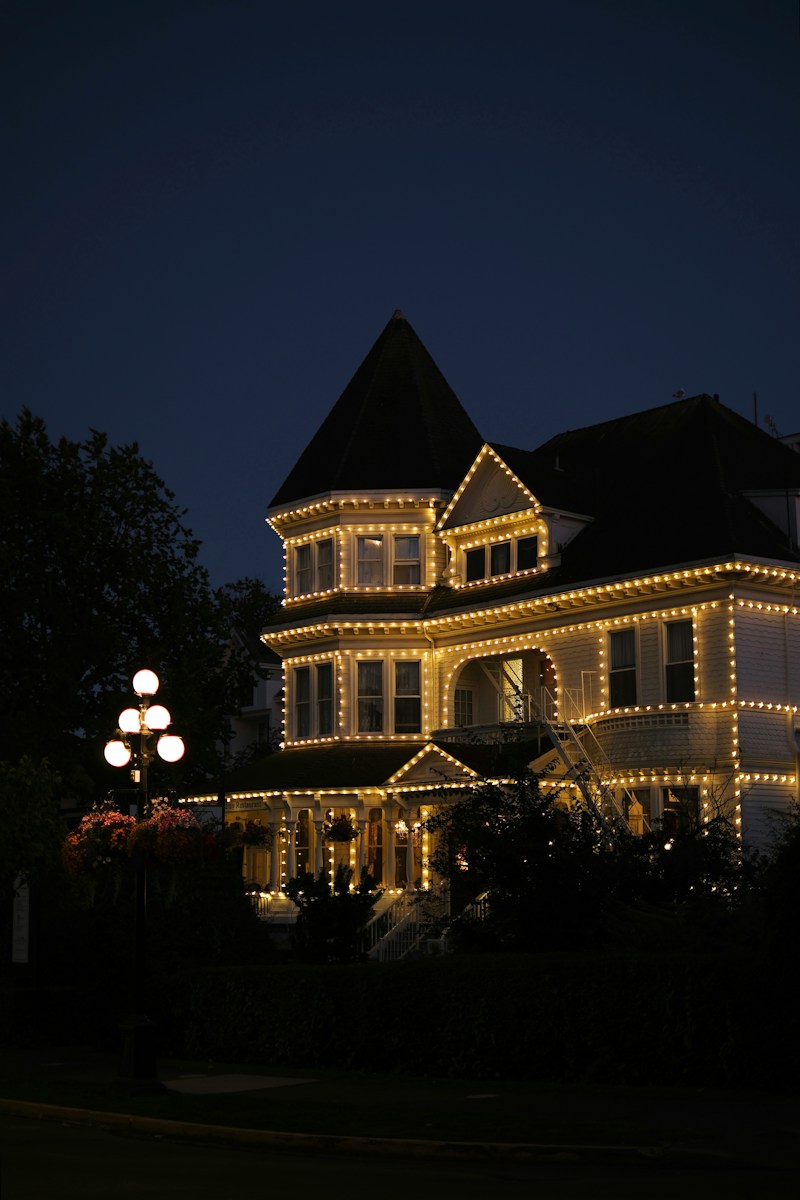
A Maryland family is racking up $50-a-day fines from their homeowners association over a Christmas light display they say is smaller than what they’ve put up in years past, and instead of taking the lights down, they’ve hired a lawyer.
The display and the fine
The Salgado family lives in the Middlebrook Manor South community in Germantown, Maryland, where their HOA cited them under the community’s nuisance rules over string lights wrapped around bushes in their garden area and a nativity scene set up on their own property. According to WHSV’s coverage of the dispute, the fines began accruing roughly a week before the story published in December 2025, and had already reached $650 at $50 per day by that point, with no sign of stopping since the family had not removed the decorations.

The Salgados’ position, per the reporting, is that their display stays entirely within their own property lines and doesn’t shine onto neighboring yards, which they say is exactly what the HOA’s own governing documents require. They also point to religious and cultural significance in the display, given the nativity scene, as part of why they see the fine as an overreach rather than a legitimate nuisance complaint.
A selective-enforcement question the HOA hasn’t fully answered
The family and some of their neighbors have raised a pointed question throughout the dispute: why this display, now, when similar decorations have gone up in the community for decades without drawing a fine. Longtime residents of the community have described putting up comparable lights themselves over the 20-plus years the neighborhood has existed, without ever facing a citation, a detail that fuels the Salgados’ argument that enforcement here isn’t as uniform as the HOA claims.
Middlebrook Manor South’s board has responded publicly that its goal is supporting “a safe, respectful, and well-maintained community,” and that its governing documents are “enforced uniformly and in accordance with Maryland law,” according to the HOA’s own statement carried in local coverage. What the board has not done, based on WJLA’s continuing coverage, is specify exactly what makes the Salgado display a “nuisance” under the community’s rules, beyond the fact that a complaint was filed. That gap between a broad justification and a specific rule citation is the crux of the family’s frustration.
Lawyering up instead of taking the lights down
Rather than pay the fines or dismantle the display, the Salgado family retained a real estate attorney to challenge the citations. Legal commentary on the case has generally centered on a familiar tension in HOA law: boards typically have broad authority to interpret and enforce their own bylaws, but that authority is not unlimited, and a board that appears to apply a nuisance rule to one household while overlooking materially similar displays elsewhere in the community can find itself vulnerable if the dispute reaches a Maryland court. Attorneys who follow HOA disputes generally note that a board’s most durable defense in situations like this is a written enforcement record showing the rule applied evenly, and it’s not clear from public reporting whether Middlebrook Manor South has produced one.
WJLA’s follow-up reporting notes the association still had not offered a detailed public explanation of the specific nuisance finding as the dispute continued into the new year, even as the fines kept accumulating daily. That combination, an unspecified rule violation and a fine that compounds for every day the decorations stay up, is what pushed the family toward legal representation rather than a quieter resolution.
Why this keeps happening every holiday season
Disputes like this one surface almost every winter somewhere in the country, and they tend to follow a similar shape: a family puts up a display that’s larger, longer-lasting, or more visible than a neighbor would like, someone files a complaint, and the HOA has to decide how strictly to enforce a nuisance clause that’s often written vaguely enough to cover almost anything. What makes the Germantown case worth watching is less the amount of money at stake and more the selective-enforcement argument sitting underneath it. If a Maryland court or a settlement eventually forces Middlebrook Manor South to show its enforcement history, the outcome could shape how other HOAs handle similar complaints the next time a resident’s holiday lights draw an unhappy neighbor’s attention. For now, the fines keep adding up, the lights stay on, and the family shows no sign of backing down before the matter gets sorted out with an attorney involved rather than a compliance letter.
Leave a Reply