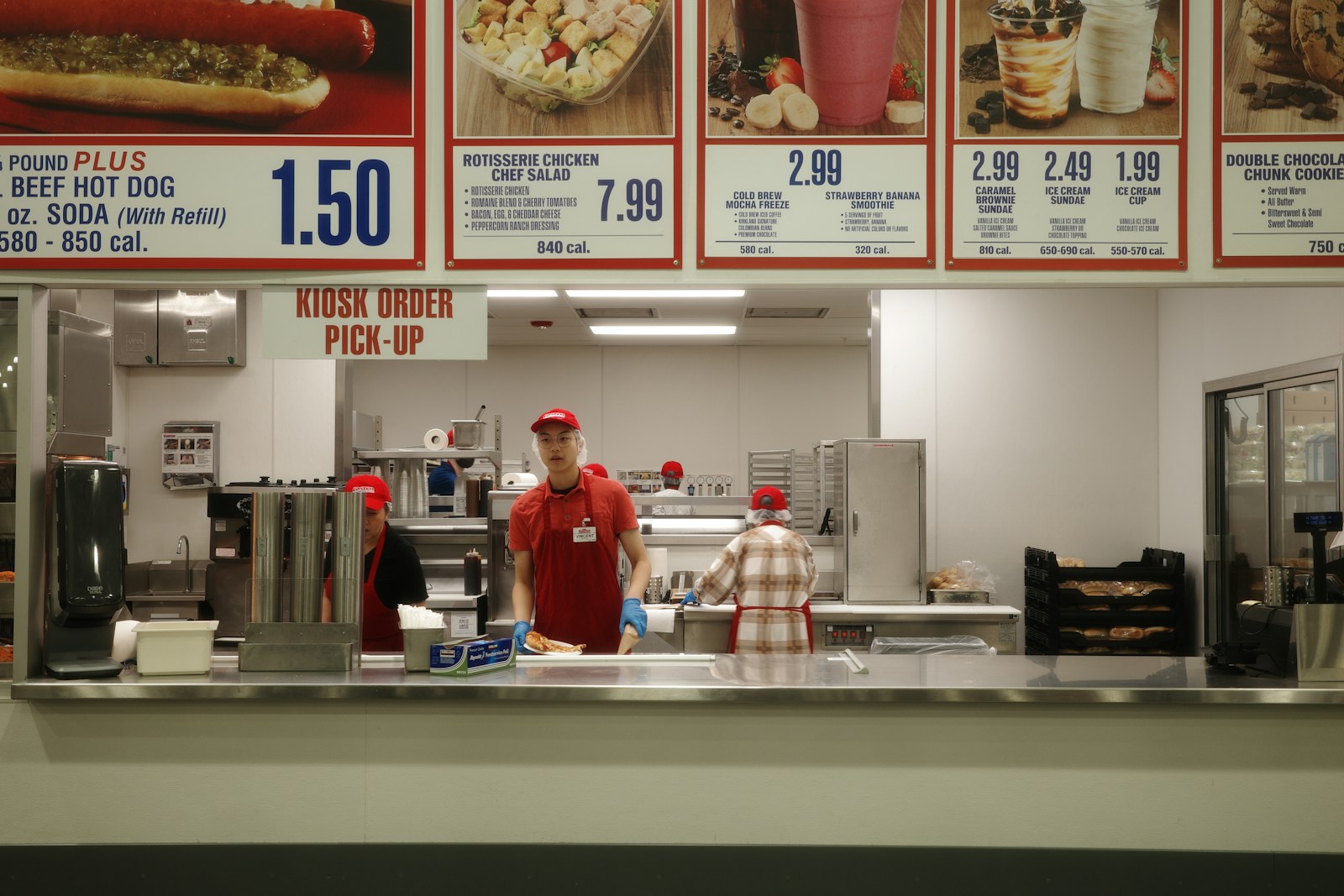
In a bustling McDonald’s during a lunch rush, an employee found herself at the center of a chaotic scene that highlighted the struggles of restaurant management and the frustrations of frontline workers. Despite her best efforts to assist during a busy shift, she was repeatedly ordered by her manager to remain at the register, leading to a series of misunderstandings and mounting customer frustration.
The employee, who had been on the job for just two weeks, had her duties primarily focused on customer service, which encompassed bagging orders, making drinks, boxing fries, and cleaning. However, when the lunch rush began to taper off, the manager insisted that the employee stay by the register, disregarding her offers to help in the kitchen. “I mean it, stay out of the kitchen,” the manager reiterated firmly, leaving the employee bewildered and bored as she stood idly at the counter.
As she stood at the register for a full hour with no customers in sight, the employee’s frustration grew. She noticed a customer waiting for her bag, which was already prepared but left unattended. Hoping to assist, she informed the customer, “I’m sorry, I would get that for you but I’m not allowed back there right now.” Her predicament was compounded further when she ran out of medium cups. Despite knowing their location, she explained to a coworker, “(Manager) doesn’t want me back there right now.” Each attempt to explain her situation seemed to be met with more obstacles, as others continued to remind her that she needed to fulfill drink orders, further highlighting the disconnect between her manager’s directives and the actual operational needs.
Eventually, after what felt like an eternity of confusion and inaction, a shift lead noticed the situation. She advised the employee to step up her contributions rather than “shrink [her] duty.” Frustrated with this vague direction, the employee decided it was time to clarify the situation. She explained her predicament to another manager, who overheard the conversation and promised to address the issue with the original manager.
This prompted a conversation between the employee and her manager, who eventually apologized, admitting to feeling overwhelmed. The manager’s honesty revealed how pressure can lead to poor decisions in a fast-paced environment, ultimately leaving the employee feeling vindicated but also keenly aware of the pressures faced by those in management roles. It was a moment that illustrated the often unseen dynamics at play in the fast-food industry, where communication lapses can lead to customer dissatisfaction and employee frustration.
While the story drew attention to a conflict within the workplace, many readers latched onto the nuances of the situation. Some noted how stressful restaurant work can be, especially during peak hours when tempers flare and communication breaks down. Others sympathized with the employee’s position, reflecting on their own experiences when following confusing directives from supervisors. A few readers humorously pointed out how ridiculous it is to be “banished” from the kitchen while orders pile up, showing that the day-to-day realities of food service can often lead to absurd situations.
As the conversation unfolded, many appreciated the final outcome, where the manager took accountability for the earlier miscommunication. It served as a reminder of the challenges fast-food workers face, often juggling multiple responsibilities while navigating the pressures from both customers and management. By the end of the shift, while the employee had her concerns acknowledged, the aftermath of the lunch rush left her with lingering questions about the workplace dynamics she had stumbled into.
More from Willow and Hearth:
Leave a Reply