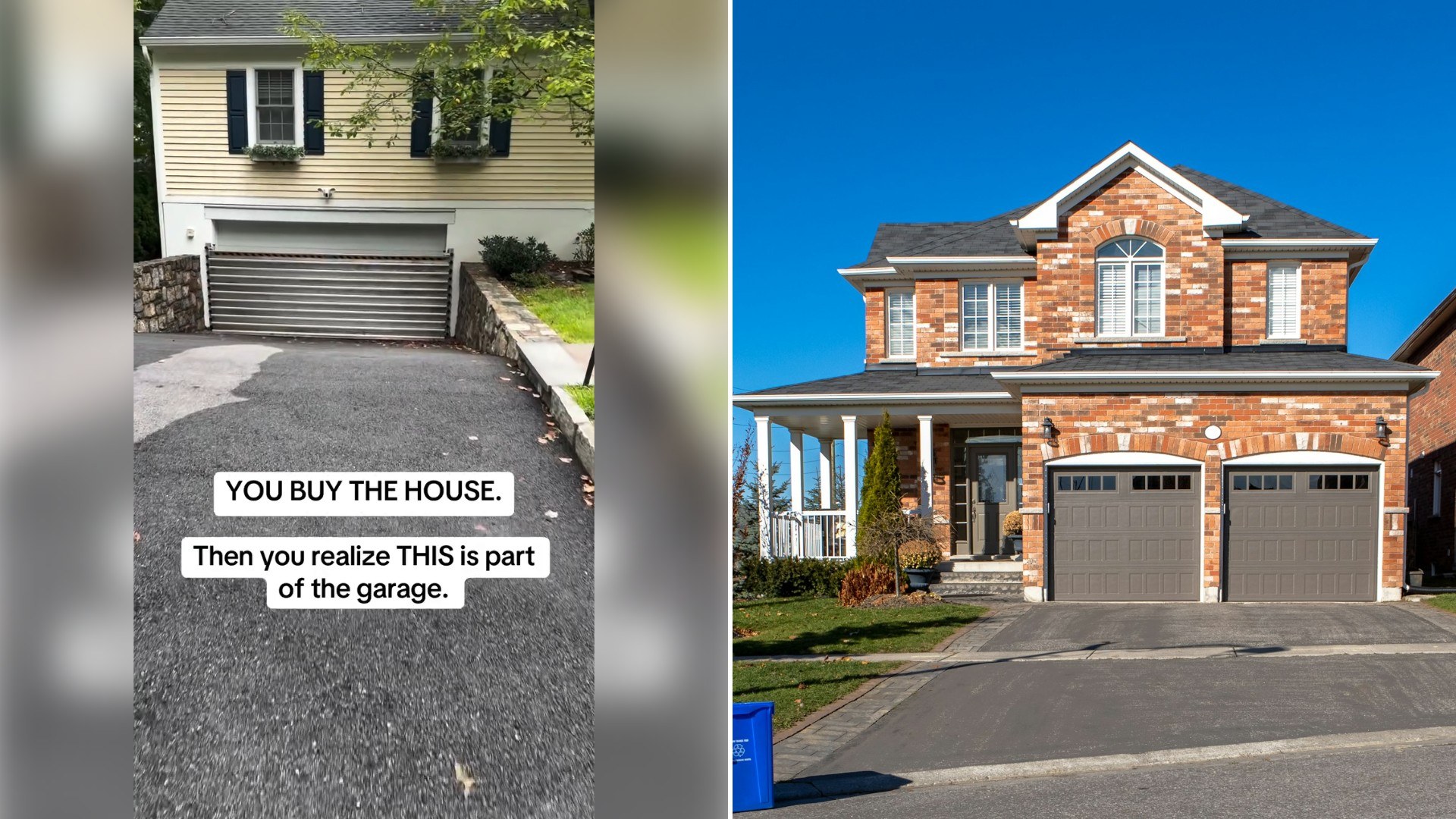
A real estate agent builds curiosity around what looks like a strange gate blocking part of a garage, then reveals it’s actually a flood barrier designed to protect the home during storms, explaining how it works when triggered by rising water. It is the kind of clip that stops a scroll not because of a dramatic twist, but because of how ordinary its starting point is, right up until the moment everything changes on camera.
What comes through most clearly in the footage is the restraint of the setup: the agent lingers on the odd-looking gate just long enough for a viewer to form their own wrong guess before the real explanation arrives, and that brief gap between confusion and clarity is exactly what gives the reveal its payoff.
View this post on Instagram
As @whitneyokunwestchesterrealtor shows it, the appeal isn’t really about the size of the number or the scale of the transformation on its own, it’s about the willingness to document the process honestly, warts and all, instead of only posting the polished result once everything was already finished.
The on-screen caption, “You buy the house. Then you realize this is part of the garage,” does the same setup work a good mystery does: it names the confusion before resolving it, so the viewer spends the opening seconds genuinely unsure whether they’re looking at a design flaw, a renovation leftover, or something else entirely. That uncertainty is exactly what keeps a thumb from scrolling past.
Flood barriers built directly into a garage opening are a more common feature in flood-prone regions than most homebuyers realize, precisely because garages sit at or near grade level and tend to be the first point of entry for rising water during a storm. A gate-style barrier that can be deployed and locked into place when water levels rise is a far more elegant solution than sandbags piled at the last minute, and it only works because it was planned into the structure from the start rather than bolted on afterward.
What makes this detail worth a dedicated video rather than a passing mention in a listing description is how easily it reads as strange before the explanation arrives. A gate blocking off part of a garage looks, at first glance, like an obstruction or an afterthought, exactly the kind of thing a buyer might ask an agent to explain away or even request be removed, without realizing that removing it would eliminate a safety feature the home may genuinely depend on during the next major storm.
For a real estate agent, pointing out a feature like this does double duty. It differentiates the listing from comparable homes nearby that lack any flood mitigation at all, and it signals a level of technical fluency that reassures prospective buyers the agent actually understands the property beyond square footage and finishes. A buyer who might never have thought to ask about flood protection walks away from the video already informed.
Flood barriers like this one tend to only become relevant to a buyer’s decision-making once they understand the area’s flood history, which is exactly the kind of context a short video can supply far more memorably than a disclosure document ever could. A line item buried in paperwork rarely registers the way watching an agent explain and demonstrate the mechanism in person does.
Comment sections under videos like this tend to fill with people from flood-prone regions sharing their own experiences, sandbags at 2 a.m., a garage ruined by six inches of water, a neighbor who installed a similar barrier after one bad storm too many, and that shared recognition is part of what gives a niche home feature this much reach outside the immediate local market.
Whatever else comes up in future walkthroughs of this property, the flood barrier has already given it a story worth remembering, the rare garage feature that justifies its own dedicated video rather than a passing mention in a listing’s amenities list.
Flood-resilient construction features like this one tend to get far less attention in mainstream home content than cosmetic upgrades, even though they can matter enormously to a property’s long-term insurability and resale value. A granite countertop photographs better than a flood gate, but in a region prone to storm surge or heavy rainfall, the gate is doing work that no amount of countertop upgrades could replace.
There’s also a useful reminder here for buyers touring any older or storm-exposed property: features that look confusing or out of place are often the result of a deliberate engineering decision made in response to a real, specific problem the home once faced. Rather than assuming an odd detail is a flaw to be fixed, it’s worth asking first whether it might actually be solving something the rest of the house depends on.
A flood barrier of this kind also tends to come with its own maintenance expectations that a buyer should factor into their sense of the home’s ongoing upkeep, seals that need periodic inspection, a mechanism that has to actually work when called on rather than sit decorative and untested for years at a time. A feature like this is only as good as its last real deployment, which is part of why an agent walking through exactly how it operates adds real value beyond simple curiosity.
Leave a Reply