A marble topped washstand painted in a flat, modern gray does not look like much of a treasure. But under the paint, and under a layer of peel and stick faux tile, this antique piece was hiding a pretty floral tiled back and a warm natural wood finish.
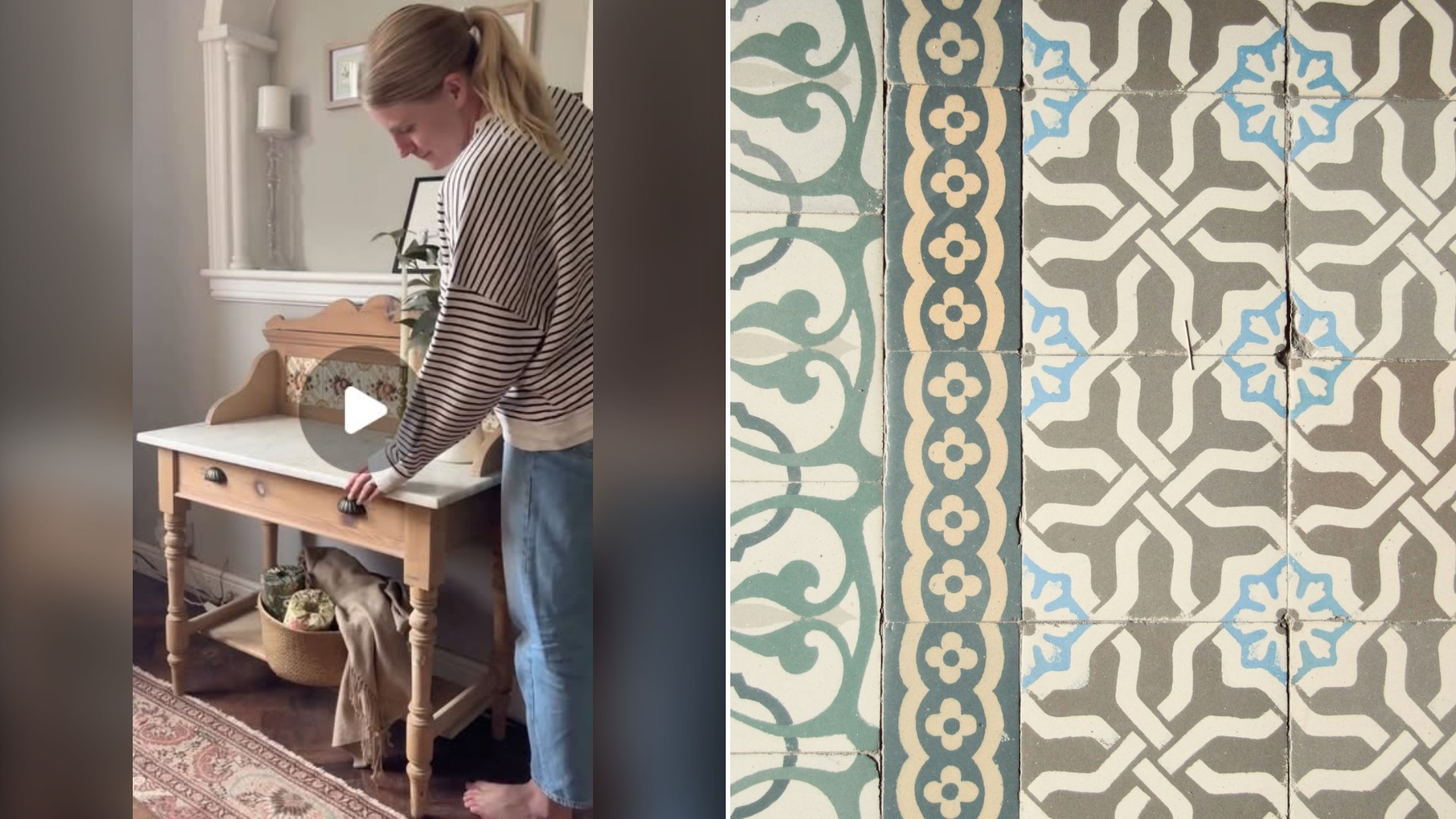
The makeover is shared by @rediscoveredbydanielle, and the whole thing plays out in a few quiet, satisfying minutes of scraping, brushing and buffing.
View on Instagram
Starting with the gray
The project opens outdoors, where a woman lifts the painted gray top piece off the wooden washstand. A text overlay sets the mission: strip the millennial gray paint. She uses a chisel to pry up the edge trim, then turns to the back panel, where a heat gun softens modern peel and stick faux tile stickers. Underneath are real vintage floral tiles, which she gently scrapes clean.
Stripper, scraper and steel wool
Next comes chemical stripper. Thick gray paint bubbles up and is scraped from the wood in curls. A utility knife blade cleans adhesive residue along the molding above the floral tiles, and a gloved hand scrubs the turned legs with steel wool to remove paint and old finish that has settled into the curves.
A soft finish and a cozy reveal
Once the bare wood is sanded, she brushes on a wash or wax style coating that leaves the grain visible, then buffs it with a cloth. The final scene shows the restored washstand in a cozy room, styled with candles, a pitcher of greenery and a basket tucked underneath. There is no talking in the piece, only the sounds of the work, and that quiet suits the transformation well.
What is a washstand?
Before indoor plumbing was common, a washstand held a basin and pitcher for washing up. Many have a marble or tiled top and a decorative back panel to protect the wall from splashes, which is why this one carries tiles on its back. Today these pieces are popular as bathroom vanities, entry tables and plant stands, and their small footprint makes them easy to place almost anywhere.
How to uncover old furniture without damaging it
- Warm adhesives gently. A heat gun on a low setting softens stickers and glue so they peel without gouging the surface underneath. Keep it moving, and keep it away from marble, glaze or anything flammable.
- Use the right tool for each layer. A chisel lifts trim, plastic or metal scrapers lift paint, a utility blade clears glue lines, and steel wool reaches into turnings.
- Protect delicate parts. Tape or cover tile and marble before applying stripper, because some products can mar stone or glaze.
- Finish lightly. A wash, oil or wax lets the natural wood show, while a heavy film hides it again.
- Work outdoors or ventilate. Wear gloves, eye protection and a respirator suited to the stripper you choose.
Common questions
Should antiques be painted or stripped? It is a personal choice. Some collectors prefer original finishes, while others enjoy refreshing a tired piece. If you are unsure of the value, a quick check with an appraiser or an antiques dealer can help before you strip.
How do I tell what wood I have? Stripping reveals the grain and color. Compare it to guides for common furniture woods such as pine, oak and mahogany, or ask someone at a wood supplier.
Is old paint a danger? Paint on pieces made before the late 1970s can contain lead. Test before sanding or scraping, and follow professional guidance if the paint tests positive.
Can I use a washstand in a bathroom? Many people do, often with a sealed top and a vessel sink. A plumber can help with fitting taps and drains.
The takeaway
Older furniture often has more to offer than a quick coat of paint lets on. With a heat gun, a scraper and some steel wool, a gray washstand became a warm, wood toned piece with tiles that had been covered up. When a piece looks too plain to be interesting, a small test scrape in a hidden corner may show you something worth saving.
Credit for the original post goes to @rediscoveredbydanielle on Instagram.
Leave a Reply