Portable space heaters cause an estimated 1,600 house fires a year, according to the U.S. Consumer Product Safety Commission’s most recent figures, covering 2020 through 2022. Those fires kill an average of 70 people and injure another 150 annually. The number is jarring given how small and ordinary these appliances look sitting on a bedroom floor. Most of the danger isn’t in the heat output itself. It’s in what happens when a unit gets knocked over, overheats internally, or sits too close to something that burns easily. The difference between a heater that shuts itself down safely and one that starts a fire usually comes down to a handful of engineered features, not price or brand name. Here’s what you should actually check before buying one this winter.
Automatic Tip-Over Shutoff
Most fire deaths tied to space heaters happen after a unit gets bumped or knocked over and keeps running against a rug, bedspread, or pile of clothes. A tip-over switch solves this mechanically rather than electronically. A small weighted or gravity-actuated sensor sits inside the base, and once the heater tilts past roughly 30 to 45 degrees from vertical, it breaks the circuit and cuts power immediately, regardless of what the thermostat is doing at the time. It doesn’t depend on software or a chip, so it still works if the heater’s electronics fail. If a listing or manual doesn’t mention tip-over protection by name, assume it’s a heater you can’t safely leave running in an empty room, even for a minute.
Overheat Protection
Overheat protection is a separate safeguard from the thermostat, and the distinction matters. A thermostat regulates room temperature by cycling the heating element on and off based on the air around it; it has no way of knowing what’s happening inside the unit’s own wiring. Overheat protection is a thermal cutoff, typically a bimetallic switch or thermal fuse mounted near the heating element, that trips independently once internal components pass a safe temperature threshold, no matter what the thermostat reads. This catches failures the thermostat can’t see, like a fan motor seizing or dust blocking airflow so heat pools inside the housing. The De’Longhi TCH7915ER tower heater publishes a two-stage version of this: a thermal shutoff paired with a backup thermal fuse, so a second mechanism is in place if the first one doesn’t trip.
UL or ETL Certification
A manufacturer can print “safety tested” on a box without anyone outside the company ever verifying it. A UL (Underwriters Laboratories) or ETL (Intertek) mark means something specific: an independent lab has physically tested the heating element, internal wiring, and housing materials against UL 1278, the safety standard written for movable electric room heaters. That testing runs the unit through abnormal conditions, including blocked vents, a tipped orientation, and sustained overvoltage, to confirm it fails safely rather than catastrophically, and it checks whether the housing plastic itself will sustain a flame if it does ignite. The Dreo Atom Core heater lists ETL certification alongside UL94 V-0 flame-retardant housing material, meaning the plastic is rated to self-extinguish rather than keep burning. When you’re comparing models, look for the actual certification mark and a lab name printed on the spec sheet, not vaguer marketing language like “safety certified” with no lab attached.
Cool-Touch Housing and Cord Placement
Where the cord exits a heater shapes how you’ll actually use it day to day. A cord that comes out of the back forces you to push the unit flush against a wall or piece of furniture to keep the cord tucked away, which puts it exactly where it shouldn’t be: close to combustible material. A cord exiting from the base lets you place the heater freely in open floor space instead of dragging furniture around or running the cord across a walkway where someone can trip. Housing material matters just as much. A genuinely cool-touch exterior stays safe to the hand even after an hour of continuous use, which matters most in households with kids or pets, and it lowers the odds of a stray piece of paper or fabric catching against a hot grille.
The Three-Foot Rule
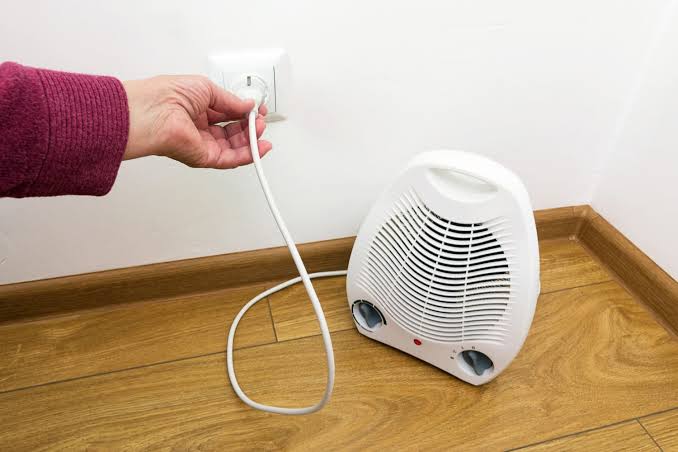
Even a heater with every one of these features built in still needs room to operate safely. The CPSC’s standing guidance is to keep space heaters at least three feet away from furniture, bedding, curtains, and anything else combustible, and to plug the unit directly into a wall outlet rather than an extension cord or power strip, which can overheat under a heater’s sustained electrical load. That three-foot radius isn’t fine print you can round down. It’s the distance CPSC ties directly to fire outcomes, since radiant heat at close range can ignite fabric well before it visibly scorches.
The pattern across certified models is consistent. The features that actually prevent fires and injuries, a mechanical tip-over switch, an independent thermal cutoff, and lab-verified flame-retardant housing, typically cost a manufacturer only a few extra dollars in parts, and the heaters that skip them tend to be the cheapest ones on the shelf. That gap is the real deal being offered here. Paying a bit more for a unit that lists UL or ETL certification alongside both tip-over and overheat protection isn’t a premium upgrade. It’s the difference between a heater and a hazard that happens to have a thermostat.
Leave a Reply