Dalton Krell opens his video beside a black Tesla Model 3 with a line that sums up his whole approach: “I’ve been at war with my HOA, so I built the world’s loudest Tesla.” In the clip, posted on September 27, 2026 to his TikTok account @djkrell under the caption “HOA Hates Me Pt.2,” he walks through what he describes as months of back and forth with his homeowners association over what sits in his driveway.
According to his video, the trouble started a couple of months earlier, when the HOA objected to the car he had parked in the driveway. His answer, he says, was to spite them: he “started parking crazier and crazier vehicles in my driveway every single day.” The footage shows the lineup. There is a black car built up with a Batmobile style body and tall rear fins, a white stretch limousine with red graffiti sprayed down its side, a big white box truck nosed onto the drive, and a scuffed silver car covered in graffiti parked next to a yellow fire hydrant.
Each time, he says, the association sent him an email “giving me reasons why one or the other car could not be” parked there. Three of those emails flash across the screen over a shot of his windshield, too small to read. Krell admits he “was just having fun with it and seeing how wild this would get.”
Then, by his account, the HOA “hit their last straw and called the police on me.” The video does not show that visit or say what came of it. Krell says this is when he talked to his lawyer and “found out that these crazy vehicles in my driveway can technically be against my contract.” He follows that with “However, there are loopholes,” but never says what they are.
So he decided it was best to “lay low.” He says he bought a Tesla Model 3, “the most basic car I could find,” and then set out to make it “the world’s loudest Tesla” by installing a subwoofer, a fake electric exhaust system and a train horn. The clips show him in a red shirt working at the open front of the car, a close look at the hardware in his hand, and a view from the driver’s seat as he rolls past a street sign in the neighborhood. He says it was “super fun” to see people react as he drove by “with an exhaust system on a Tesla.”
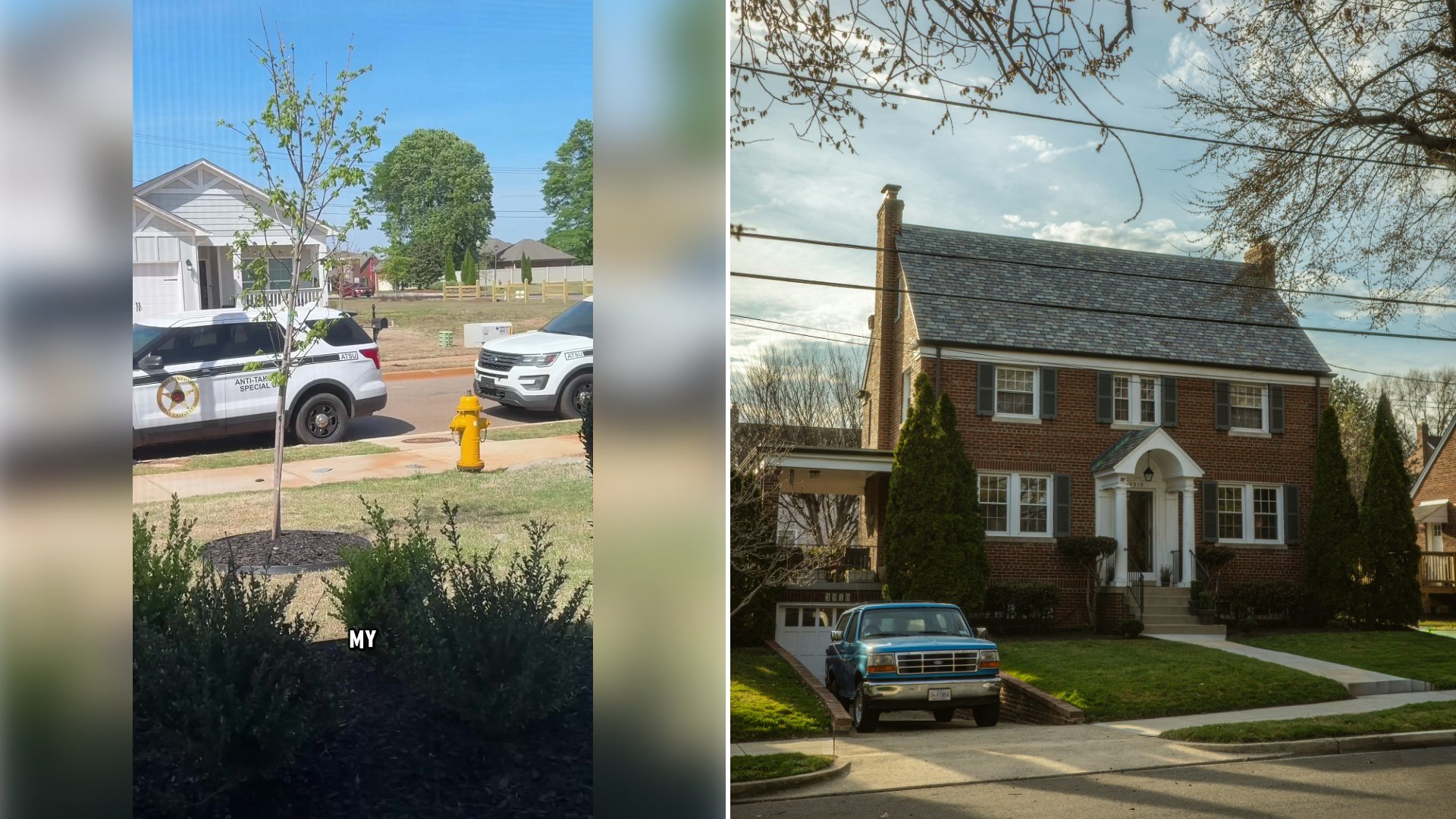
His favorite part, he says, is “this little remote key that can activate the train horns,” and he holds a small black fob with a thin antenna up to the camera. “So anytime my HOA is outside, I can blast it from wherever,” he says, and “watch them panic and try and figure out where it came from.” The next shots are filmed from just behind his parked Tesla, looking across the street at a couple of people standing on the far side near a fire hydrant. He says he does not think they suspect the noise came from a Tesla.
He was waiting for another email about his vehicle, he says, “but nothing.” A couple of days later he received an email saying the HOA “is being transferred,” and as the video ends on him walking into his house, he declares that “after months of torment, I finally won.” He does not explain what the transfer involves or who takes over, and nothing in the video connects that change to his horn; the link is his punchline. The whole clip is cut and narrated as a comedy bit, so every detail here is his own account.
What to Do When the HOA Emails Start About Your Driveway
The most useful moment in Krell’s story is the one where he stops and calls a lawyer, who told him the vehicles could “technically be against my contract.” Before you answer a single notice, pull out your own copy of the association’s documents and find the section on vehicles and parking. Read the exact wording: whether it limits commercial vehicles, trucks over a certain size, vehicles that do not run, or how long anything can sit in the driveway.
Answer each notice in writing and ask the association to name the specific rule and section it says you broke. Krell says each email gave him “reasons”; your own file should hold every one of those emails with its date, alongside dated photos of what was parked and when it was moved.
If a notice mentions fines or towing, or if things reach the point Krell describes, with the police called to the house, do what he did and have an attorney read the documents themselves. He says he learned there were loopholes; the only way to know what your covenants cover is to have someone read the actual text rather than a summary in a management email.
When an email like the one Krell got arrives, saying the HOA is being transferred, treat it as a paperwork change and ask three things in writing: who now manages the community, where correspondence and payments should go, and whether any open violation on your account carries over. File the reply with everything else.
More from Willow and Hearth
- Small Business Owner Takes on His HOA After They Start Towing Work Vans From His Own Driveway
- 11 HOA Rules That Homeowners Often Don’t Discover Until It’s Too Late
- HOA President Confronts a Mobile Car Detailer Over Parking on the Grass in the Middle of a Job, and the Detailer Caught the Entire Heated Exchange on Camera
Leave a Reply