You look up after a snowstorm and see a thick ridge of ice along the edge of your roof, with icicles hanging from the gutters like a row of teeth. It may look like a winter postcard, but it is often a warning. That ridge is called an ice dam, and it can force water under shingles and into your ceilings and walls.
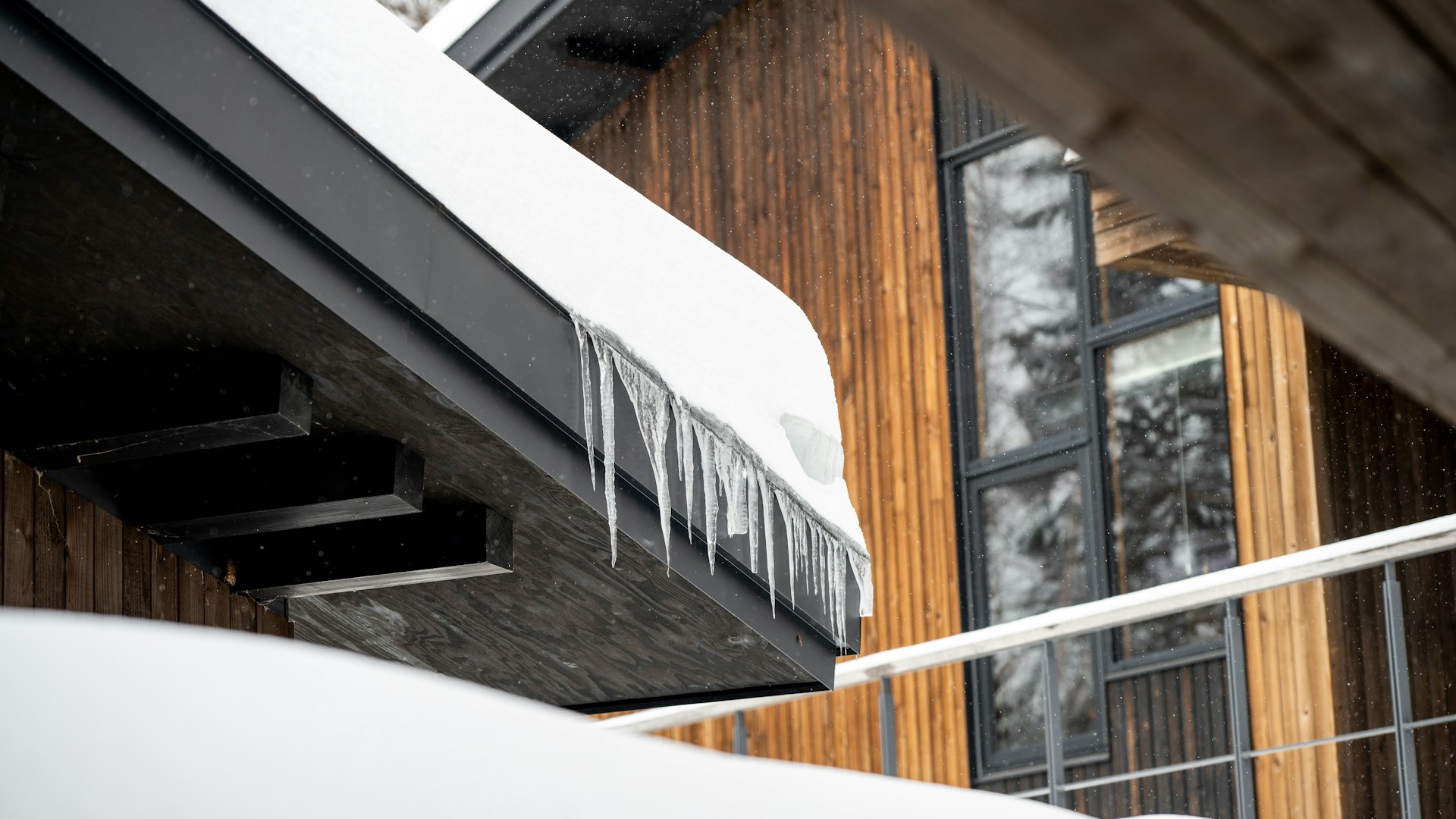
Many homeowners grab a shovel or a hammer or head to the store for heat cables. But the real fix usually starts inside the house, in the attic.
How ice dams form
An ice dam is the result of uneven roof temperatures. Heat from the living space escapes into the attic, and that warms the roof deck. Snow on the upper part of the roof melts, and the water runs downhill. When it reaches the cold edge of the roof, the eaves that overhang the house and stay near outdoor temperatures, it freezes again. Over time that frozen edge builds into a ridge of ice.
Once the ridge grows, meltwater behind it has nowhere to go. It pools, then can back up under the shingles and leak into the attic, ceilings, insulation and walls. The damage can show up as stains, peeling paint, wet insulation, mold or rot, often well after the storm.
Insulation and ventilation are the real fix
Since ice dams start with heat escaping into the attic, the long-term solution is to keep that heat in the house and keep the attic cold. Two things do the job together.
- Insulation. Adequate insulation on the attic floor keeps warm air from seeping up from the rooms below. Gaps around attic hatches, recessed lights, chimneys, vent pipes and wiring can leak a surprising amount of warm air.
- Air sealing. Sealing the cracks and openings between the living space and attic goes hand in hand with insulation, and makes it work better.
- Ventilation. Vents at the eaves and ridge allow cold outside air to flow through the attic, keeping the roof deck cold and carrying off warm, moist air. Make sure insulation is not blocking the vents at the eaves.
How much insulation and ventilation your home needs depends on your climate and your house, so ask a qualified insulation contractor, a home energy auditor or your local building department. An energy audit can find air leaks and show where the heat is escaping. Doing this work in the fall or any time before heavy snow is far better than during the storm.
Why heat cables are not enough
Heat cables, the wires that zigzag along the edge of the roof, can melt channels through ice so water can drain. They can help in trouble spots. But they do not fix the reason the ice formed. They use electricity, they need to be installed correctly and they can fail. Think of them as a patch for a problem you still need to solve, not a cure. If you consider cables, talk with a roofer or electrician about proper installation.
Do not chip the ice
When ice builds up and water starts dripping inside, the urge to attack the ice with a hammer, an ax or a shovel is strong. Resist it. Chipping ice can damage shingles, gutters and flashing, and it makes roof leaks more likely. It is also extremely dangerous. Ladders on icy ground, a slick roof and falling chunks of ice are a bad combination, and every winter people get hurt this way.
Stay off the roof. If an ice dam is already causing leaks, call a reputable roofer who has the right equipment and training to remove it safely. Some professionals use low-pressure steam. Ask them what method they use and whether they carry insurance.
Safe snow removal
Removing snow from the roof edge before it melts and refreezes can help reduce ice dams. A roof rake with a long handle lets you pull snow off the lower part of the roof while you stand on the ground. Use it carefully, since snow can slide down suddenly, so stay out from under it and watch for power lines. Do not scrape down to the shingles, because that can damage the surface. Do not use sharp tools or climb on a snowy roof.
If you do not feel safe doing it, hire a professional. No amount of snow is worth a fall.
If water is already coming in
- Move belongings out of the area and protect floors with towels or buckets.
- If a ceiling is bulging with water or water is near light fixtures, keep clear of the area and call a professional.
- Take photos of the damage for insurance purposes.
- Call a roofer and read your homeowners policy, or ask your insurance agent whether the damage is covered.
- Dry out wet insulation and drywall promptly to prevent mold.
Ice dams are a symptom, not just a nuisance. The real cure is a well-sealed, well-insulated and well-ventilated attic that keeps your roof cold and your heat where it belongs. Take care of those things before the next storm, keep a roof rake handy, and leave the hammer in the toolbox. Your ceilings will thank you come spring.
More Stories You May Like
- Couple Renovating a Fixer Upper Knew Something Was Off About One Wall, and When They Finally Opened It They Found a Massive Termite Nest Instead of Insulation
- Homeowners Find A Hidden Box In Their Attic Wall With A Key Rattling Inside A Mirror And Open It To A Burnt Ouija Piece And A Lock Of Hair
- Couple Restoring An 1888 Home Clears The Attic And Finds A Sewing Machine, A 1920s Chemical Company Ledger And A Glass Display Cabinet
Leave a Reply