Most home sales rely on a bit of cooperation. The seller opens the door, the inspector looks around, and the buyer finds out what they are really getting. But home inspector @inspector_fletch says one inspection started with resistance. The night before, he was told he was not allowed in, and he says he had to fight it.
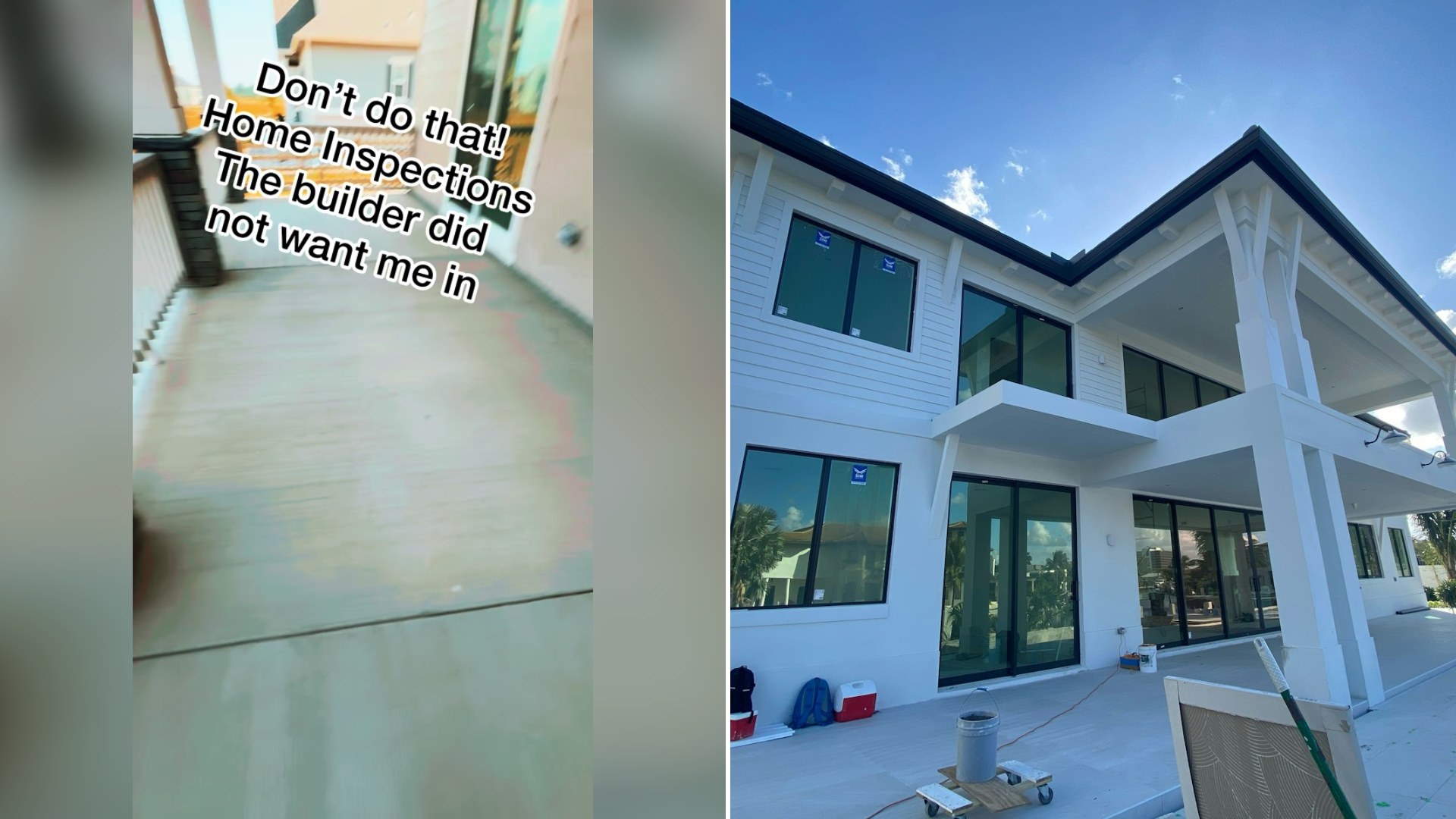
His caption has a bit of humor, saying that the boulders did not want to let him in but he was not taking no for an answer. Once inside, he shows a quick list of problems.
@inspector_fletch
Getting in the door
He starts by saying that they tried really hard not to let him into the inspection the night before. He was told he was not allowed to come, but he insisted. In most home sales, the buyer has the right to an inspection as written in the purchase contract, so he went ahead. His attitude is that the buyer deserves to know what they are paying for.
Paint that stops halfway
His first comment is about the exterior paint. He says he understands that a painter can miss a spot right in between, but in this case the crew missed an entire side. Unpainted or poorly painted siding and trim are more than a cosmetic problem, since paint is a protective layer that keeps moisture out of wood. Exposed wood can swell, crack and rot over time, so a missing coat on one whole side can shorten the life of the siding.
A home for the wasps
Next, he jokes that when you buy this home, you also get a little front door for the wasps. In other words, there is an opening where wasps can come and go. Gaps in siding, trim and vents are common entry points for wasps, bees and other pests, and they are worth sealing. Wasps often nest in sheltered gaps, and a home that is already open to them is easier to infest.
A loose soffit vent and a chipped floor
He also points out a loose vent in the soffit, which is the underside of the roof overhang. Soffit vents let fresh air into the attic, and when they are loose or missing, rain, insects and animals can get in. Then he notes a small chip out of the floor and says, tongue in cheek, that no one will notice. He says it is an easy fix, but he wants everyone to stay with him.
A bulge that does not look right
He ends the tour at a spot with a big bulge, and says the house would be fine if it were a Dr. Seuss house, since everything there seems to bend and curve. But in a real house, he says, that is not right. He does not say in the clip what is causing the bulge, which is the sort of thing a buyer would want to investigate further. A bulge in a wall, ceiling or siding can be a sign of moisture, a structural issue or poorly installed materials, and it is wise to have it examined by a professional before you buy.
Why a seller might resist an inspection
It is not unusual for a seller to be nervous about an inspection. They may worry the inspector will find something that costs them money or kills the deal. A seller can also be busy, stressed or confused about the schedule. That does not mean they are hiding something.
But from a buyer’s perspective, resistance is a reason to pay attention. If you are buying a home, an inspection is usually one of the most important protections you have. Most contracts include an inspection period with a deadline, and the right to ask for repairs, a lower price or a credit, or to walk away, depending on how the contract is written. Because those deadlines can be short, delays matter.
What buyers can do if access is a problem
If a seller or their agent tries to limit or cancel an inspection, there are a few steps worth taking:
- Contact your own real estate agent right away and let them handle the communication.
- Read your contract, which typically spells out the buyer’s inspection rights and the deadline for completing them.
- Ask in writing for access, including a date and time, so there is a record.
- Ask whether the inspection period can be extended in writing if the delay was not your fault.
- If it turns out access is not possible, talk with your agent or a real estate attorney about your options.
Small problems, big picture
None of the items in this tour sounds like a disaster on its own. Paint can be redone, a vent can be tightened and a floor chip can be patched. But the combination tells a story about how well the home has been built or kept up. An unpainted side suggests someone cut corners, and a bulge suggests there could be a problem you cannot see.
The best way to read an inspection report is to separate the items into three groups: safety issues, items that could lead to major damage, and cosmetic touches. Ask the seller to address the first two groups, and decide what you are willing to take on yourself in the third.
It also helps to ask your inspector to rank the findings by priority and to explain which ones can wait. A report that lists thirty items can feel overwhelming, but often only a handful carry real cost or risk. Starting with those keeps a negotiation focused and fair to everyone involved.
The inspector’s message is clear. If someone tries hard to keep you from seeing a house, go and see it anyway.
Leave a Reply