“My house was built in the ’50s, and it’s been flipped more than five times. Come with me on a journey.” With that, one homeowner begins a tour of a house where every layer of paint seems to be hiding something better, and she is about to start peeling.
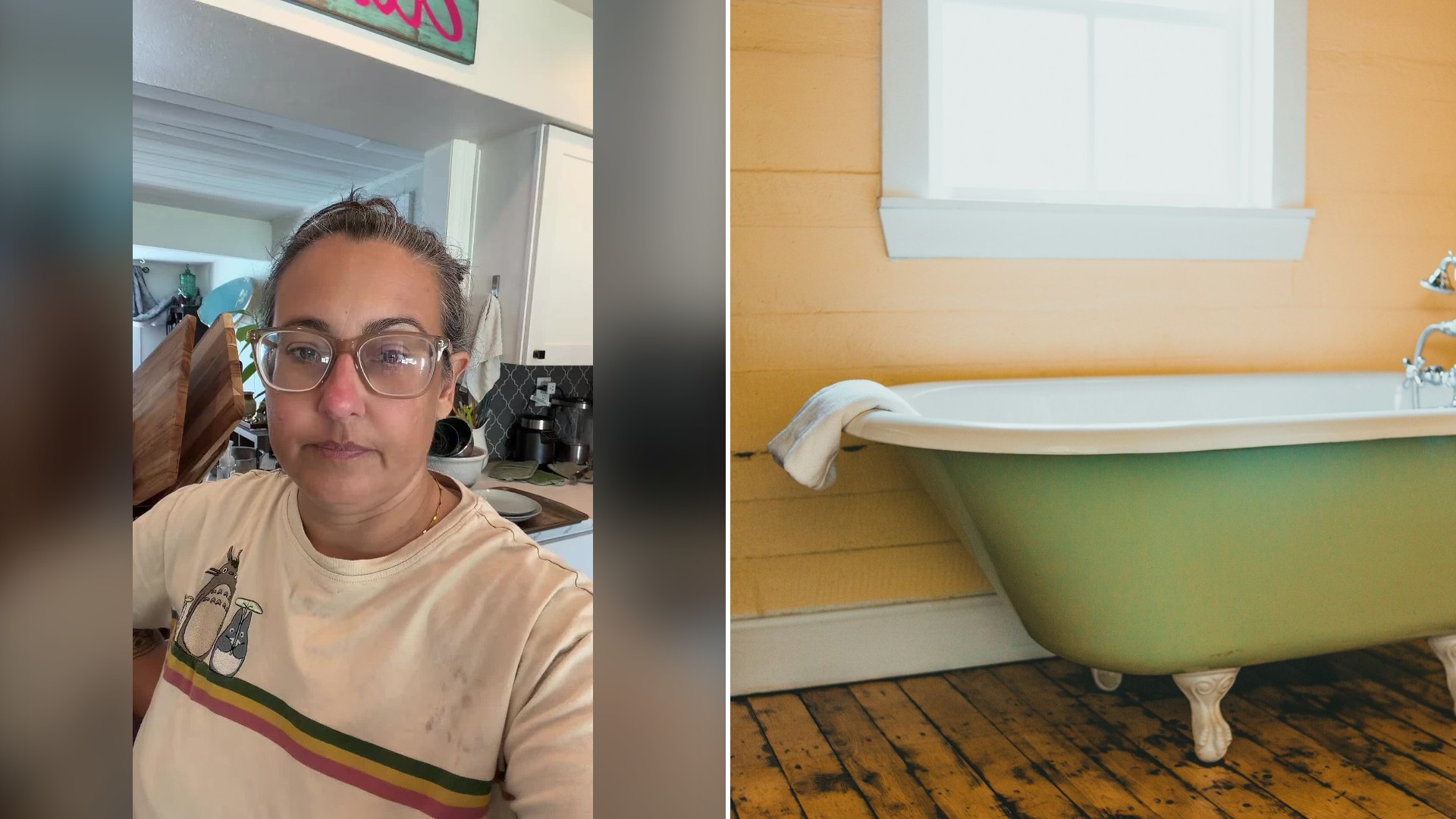
The tour is shared by @lesleypsyd, and it is a cheerful, honest look at the temptation every owner of an older house knows well.
@lesleypsyd
A house with many past lives
Standing in her kitchen, she explains that the house has plenty of special details and some questionable decisions. Her first example is the flooring, where wood look laminate meets a tiled edge. She lifts a decorative mat to show the original tile transition underneath, admits that it is pretty dirty and notes that she is cleaning today anyway.
Original cabinets under many coats
Next she shows the hallway storage, a set of white painted cabinets built right into the wall. They are original, she says, and they hold the family’s gift wrap. A close look at a hinge tells the rest of the story. The thick white paint has chipped, and underneath is a hint of light blue or green. In her words, the cabinets have obviously been painted many times, and she thinks that color underneath looks like a really cute blue.
A bathroom with a clue
In one of the bathrooms, she points to a chip in the painted tile and wonders whether it might be one of those pink or green original colors from the 1950s. She touches the tub and notes it is porcelain, not plastic, and built in. That detail matters because a porcelain tub can often be cleaned or refinished, while plastic cannot be treated the same way.
Knowing the risks and doing it anyway
She ends by holding up a bottle of paint stripping gel. She is aware that stripping paint from original details could end in homeowner disaster. Will she do it anyway? Probably. Definitely.
Why mid century homes hide so much
Houses built around the middle of the last century often feature built in cabinets, ceramic tile in cheerful colors and solid porcelain tubs. A house that has changed hands many times usually collects layers of paint, flooring and quick fixes, each aimed at a short term goal such as a faster sale. Under those layers, original features are often intact, which is why a chipped edge can feel like a clue.
Before you strip old paint
- Test for lead first. Houses built before 1978 may have lead based paint. Test kits and certified labs can check, and a certified lead safe professional can advise if the test is positive. Do not dry sand or scrape suspect paint.
- Try a small test patch. Strip one hinge or a corner of a panel to see what is underneath before you commit to the whole piece.
- Ventilate and protect yourself. Read the stripper label, then wear gloves and eye protection and keep air moving.
- Remove hardware. Hinges and pulls are easier to strip separately, and the wood underneath is easier to reach.
- Protect the floor and tile. Cover them before you begin, because many strippers can damage finishes.
Common questions
How can I tell if my tub is porcelain? Porcelain enamel over steel or cast iron feels hard and cold, makes a solid sound when tapped and is usually heavy. Plastic and fiberglass feel warmer and flex slightly.
Can painted tile be restored? Sometimes. The result depends on the type of paint and the condition of the glaze. Test a small area and ask a refinishing professional if unsure.
Is a flipped house worse to renovate? It can be a mixed bag. Quick cosmetic fixes may cover problems, so it is worth having an inspector look at the systems before investing in finishes.
The takeaway
Every older house tells a story in its layers. Chipped paint, a tile edge under a mat or a hinge that peeks out in a surprising color can be the start of a restoration. The key is to move carefully, test for hazards and start small, even when the temptation to peel is strong.
Credit for the original post goes to @lesleypsyd on TikTok.
Leave a Reply