Counting chickens at night is supposed to be simple. You close the coop door, check the numbers and go to bed. The hosts of the YouTube channel Lineal Havenland Life say they had been doing that for a while and noticing a problem: more and more mornings, a pile of chickens was already outside, even though the door had not been opened. The mystery took a week or two to solve, and the answer was far above their heads.
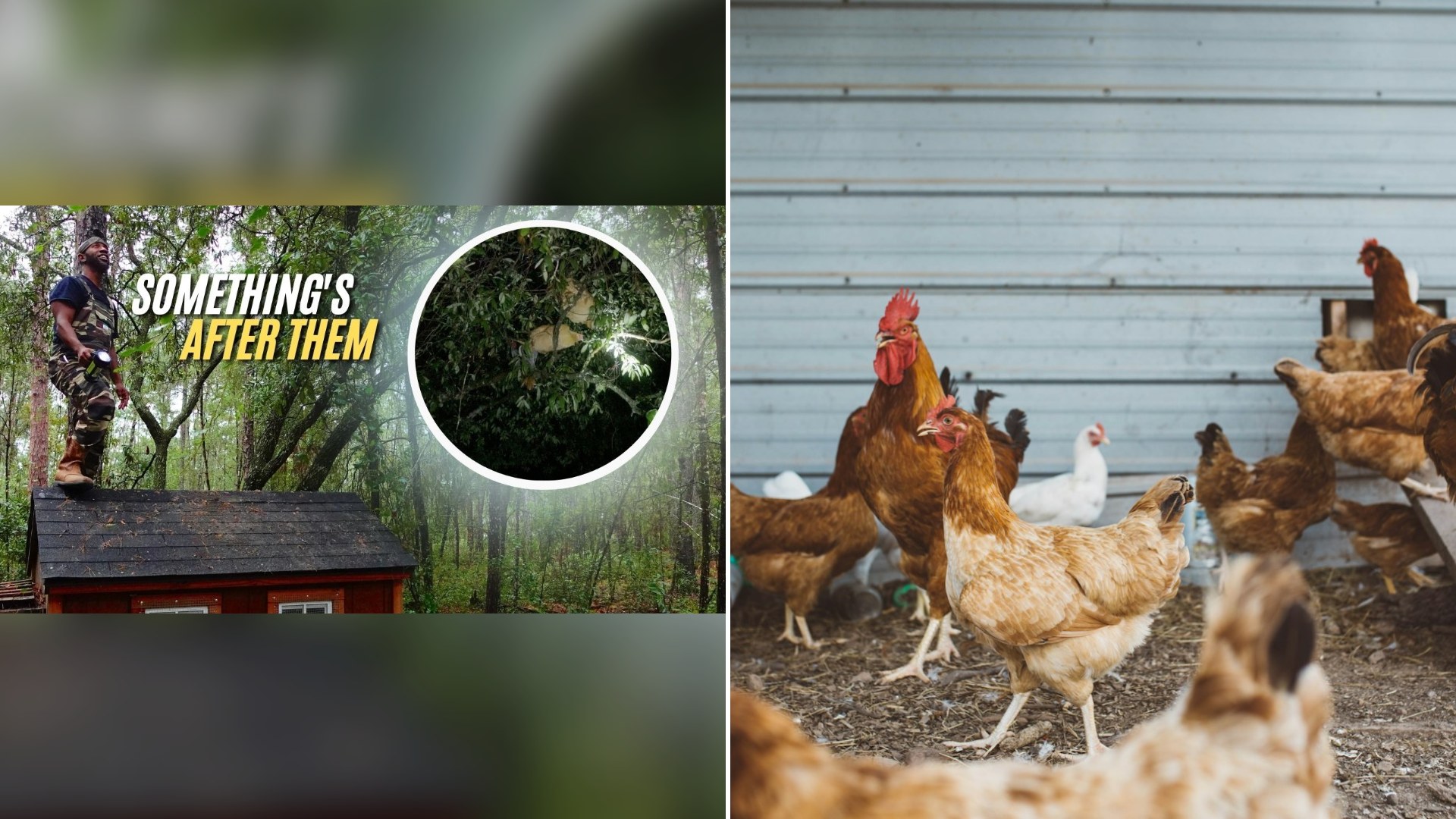
In an episode on @LinealHavenlandLife, the hosts explain that they keep about 40 pasture raised chickens. The birds range during the day and are supposed to come back to the coop each evening. Lately, they say, they had been finding more and more chickens outside in the morning, and some 10 or 15 of them would come running down the driveway before the coop had even been opened.
Where Did The Chickens Go
At first the hosts did not know where the extra birds were spending the night. They checked inside the coop and found chickens, but not 40 of them. Then, after a week or two of puzzling, they say they pinpointed the rest. About five to seven feet above the coop, they found three chickens perched. Looking higher, they spotted more, some 30 to 40 feet up in the trees. They compare the birds to crows.
The hosts say the trail of clues made sense after that. The roof of the coop was covered with droppings, and they had not understood why until they realized the birds were climbing onto the roof and then hopping into a nearby tree. From there, they say, the chickens climbed all the way to the top.
Why It Was A Problem
This was funny to look at but not a harmless habit. The hosts say they have raccoons, coyotes and other predators nearby, and that they have lost chickens at night because the birds were not in the coop. They live in the middle of the woods, so the risk is real. In the daytime, they say, they do not mind the chickens perching high. At night, the birds need to be inside.
There was a second complication. The tree in question was an oak, and the hosts say they dislike cutting trees when they do not have to. Still, they decided it had to come down, and they planned the work for the next day.
The Tree Work
On the following morning, they let the chickens and ducks out to range in a safe area before starting. They say the first tree had a natural lean away from the coop, which helped. When they felled the next one, they say, it landed very close, within about two or three feet of the coop. In their words, they were glad to be cleaning the coop, not taking it down.
All told, they cut three trees, and they say the tangle of branches and vines explains why the birds had been so hard to find. The wood was cut up and hauled to the woodshed, with some helping hands carrying logs. The chickens, meanwhile, seemed delighted with the cleared ground, scratching for bugs in what the hosts jokingly call brunch.
Did It Work
That evening, the hosts say, a few chickens went onto the roof of the coop before heading inside, and it began to pour. By the next morning, they report, none of the usual 10 or so birds came running down the driveway. Every chicken was inside the coop. The hosts say that taking down the tree helped, though they caution that they would only know for sure over time. They also planned a fall deep cleaning of the coop.
Lessons For Your Own Flock
You do not have to own 40 chickens to learn something from this story. Chickens naturally want to roost up high at night, because it feels safer, and a coop is only successful if birds choose to use it.
Count your birds at dusk. A quick headcount tells you whether everyone made it home. If numbers are short, check trees, rafters, fences and rooftops before assuming the worst.
Make the coop the best roost. Provide roosting bars that sit higher than the nest boxes, with enough space for every bird. Chickens will pick the highest spot they can find, so if the coop’s roost is lower than the nearby tree, the tree may win.
Remove easy climbing routes. Branches that hang over a coop, stacked pallets and nearby fences can all serve as ladders. Trimming or removing them can keep birds from using them.
Encourage a habit. When chickens are newly out of a brooder or moved into a new coop, keep them inside for several days so they learn it is home. Then let them out in the morning and close the door at night.
Protect against predators. Raccoons can open simple latches, so use secure locks, and consider hardware cloth instead of chicken wire for windows and vents. Check for gaps at the bottom of the walls.
Keep the area clean. Droppings piling up on a roof, as the hosts found, are often a sign that birds are spending their nights where they should not be.
A Mystery Solved By Looking Up
There is something funny about spending a week or two looking for chickens on the ground when they were sitting in the treetops. The hosts of @LinealHavenlandLife say that taking those trees down helped get the flock back into the coop where it belongs. For anyone raising birds, the lesson is a simple one. If the numbers do not add up, look up.
Leave a Reply