Buying a brand new house feels like the safe choice. Everything is fresh, nothing has been lived in, and the builder hands you the keys with a smile. But a home inspector in Texas says the real story of a new build is written in the walls long before anyone paints them, and once spray foam goes up, most of it disappears from view.
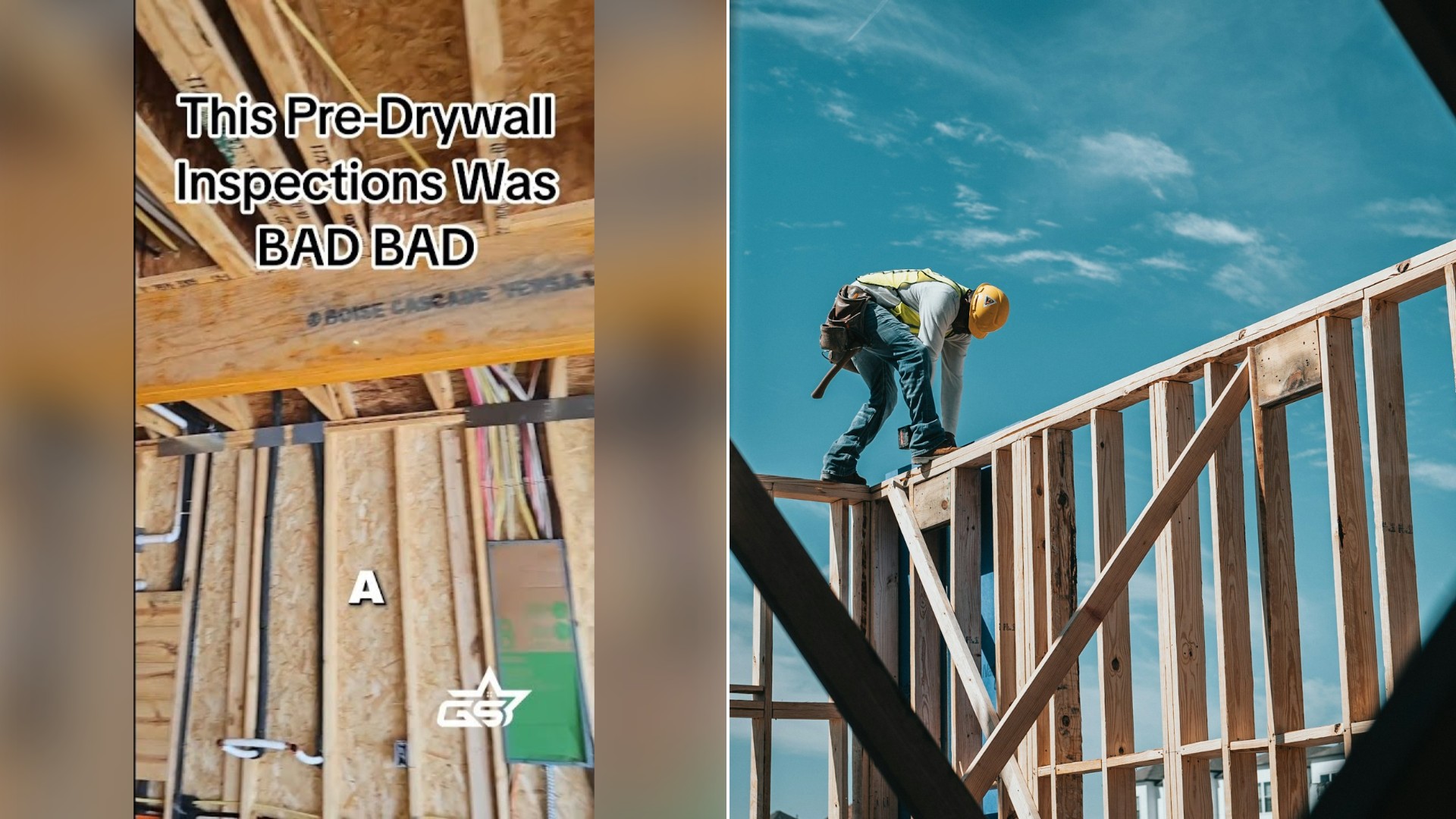
The inspector behind the YouTube channel gold.star.inspections took viewers through a framing inspection of a new home in Tomball, Texas. His message is blunt: get a proper phase two framing inspection before the foam goes in, because afterward you will never see what he found.
He opens by telling the crew he knows this builder, and that this builder sprays foam everywhere, on all the exterior walls and on the ceiling in the attic.
Why Timing Matters Before The Foam Goes On
Spray foam is a popular insulation because it seals a house tightly. The trade-off, as the inspector explains it, is that it buries the structure. Once it is sprayed over the framing, a buyer or a later inspector cannot check what is underneath. That is why he wants the walk-through done at the framing stage, while every connection is still exposed.
He starts with the exterior wrap. The builder is using OSB wood sheathing, and he explains that wood sheathing has to be covered with a water resistive barrier. He likes seeing it installed, but he points out that every penetration has to be sealed. He shows what a sealed one looks like, then points out several that are not sealed. Around the windows he spots wrap that does not fully cover the area above them.
His reasoning is plain. A barrier that keeps out air and water cannot do its job if it is full of holes and open penetrations.
Straps With No Fasteners Anywhere
The headline problem came up again and again. The framing has metal straps, the hardware meant to tie parts of the structure together. He says they are in place, but there are no fasteners in them. Not one. He calls it consistent, and he means that literally: every strap he looked at had the same issue.
At one point he decides to cut to the chase. He walks through the house wall after wall asking whether there are fasteners anywhere so he can document it and stop looking. The answer, wall after wall, is no. He says it is safe to say there are none anywhere in the house.
He also notes spots where the bottom plate is broken, which means two pieces were put together, and says straps are needed on both sides. In those places there is nothing at all. He adds that even if the straps were fastened, those particular ones are missing.
A Long List Of Other Problems
The inspector keeps going, and the list grows. Here is what he flags along the way:
- Support under a beam. Where a beam runs across, he wants solid support beneath it, and in some spots he sees big gaps in the studs that should be holding it up. He also says the porch beam should have a stud supporting it all the way down to the bottom plate.
- Fire blocking. In more than one location he sees a vertical run with no fire blocking, which is meant to slow a fire from racing up through the wall. He turns it into an inspector challenge for viewers before revealing the answer.
- The tankless water heater. He says the condensate drain line often is not installed, and he plans to check again at the final inspection to see if the builder adds it.
- Refrigerant line insulation. The insulation on the air conditioning line is rough and damaged. He warns that a cold line in the wall can build up moisture, leading to water and mold behind the drywall.
- Plumbing and venting. He points out loose water lines and a toilet that needs a proper vent connection.
- A cracked window and wood that needs treatment.
He also gives the builder some credit. The dryer duct runs straight to the exterior, which he calls the best way to do it, and the hangers were good. He notes that plumbing on exterior walls is fine in Texas because it does not get that cold there.
Wood That Walks Away
One more remark stands out. He says materials are often left on a work site, and he has seen people pull up in a truck and take lumber from job sites. In this case he saw workers walking down the street to another house, so he assumes they were builders moving wood. But the takeaway he gives is simple: you have to be watching.
What A Buyer Can Take From This
You do not need to be a contractor to use these lessons. Here are practical steps for anyone buying or building new.
- Hire your own inspector and schedule the visit before insulation and drywall go up. Ask specifically for a framing inspection.
- Do not assume new means correct. The inspector says he has seen the same mistakes repeat from one house to the next.
- Ask the inspector to explain each finding in plain words and get it in writing, with photos.
- Ask for a follow-up visit so you can confirm the builder fixed the items on the list, like the condensate drain line he plans to recheck.
A house is the biggest purchase most families ever make. A few hundred dollars spent while the walls are still open can save thousands later, and as this Tomball walk-through shows, the time to find out about missing fasteners is before they vanish behind a layer of foam.
More Stories You May Like
- Inspector Checks a Brand New Home Before the Drywall Goes Up and Finds the Bathtub Filled With Dirty Water, Sawdust and Construction Trash
- Couple Restoring An 1888 Home Clears The Attic And Finds A Sewing Machine, A 1920s Chemical Company Ledger And A Glass Display Cabinet
- Home Inspector Finds A Gas Meter With A Broken Top Held Together With Tape, Then Learns Nobody Ever Called The Gas Company To Fix It
Leave a Reply