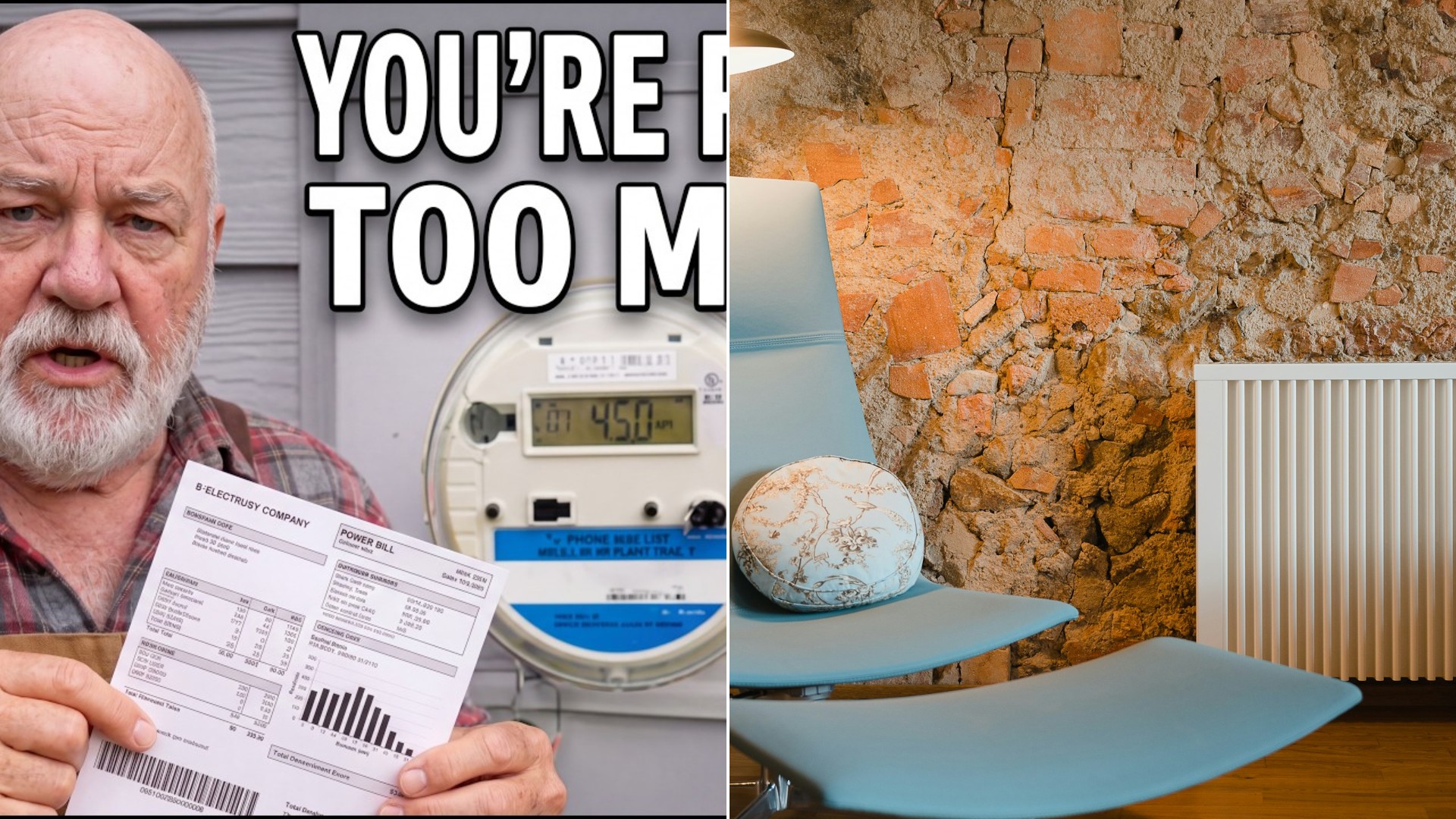
The first winter after his wife passed, the house got real quiet and the bills got real loud. That is how Gus, an Ohio homeowner who has paid the bills on the same old house for 40 winters, tells it on his YouTube channel.
December came in higher than any December he could remember. So he did what he thought a careful man does.
He turned the heat down into the 50s every night. He shut the vents in his wife’s sewing room and the two spare bedrooms, since nobody was using them. Then he bought a little space heater and set it by his chair in the den.
“I was proud of myself,” Gus says. Then January came in higher than December.
His Grandson Walked Through The House And “Found Five Things”
That winter Gus’s grandson came by for a weekend. Gus describes him as the one in the family who reads the fine print on everything.
The young man went through the house room by room. Three of the five problems he found were things Gus had done that very winter to save money, and every one was costing him every single month.
He never had to call anybody or buy anything big. Here is the walk through, in the same order.
“Your Thermostat Is Not A Gas Pedal” And Cranking It To 80 Will Not Heat The House Faster
Gus says the first problem is the thermostat. Walking in from the cold and pushing it up to 80 feels natural, but he says the furnace puts out heat at one steady pace no matter what number you ask for.
“All that high number does is move the finish line further away,” he says. The furnace runs past the temperature you wanted, and you pay for every minute of it.
The big drop at night works the same way in reverse. In the cold morning the furnace has to run for hours to catch up.
His advice is to pick the lowest number you are honestly comfortable at and leave it. If you like it cooler at night, drop it a few degrees, not 20, and a thermostat with a schedule can do that for you.
He adds that it matters even more with a heat pump, because a big jump on the thermostat can kick on the backup electric heat, which he calls the most expensive heat in the house.
Closing The Vents And Running A Space Heater Feel Like Saving Money But Do The Opposite
Gus says his second mistake was really two habits. The first was closing vents in rooms nobody uses, which seems like common sense. Why heat an empty bedroom?
But the furnace fan is built to push a certain amount of air through the ducts. With vents closed, the air has fewer places to go, pressure builds, and the fan works against it. The open rooms get noisy and uneven, and the system runs longer.
He says one vent in one spare room will not hurt much, but closing half the house will. If a closed room has a return, the big grate that pulls air back to the furnace, you are starving the furnace of air too.
The second habit was the space heater by his chair while the furnace kept running. He says that little heater pulls about as much power as a hair dryer the whole time it is on, and it does not turn the rest of the house off. So he was paying for the furnace and paying again for one corner.
If one room is always cold, Gus says to find out why the warm air is not getting there. Maybe a door stays shut over the return, or a duct got crushed in the basement. Fix that and the heater is not needed.
The Water Heater Was Quietly Running Hotter Than Anybody Needed
Third on the list was the water heater. Gus says heating water is somewhere around a fifth of the energy in a typical house, and a tank of 40 or 50 gallons stays hot around the clock whether anybody uses it or not.
Many come from the factory set hotter than needed, and the hotter the tank sits, the more heat leaks into the basement for nobody’s benefit.
He says to turn the dial down to about 120 degrees, which is plenty hot for a shower and the dishes. It also keeps a grandkid from getting burned at the sink.
He adds one honest note. If someone in the house has a weak immune system, check with their doctor on the right setting. On an older tank, an insulating blanket from the hardware store can help, following the package directions, and a gas tank needs the top and burner door kept clear.
Nobody At The Power Company “Is Ever Going To Call” About The Cheaper Rate
The fourth item is the price paid for every bit of power. Gus says most folks are on a flat rate, the same price at any hour, but many power companies also offer a plan where power costs less at certain hours.
The part that got under his skin is that the flat rate is the default and the company does not call to offer anything else. You have to ask.
He suggests calling or checking your account online and asking two questions. Do you have a time of use plan, and what are the expensive hours? If so, run the dishwasher before bed and do laundry late in the evening. Same dishes, same laundry, bought at a cheaper hour.
He is careful to say that not every company offers this, and if you cannot move your heavy chores it may not save a thing. Ask first, then decide.
A $12 Tool Found An Old Freezer Pulling More Power Than The Refrigerator And TV Together
The last item is the one Gus saved for the end. Walk through the house and count the little lights, he says. The microwave clock, the cable box, the television that is off but still warm, the game console the grandkids left in the den.
A house can have 30 or 40 of them, and together they can eat up to a tenth of the bill. He says the cable box and game console are the worst, and some pull nearly as much asleep as in use.
The tool is a plug-in power meter that runs about $12. You plug it into the wall, plug the device into it, and it shows what the device is pulling.
When his grandson tried it, he found the one Gus never suspected, an old freezer in the garage bought when the kids were little. It was pulling more power than the refrigerator and television put together. Gus emptied it, unplugged it, and says he has never missed it.
Gus calls these hidden drains vampires. For the rest, he suggests putting the whole television corner on a power strip with a switch, or one with a timer.
A Few Things Not To Do, And A Saturday Plan
Gus is fair about the power company. The fellow who reads the meter is just doing his job, he says, and the plans are the plans.
His do-not list is short. Do not unplug the refrigerator or the internet box to save pennies. Do not buy gadgets that promise to cut a bill in half by plugging in, since he says most are junk. If one room stays cold no matter what, have someone look at the ducts.
His Saturday checklist is easy to follow.
- Set the thermostat and leave it.
- Open the vents.
- Unplug the space heater.
- Turn the water heater down to 120.
- Call and ask about the rate.
- Hunt your vampire with the $12 meter.
Gus says everything on the list but the phone call costs nothing or about the price of lunch, set against every month from the first bill in December to the last one in April. He says the older the house, the more money is usually hiding in it.
More Stories You May Like
- Bleach Tablets In The Toilet Tank Flushable Wipes And Grease Down The Drain Are Plumbing Myths That Can Cost Homeowners Real Money
- Overwatering The Wrong Plant For Your Zone And Buying Too Early Are The Quiet Ways Gardeners Kill Plants And Waste Money Every Spring
- 60% Of Americans Had A Large Appliance Break Down In Five Years And 39% Of Them Tossed It Because They Could Not Find A Repair Person They Were Happy With
Leave a Reply